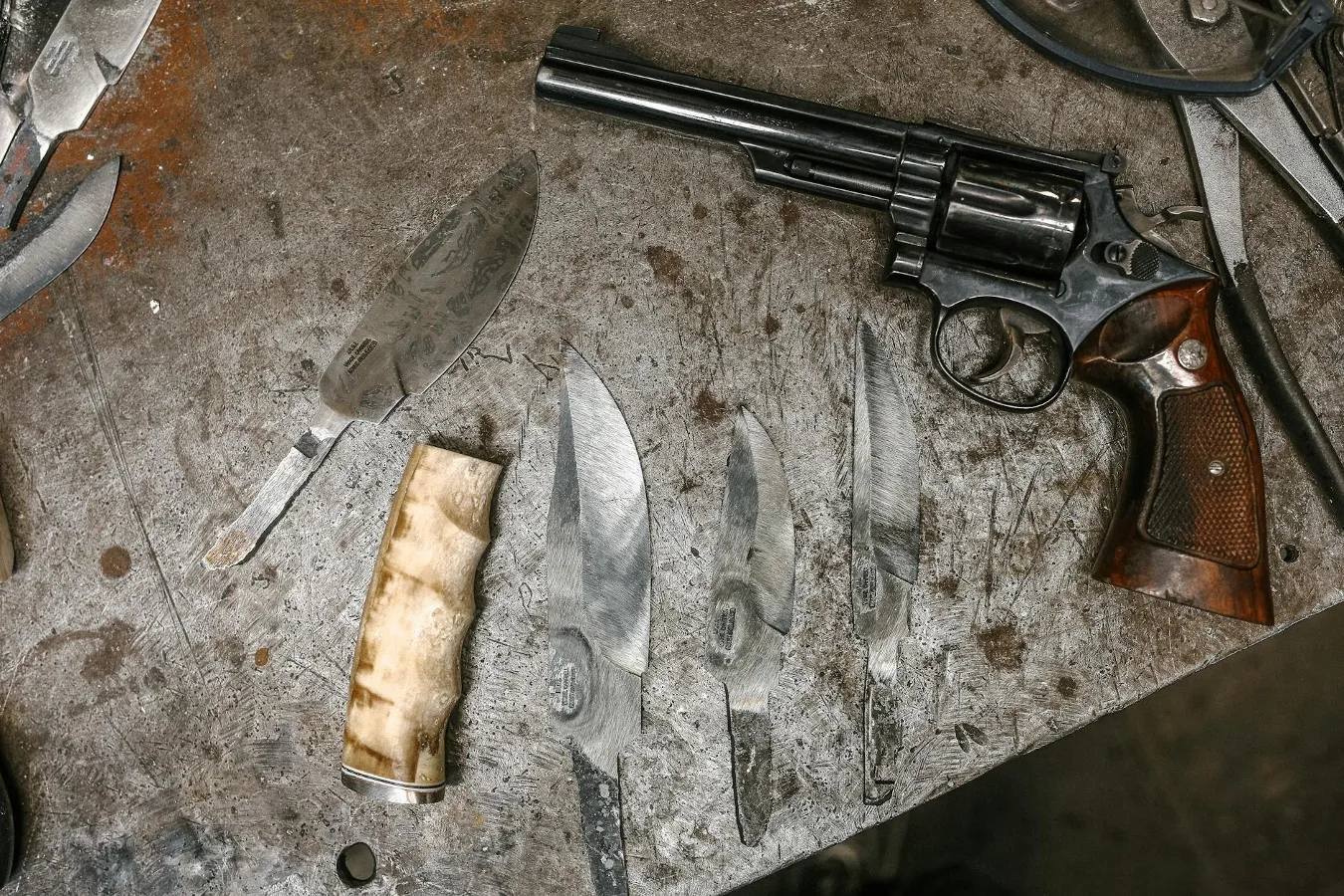
A hunting knife set is usually the smarter buy if you want one kit that can handle field dressing, skinning, trimming, and a few camp tasks without forcing every job onto a single blade. For most buyers, the real question is not whether to buy a set, but which combination of blades, handles, and storage will fit the way they hunt. white knife set offers more detail on this point.
The best hunting knife set is the one that matches your use case. A deer hunter who processes game at camp has different needs from someone who wants a compact kit for occasional weekend trips. Some sets lean toward portability, while others focus on having multiple specialized blades. The trade-off is simple: more variety can mean more flexibility, but also more weight, more upkeep, and more gear to keep track of. Best BBQ Knife Set: What to Look For offers more detail on this point.
What a hunting knife set should actually do
A good hunting knife set should make the core tasks of hunting and game care easier, not more complicated. In practical terms, that usually means helping with skinning, gutting, trimming, deboning, and minor campsite prep. Some kits also include a sharpening tool, saw, or cleaning accessories, but those extras only matter if they fit your routine.
The key is specialization. A set with a single all-purpose blade may be enough for light use, but many hunters prefer at least a few tools with different blade profiles. A curved blade can feel more natural for skinning, while a stout fixed blade is often better for tougher cutting tasks. If the set includes a gut hook, that can be helpful for some users, but it is not essential for everyone.
How to compare hunting knife sets
Rather than starting with the number of pieces, compare the parts that affect how the knives will perform in real use. A larger set is not automatically better. In fact, a simpler kit can be the better choice if it gives you the right blades without extra clutter.
Blade style and task fit
Blade shape should match the jobs you expect to do most often. Drop-point blades are widely favored for general utility because they offer a controlled tip and a strong belly for cutting. Clip-point blades can feel more precise for certain cutting angles. Skinner-style blades often have more pronounced curves that can help when working around hide and connective tissue.
If you want a set that covers a range of tasks, look for a balanced mix rather than several redundant blades. A hunting knife kit with two or three well-chosen blades is often more practical than a large set full of near-duplicates.
Blade steel and edge retention
Blade steel affects how the knife sharpens, how often it may need maintenance, and how it handles corrosion. For hunting use, that balance matters because knives can be exposed to moisture, blood, dirt, and repeated cleaning. Some steels are easier to sharpen in the field, while others may hold an edge longer but require more effort when it is time to touch them up.
Instead of chasing a single “best” steel, think about maintenance habits. If you sharpen regularly and want easy upkeep, that points one direction. If you prefer less frequent touch-up work, that points another. Either way, corrosion resistance and ease of cleaning matter as much as raw toughness.
Handle grip and control
Handle security is one of the most overlooked parts of a hunting knife set. A handle that looks good in product photos may still feel awkward once your hands are wet, cold, or wearing gloves. Texturing, contouring, and handle shape all affect control. A secure grip matters more than decorative detailing.
Materials vary widely, but the practical question is whether the handle feels stable during precise cuts and comfortable during longer use. If a set includes multiple knives, consistency across the handles can also make the kit easier to use without constantly adjusting your grip.
Sheaths and storage
A hunting knife set is only as convenient as its storage system. Sheaths should protect the edge, cover the blade securely, and make transport manageable. Leather, nylon, and molded synthetic sheaths all have trade-offs. Leather can feel classic and substantial, but it usually needs more care. Synthetic materials often dry faster and can be easier to clean.
Storage also affects safety. A loose set thrown into a pack is a bad idea. If you plan to carry knives into the field, check how each piece is retained, whether the set packs compactly, and whether the sheath design prevents accidental contact with the edge.
Weight and portability
Some hunting knife sets are built for the truck, the cabin, or the base camp table. Others are designed to travel in a pack. If you move a lot on foot, a lighter, more compact kit may be the better fit even if it offers fewer blades. If you process game at a fixed location, a heavier kit with more accessories may be worth the trade-off.
Portability is often underestimated at first. A set that looks complete can become annoying if it takes too long to organize, weighs down your pack, or includes blades you never use.
Choosing between a small kit and a larger set
The main decision is whether you want a compact, task-focused kit or a broader multi-piece set. Each has clear strengths.
| Set type | Best for | Main advantage | Main drawback |
|---|---|---|---|
| Compact set | Hunters who want portability and simplicity | Easy to carry and maintain | Fewer blade options |
| Mid-size set | Most general hunting needs | Good balance of versatility and convenience | May include one or two unnecessary pieces |
| Larger kit | Users who process game more often or want dedicated blades | Better task separation | Bulkier and more expensive to maintain |
A useful way to decide is to ask how often you actually switch tasks in the field. If you rely on one knife for most work, a large set may be overkill. If you want a dedicated blade for skinning, another for general cutting, and a backup for camp use, a broader set can make more sense.
Common mistakes to avoid
One common mistake is buying a hunting knife set based on piece count alone. A six-piece kit can be less useful than a well-designed three-piece kit if the extra blades are redundant or poorly balanced.
Another mistake is ignoring the sheath system. A knife that feels solid in hand but is awkward to carry can become frustrating fast. The same goes for handle grip. A smooth handle may look refined, but it can become slippery when conditions are less than ideal.
A third mistake is choosing a set that is hard to maintain. If the blades are difficult to clean or the storage system traps moisture, the kit may require more attention than it is worth. That is especially relevant for hunters who use gear seasonally and may store it for long stretches between trips.
Finally, many buyers underestimate how much overlap exists between hunting knives and general outdoor knives. If you already own a capable fixed blade or a reliable camp knife, you may not need a huge hunting-specific set. Sometimes the most practical purchase is a focused kit that fills one gap instead of replacing everything you already have.
When a hunting knife set is worth it
A hunting knife set makes the most sense if you want convenience, task separation, and a ready-to-go package. It is especially useful for hunters who process game in the field, want backup blades on hand, or prefer to keep a dedicated kit instead of mixing knives with household kitchen tools. damascus kitchen knife set offers more detail on this point.
It may be less useful if you are still figuring out your preferences. In that case, starting with one dependable fixed blade and a sharpening method can be a smarter first step. That gives you a better sense of whether you actually need a specialized skinning blade, a gut hook, or a larger multi-piece kit.
For many buyers, the sweet spot is a moderate set that covers the main jobs without turning into a toolbox. That usually means a practical blade mix, secure handles, reliable sheaths, and materials you are willing to maintain.
Alternatives to consider
If a hunting knife set feels too broad, there are a few sensible alternatives. A single fixed blade is the simplest option and often the easiest to care for. A compact two-knife kit can cover general cutting and skinning without adding unnecessary bulk. Some hunters also prefer to build their own setup by buying one knife at a time, which allows more control over blade shape and handle feel.
For those who process game at home or base camp, it may also make sense to separate field tools from kitchen knives. That keeps the maintenance and cleaning demands distinct and reduces the risk of mixing gear meant for very different jobs.
The practical takeaway
The right hunting knife set should feel purposeful, not oversized. Focus on blade shapes that match your tasks, handles that stay secure in real conditions, and a sheath system that makes transport safe and easy. If the set is easy to maintain and covers the jobs you actually do, it is probably a better buy than a larger kit with extra parts you will never reach for.
That is the real standard to use: not how many knives come in the box, but how well the set supports your hunting routine.