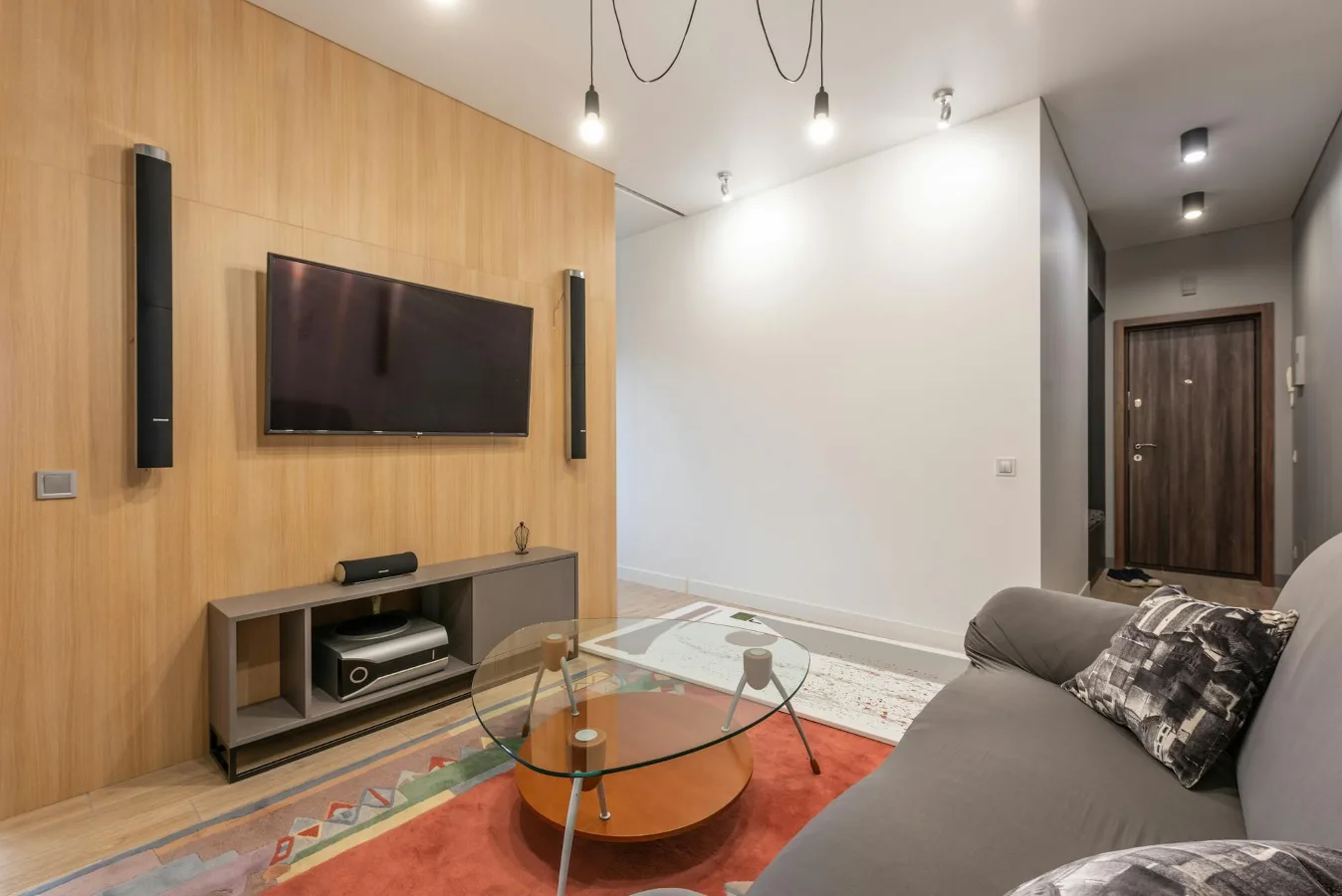
A home theater home decor plan works best when the room feels like part of the house, not a sealed-off equipment zone. The goal is to make the space comfortable for movie nights, attractive enough for everyday use, and practical enough to handle screens, speakers, remotes, and all the visual clutter that comes with entertainment gear.
That usually means treating the room as both a design project and a function-first setup. The screen, seating, lighting, storage, and wall finishes all affect how the space looks and how well it works. A room can be stylish and still fall short if glare is an issue, the seating is awkward, or the decor competes with the screen. how to choose lighting for a TV room offers more detail on this point.
Why home theater decor feels different from standard room styling
A traditional living room often prioritizes conversation, natural light, and decorative focal points. A home theater asks for something more controlled. You are usually designing around a large TV or projector, reducing reflections, and making sure the room supports long viewing sessions.
That does not mean the room has to look technical or overly dark. The most successful home theater home decor ideas tend to work because they solve a few practical problems at once. A textured rug can soften the room and help with sound. A deep wall color can reduce visual distraction while also creating a more finished look. Closed storage can keep remotes, game consoles, and streaming boxes out of sight without making the room feel minimal or cold.
The misconception is that a theater room must look like a commercial cinema to work well. In reality, many of the best spaces feel more like a calm lounge or a layered den. The decor should support the viewing experience, not overpower it.
The design factors that matter most
Screen placement and visual balance
The screen usually becomes the strongest visual element in the room, so the surrounding decor should frame it rather than compete with it. This is true whether the room uses a large television or a projection setup. Heavy patterning, shiny surfaces, and cluttered shelving near the screen can pull attention away from the image.
Instead, aim for a balanced composition. Symmetrical shelving, simple artwork, or built-ins can make the screen area feel intentional. If the screen is large, leave some visual breathing room around it so the wall does not feel crowded.
Lighting control and atmosphere
Lighting is one of the biggest differences between attractive decor and effective theater design. Bright overhead light can wash out the screen, while a room with no layered lighting can feel flat and hard to use.
A better approach is flexible lighting. Think in layers: dimmable ceiling lights, sconces, lamps, LED accents, or cove lighting that can shift the room from casual daytime use to movie-night mode. The decor should still feel polished when the lights are on, not just when the room is dark. gold floor lamp tips offers more detail on this point. guide to bronze floor lamp offers more detail on this point.
Acoustics without a studio look
Sound treatment often gets overlooked because people assume it will make the room look too technical. But acoustics and style do not have to clash. Soft materials naturally help absorb some sound, and they can also warm up the room visually.
Rugs, upholstered seating, curtains, and fabric wall art can all contribute to a more comfortable listening environment. Acoustic panels can also be integrated more subtly than many people expect, especially when they are chosen to match the room’s palette or placed as part of a wall design.
Storage and cable control
Entertainment gear creates visual noise. Cables, controllers, media boxes, charging cords, and spare accessories can make even a carefully decorated room look unfinished. Hidden storage is one of the most overlooked parts of home theater home decor because it affects both the appearance and the daily ease of use.
Closed cabinets, low-profile consoles, floating shelves with concealed routing, and media units with ventilation can keep the room tidy without sacrificing access. The key is to store what you use frequently in easy reach while hiding the items that tend to pile up.
Practical ways to make the room look designed, not improvised
Choose a color palette that supports the screen
Color has a major effect on how a theater room feels. Very light walls can reflect light and make the screen area feel less focused. Very dark rooms can be immersive, but they can also feel heavy if they are not balanced with texture, warm materials, or a few lighter accents.
Many homeowners find that muted, saturated colors work well because they feel intentional without making the room cave-like. Deep blue, charcoal, forest green, or warm brown tones can create a composed backdrop. If you prefer lighter decor, use it selectively in furniture, textiles, or artwork so the room still feels inviting.
Use furniture that looks comfortable from every angle
Seating is not just about viewing comfort. It also defines the room’s style. A sleek leather recliner may suit a dedicated theater, while a tailored sectional can make a multipurpose media room feel more residential and relaxed.
Think about how the furniture reads when the room is not in movie mode. Low, bulky seating can make the space feel crowded if it dominates the entire floor plan. On the other hand, furniture that is too small or too casual may not provide the posture support people want during long viewing sessions.
Mixing seating types can be useful in larger spaces. For example, a main sectional can anchor the room, while a pair of lounge chairs or a loveseat gives the layout flexibility. Just keep circulation clear so people can enter and exit without crossing the main sightline.
Make the wall behind the screen feel intentional
Blank walls can be useful in a theater room, but too much emptiness can make the space feel incomplete. One solution is to frame the screen area with subtle architectural detail such as paneling, trim, or a textured finish. Another is to create visual balance with shelving, built-ins, or a low console beneath the display.
The best choice depends on the screen type and the room’s proportions. A projector screen often benefits from a cleaner, quieter wall treatment. A TV can sometimes be integrated into a more decorative wall if the surrounding elements stay restrained.
Use textiles to soften the room
Soft furnishings do more than add comfort. They break up hard surfaces and help the room feel welcoming rather than stark. A rug can define the viewing zone. Curtains can soften windows and help control light. Throw blankets and pillows can add texture, but they should be chosen carefully so the room does not become visually busy.
The common mistake is to rely on decor accessories to carry the room without addressing the bigger design structure. Textiles work best after the layout, seating, and lighting have been resolved.
Style directions that work especially well
There is no single right aesthetic for a home theater. The best style is the one that matches the rest of the home and supports the way the room is used. Still, a few approaches tend to translate well.
- Modern lounge style: clean lines, warm neutrals, concealed storage, and a few sculptural accents.
- Classic cinema-inspired style: darker walls, plush seating, layered drapery, and richer textures.
- Transitional family room style: a softer sectional, low-profile media furniture, and decor that can work during the day.
- Minimal contemporary style: simple finishes, hidden technology, and a restrained palette to keep focus on the screen.
The most useful style choice is often the one that feels like a natural extension of the rest of the home. A theater room that ignores the house’s overall character can feel disconnected, even if each individual element looks good.
Common mistakes that make a theater room feel off
One of the biggest mistakes is treating the screen wall like an afterthought. If the TV, speakers, and furniture are installed without a visual plan, the room can become dominated by devices instead of design.
Another issue is overdecorating. Too many framed pieces, shiny finishes, or small objects can create distraction and reflect light in unhelpful ways. A theater room usually benefits from fewer, larger design decisions rather than many tiny ones.
People also underestimate how much natural light affects the space. If windows are not addressed with the right coverings, glare can undo even the best layout. For some rooms, blackout curtains or layered shades are more useful than another decorative accent.
A final mistake is choosing furniture for looks alone. A beautiful chair or sofa that is too shallow, too upright, or too large for the room can make the space feel awkward during real use. In a theater setting, comfort and scale matter as much as finish and fabric.
How to decide between a dedicated theater and a multipurpose media room
This is one of the most important decisions because it shapes every decor choice that follows. A dedicated theater room gives you more freedom to control light, acoustic treatment, and seating layout. It can lean darker, more immersive, and more specialized.
A multipurpose media room has to do more. It may host reading, gaming, casual conversation, or family downtime in addition to viewing. That means the decor needs to be more flexible and often a little brighter, softer, and less equipment-heavy in appearance.
If the room has multiple jobs, avoid designs that only look good in a dark movie setting. If it is truly dedicated to film and TV, you can lean harder into immersive materials, more controlled lighting, and deeper wall colors without worrying as much about day-to-day versatility.
Simple upgrades that deliver the biggest visual payoff
Not every room needs a full renovation. A few well-chosen updates can make a theater area feel much more polished.
- Replace exposed shelving clutter with closed storage or baskets.
- Swap bright overhead lighting for dimmable, layered lighting.
- Add a rug large enough to anchor the main seating area.
- Choose window treatments that reduce glare and feel finished.
- Organize cables so the equipment reads as part of the design.
- Use wall color or paneling to create a more cohesive screen backdrop.
These changes work because they address the parts of the room that people notice immediately: light, clutter, scale, and balance.
Choosing decor that will still make sense later
A good home theater home decor plan should age well. Technology changes, but the room’s structure and style should remain usable. That is why neutral foundations tend to perform better than novelty-driven themes. You can always update accessories, add new equipment, or shift the mood with lighting. It is harder to recover from a layout that is too rigid or a decor scheme that only works for one specific gadget.
Ask a practical question before buying anything decorative: will this still look right if the screen changes size, the furniture changes shape, or the room needs to serve a different function later? If the answer is yes, the piece is probably doing real work for the space.
The best theater rooms rarely feel overdesigned. They feel composed. The screen is integrated, the seating is comfortable, the lighting is flexible, and the decor helps the room feel like part of the home rather than a separate machine for watching content.