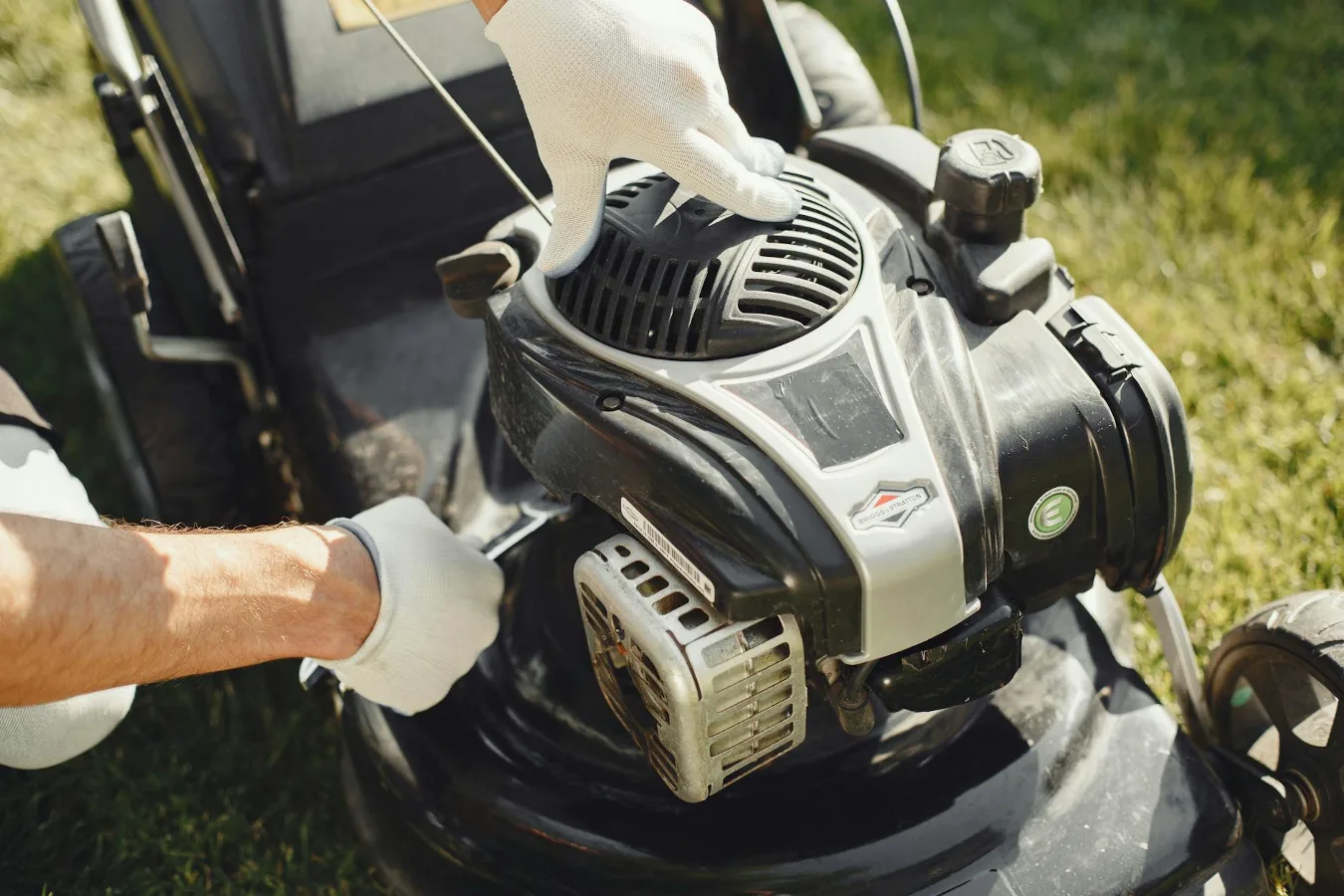
When mobile lawn mower repair makes sense
If you searched for mobile lawn mower repair near me, you are probably looking for a convenient way to get a mower fixed without hauling it to a shop. Mobile repair can be a good fit when the mower is hard to transport, the problem seems straightforward, or you need help getting back to mowing quickly.
It is especially practical for riding mowers, self-propelled models that are difficult to load, and homeowners who do not have a truck or trailer. It can also save time when the issue is something a technician can diagnose on-site, such as a dead battery, clogged deck, dull blade, starting trouble, or a simple tune-up. For more complex rebuilds, however, a shop may still be the better choice.
The key is not just finding someone nearby. The better question is: What kind of repair do you need, and is mobile service the right way to handle it?
What mobile lawn mower repair usually covers
Mobile lawn mower repair services vary, but they commonly focus on diagnostics, maintenance, and common fixes that can be done at your home or property. Depending on the technician and your mower type, service may include:
- Starting and ignition troubleshooting
- Battery testing or replacement guidance
- Spark plug inspection and replacement
- Air filter and fuel system checks
- Blade sharpening or blade replacement
- Belt and cable inspection
- Carburetor cleaning or adjustment
- Wheel, drive, or height-adjustment issues
- Deck cleaning and mower tune-ups
Some providers also handle pickup and delivery if the repair needs shop equipment. That can be a useful middle ground when the mower cannot be fixed entirely on-site.
How to decide whether mobile service is the right choice
A mobile repair visit is not always the fastest or least expensive solution once you consider the type of mower, the issue, and the distance involved. Use these criteria to judge whether on-site repair is likely to be worthwhile.
1. Can the mower be diagnosed where it sits?
Many common mower issues are visible or testable on-site. If the mower will not start, stalls quickly, vibrates excessively, or cuts poorly, a technician may be able to diagnose the problem without moving the machine. That makes mobile service appealing because the first visit can often resolve the issue or at least narrow down the next step.
If the mower has internal engine damage, major transmission problems, or a repair that requires specialized shop tools, a mobile technician may only be able to identify the issue, not fully repair it on the spot.
2. Is the mower difficult to transport?
Riding mowers, zero-turn mowers, and some large self-propelled models can be awkward to move. If loading the machine would take extra equipment or another person, mobile repair may reduce hassle. The convenience factor matters most when transport is the main barrier, not when the repair itself is already simple to handle at a shop.
3. Is the problem likely routine or complex?
Routine maintenance and common wear items are often good candidates for mobile repair. Examples include tune-ups, blade service, battery issues, and some fuel-system cleaning. More complex repairs, especially those involving engine teardown, major electrical faults, or proprietary parts, may be better suited to a shop.
A useful rule of thumb is this: if the repair depends on bench testing, deep disassembly, or specialized equipment, ask whether the technician prefers to complete it off-site.
4. How urgent is the repair?
If you need the mower working before a weather window closes or before grass gets overgrown, mobile service can be attractive. It may reduce waiting time, especially if a provider offers same-day or next-day appointments. Still, availability varies by area, season, and workload, so “near me” does not always mean immediate.
Questions to ask before booking
Not every provider means the same thing by mobile repair. A quick call or message can prevent frustration and help you compare services more accurately. Ask clear questions before scheduling.
- What mower types do you service? Push mowers, self-propelled mowers, riding mowers, and electric models may not all be supported.
- Do you diagnose and repair on-site? Some providers only perform maintenance or limited fixes in the field.
- What problems require shop repair? This helps you avoid paying for a visit that cannot complete the job.
- Do you bring common parts? Routine service is easier when the technician stocks spark plugs, belts, filters, and similar items.
- Is there a service call fee? Mobile repair often includes a trip charge or diagnostic fee.
- How do you handle pickup if needed? If the mower needs a shop visit, ask whether transport is offered.
- Do you service gas, battery, or both? The skill set and tools can differ by mower type.
One overlooked detail: ask whether the repair is done at your home, in a driveway, or at another outdoor location. Some mowers are easier to work on in a flat, accessible spot with enough room around the machine.
Step-by-step criteria for comparing providers
When several local options appear in search results, comparing them by price alone can be misleading. A lower quoted fee may not include diagnostics, parts handling, or follow-up visits. A more useful comparison looks at the full service fit.
Start with mower compatibility
Make sure the provider explicitly handles your mower type. A technician who mainly works on walk-behind gas mowers may not be the best match for battery-powered equipment or riding mowers. Some electric mowers have simpler mechanics but require different troubleshooting knowledge than small gas engines.
Then look at the repair scope
Ask whether the provider handles the issue you are facing. If your mower needs blade replacement and a deck clean-out, that is different from an engine that dies under load or a drive system problem. Good mobile service should clearly state what falls within their normal field repairs.
Compare convenience against total effort
Convenience is the main reason people choose mobile repair, but convenience has layers. Consider travel time to a shop, your ability to transport the mower, and whether the technician can complete the work during one visit. If multiple trips are likely, a shop may actually be simpler.
Review communication quality
Reliable providers usually ask a few diagnostic questions before arriving. That can be a positive sign, because it suggests they are preparing for the right parts and tools. Vague communication, on the other hand, may lead to a visit that does not solve the issue.
Examples of situations where mobile repair is a strong fit
Examples can make the decision easier. Mobile service often makes sense in situations like these:
- A riding mower will not start after sitting through the off-season and may need battery or fuel-system attention.
- A push mower starts but cuts unevenly because the blade is dull or damaged.
- A self-propelled mower is hard to push because the drive cable or wheel mechanism needs adjustment.
- A homeowner needs a seasonal tune-up but does not want to transport the machine to a shop.
- A mower has a simple issue that can be diagnosed where it is stored, such as a loose cable or clogged deck.
These are the kinds of jobs where on-site service can be efficient because the technician can inspect the mower in context and address the problem without relocation.
When a shop repair may be the better choice
Mobile repair is convenient, but it is not automatically the best option. A shop may be more suitable if the mower has a serious mechanical failure, needs extensive cleaning after a fuel issue, requires parts that are not readily stocked, or must be tested with specialized equipment.
A shop can also be better when the repair is likely to take longer than a single visit. If the technician has to return with parts, remove major assemblies, or complete disassembly, the convenience advantage of mobile service shrinks. In those cases, pickup and delivery repair may offer a better balance between access and capability.
Another practical limitation: some neighborhoods, driveways, or storage areas do not provide enough working room. Tight access can slow the technician down or make certain repairs impossible on-site.
Common mistakes to avoid
People looking for mobile mower repair often focus on speed and ignore the details that affect whether the visit will be successful. A few common mistakes come up again and again.
- Booking without identifying the mower type. Gas and battery mowers involve different parts and troubleshooting steps.
- Describing the problem too vaguely. “It does not work” is less helpful than explaining the symptoms.
- Assuming every repair can be done outside. Some jobs need a shop or a full service bay.
- Ignoring seasonal backlog. Spring and early summer can be busy for lawn equipment service.
- Skipping basic preparation. A cluttered work area can delay the repair or make diagnostics harder.
A more subtle mistake is treating mobile repair as a replacement for preventive maintenance. A mower that needs repeated emergency fixes may be telling you it is overdue for a tune-up, blade service, or fuel-system cleaning.
Checklist before the technician arrives
A little preparation helps the visit go more smoothly and can shorten diagnosis time. Before the appointment, use this quick checklist:
- Move the mower to a clear, accessible spot
- Note the make, model, and type of mower if available
- Describe the symptoms as specifically as possible
- Clear away grass bags, tools, hoses, and debris
- Make sure the technician can reach the mower safely
- Ask whether you should leave gas, battery, or keys in a certain state
- Confirm how payment, diagnosis, and parts will be handled
If the mower has a recurring issue, jot down when it started, what happened just before it failed, and whether anything changed recently. Those details can help a technician rule out obvious causes faster.
Mobile repair vs. other lawn mower service options
Choosing a service model is often a matter of trade-offs rather than right or wrong. Here is how the main options compare at a practical level.
| Service option | Best for | Trade-off |
|---|---|---|
| Mobile on-site repair | Convenience, simple diagnostics, routine maintenance, hard-to-transport mowers | May not handle major repairs or specialized shop work |
| Shop repair | Complex issues, deeper diagnostics, equipment needing bench work | Requires transport and usually more time |
| Pickup and delivery | Homeowners who want less hassle but still need shop-level service | May add logistical coordination and transport waiting time |
| DIY maintenance | Basic upkeep for experienced owners | Not ideal for electrical, fuel, or engine issues beyond your comfort level |
For many homeowners, the best choice is situational. A straightforward blade change may be ideal for mobile service, while a no-start issue after fuel contamination may be better handled in a shop.
What to expect from a useful mobile repair visit
A good mobile repair appointment should leave you with more clarity, even if the mower is not fully fixed the same day. The technician should explain the likely cause, outline the next step, and tell you whether the repair can be finished on-site or would be better completed elsewhere.
That kind of communication matters because it helps you decide whether the mower is worth repairing, whether a follow-up shop visit is needed, or whether replacement is the more sensible route. The goal is not simply to patch a symptom. It is to understand the mower’s condition well enough to make a practical decision.
Frequently asked questions
Do mobile lawn mower repair services handle all mower brands?
Not always. Some technicians work across many brands, while others focus on specific mower types or engine systems. Always check whether your brand and model are supported before booking.
Can a mobile technician fix a mower that will not start?
Often yes, especially if the cause is related to fuel, spark, battery, or a simple mechanical issue. If the problem is more involved, the technician may recommend shop repair after the initial diagnosis.
Is mobile mower repair usually better than taking it to a shop?
It depends on the issue. Mobile repair is often better for convenience and simple service, while a shop is usually better for deep diagnostics or repairs that need specialized equipment.
What should I tell the technician before the visit?
Share the mower type, symptoms, when the problem started, and anything unusual that happened before it failed. The more specific you are, the easier it is to prepare the right parts and tools.
Should I repair or replace an older mower?
That depends on the condition of the mower, the cost and complexity of the repair, and how well the machine has been maintained. If repairs keep recurring or the mower needs major work, replacement may be more practical.
A practical way to choose
If you want mobile lawn mower repair near you, start with the problem rather than the service label. Ask whether the issue can be diagnosed on-site, whether your mower type is supported, and whether the provider can complete the repair without a shop visit. That approach helps you avoid paying for convenience that does not actually solve the problem. complete guide to ariens lawn mower offers more detail on this point.
For routine maintenance, light repairs, and difficult-to-transport mowers, mobile service can be a smart option. For major breakdowns, specialized testing, or repairs that need bench work, a shop or pickup service may be the more reliable route. The best choice is the one that matches the mower, the problem, and the amount of effort you want to spend getting it running again.