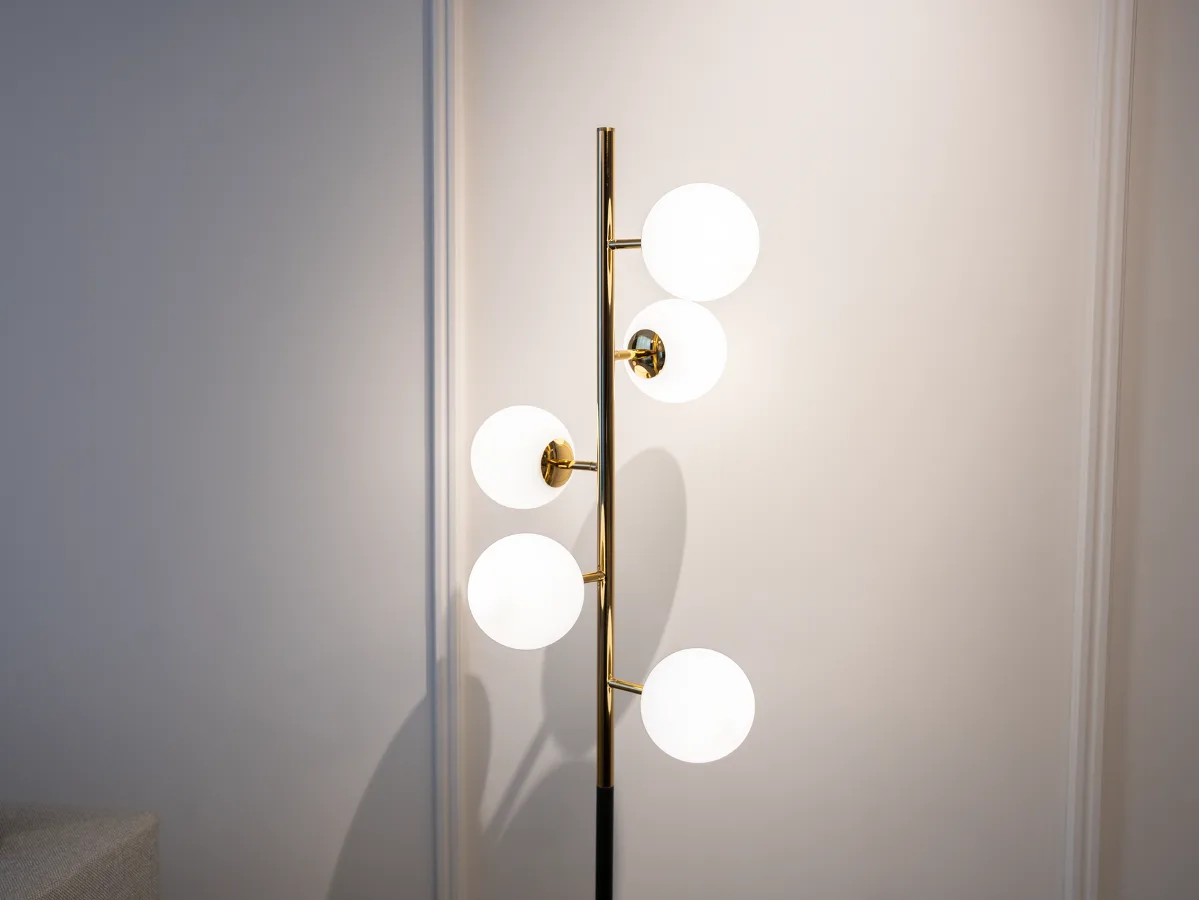
A floor lamp with gold works best when it feels intentional, not shiny for the sake of being shiny. The gold finish should support the room’s palette, complement nearby materials, and suit the type of light you want to create. choosing the right floor lamp height offers more detail on this point.
If you are shopping for one, the main question is not just whether the lamp looks good online. It is whether the finish, scale, shade, and silhouette will hold up in your space once it is next to your sofa, side table, rug, and wall color.
Why a gold floor lamp works so well in decor
Gold adds visual warmth. Compared with black, chrome, or matte white, it often softens a room and brings a more layered, finished look. That is part of why gold floor lamps show up so often in living rooms, bedrooms, reading corners, and entryway vignettes. swing arm floor lamp offers more detail on this point.
There is also a common misconception that gold automatically means ornate or traditional. That is not always true. A slim stem, simple drum shade, or arched silhouette can look clean and modern even with a metallic finish. The result depends more on the lamp’s shape and proportions than on the color alone.
Key factors to compare before you buy
1. Finish quality matters more than the word “gold”
Not every gold finish reads the same in a room. Some finishes look muted and brushed, while others are brighter and more reflective. That difference affects whether the lamp feels understated, glam, vintage-inspired, or contemporary.
For a subtle look, brushed or satin finishes are usually easier to live with because they tend to hide fingerprints and visual noise better than mirror-like surfaces. A highly polished finish can work too, but it usually needs more surrounding balance so the room does not start to feel overly metallic.
Also consider whether the finish looks closer to brass, champagne gold, or antique gold. Those tones can make a noticeable difference once the lamp is paired with wood furniture, marble surfaces, boucle upholstery, or darker paint colors.
2. Scale should match the room, not just the corner
A floor lamp can look elegant in isolation and still feel wrong in context. The most useful size check is how the lamp will sit next to nearby furniture.
If the lamp is going beside a sofa, chair, or console, its height and visual weight should feel proportionate to those pieces. A tall, narrow lamp can disappear next to oversized seating. A large arched lamp can overwhelm a compact nook if the base or arm extends too far into the room.
Many shoppers focus on the finish and ignore the footprint. That is a mistake. In smaller rooms, the base size and arm reach matter just as much as the decorative look.
3. Shade style changes both the look and the light
The shade determines how much light the lamp throws and how formal it feels. This is one of the most overlooked parts of the decision.
- Drum shades usually feel relaxed and modern.
- Empire shades often lean more traditional.
- Globe or globe-inspired tops can create a softer, more sculptural profile.
- Open or exposed bulb designs feel more decorative, but they may not be ideal if you want softer ambient lighting.
Shade material also matters. Fabric tends to diffuse light more gently, while glass or metal components can create a sharper, more directional effect. If you want the lamp to work as a reading light, think about how the shade directs illumination, not just how it photographs.
4. Light output should match the room’s purpose
Some gold floor lamps are primarily decorative. Others are better suited for reading or task lighting. The distinction is practical, and it is worth deciding before you buy.
If the lamp is meant to brighten a seating area, look for a design that directs light where you need it. An arc lamp may work well over a chair, while a torchiere-style lamp can help bounce light upward for general ambient lighting. If you just want an accent piece, softer light and a more sculptural form may be enough.
Do not assume every attractive floor lamp will work as a functional light source. A lamp can be beautiful and still be poorly suited to reading, working, or everyday use if the shade blocks too much light or the bulb sits too low.
5. The base should feel stable and visually balanced
Gold finishes are often used on slender frames, which makes the base especially important. A base that is too light, too narrow, or too visually delicate can look elegant but feel less grounded in a busy household.
If the lamp will be placed near traffic paths, pet activity, or kids’ play areas, stability should move up your list. A heavier base or a lower center of gravity can make the lamp feel safer and easier to live with. If the lamp has a slim silhouette, the rest of the design should still feel sturdy rather than top-heavy.
6. Style compatibility is about the whole room
A floor lamp with gold can bridge different decor styles, but it still needs context. The most successful pairings usually come from repeating the finish or echoing the shape elsewhere in the room.
For example, gold can look cohesive with:
- brass picture frames
- gold hardware on cabinets or side tables
- warm wood tones
- cream, ivory, taupe, or oatmeal upholstery
- black metal accents for contrast
- glass tabletops and marble details
If your room already has several competing metals, a gold floor lamp can still work, but the finish should feel deliberate rather than accidental. Mixed-metal spaces look best when one tone leads and the others act as accents.
Practical ways to choose the right one
For a living room
In a living room, a gold floor lamp often acts as both lighting and decor. That means it should relate to the sofa, coffee table, and nearby wall art.
If the room is neutral, gold can add just enough warmth to keep the space from feeling flat. If the room already has strong color, a simpler lamp shape may be the better choice so the room does not become visually crowded.
For reading corners, choose a lamp that delivers usable light without glare. For lounge seating, prioritize overall ambiance and silhouette. For a formal living room, a more polished gold finish may feel appropriate. For a casual family room, a simpler matte or brushed finish is often easier to integrate.
For a bedroom
Bedroom lighting usually needs a calmer touch. A gold floor lamp can add a soft metallic accent without making the room feel overly decorative. gold accent lighting offers more detail on this point.
Look for a lamp that feels proportional to the bed and nightstands. If the room is compact, a slim design can keep the space open. If the lamp will replace a table lamp, make sure the height and shade angle make sense for nighttime reading or general use.
A subdued gold finish is often a smart choice in bedrooms because it blends easily with linens, upholstered headboards, and softer color palettes.
For a small space
In smaller rooms, the challenge is not finding a lamp with gold. It is finding one that adds style without adding clutter.
Choose a streamlined frame, a smaller base, and a shade that does not block sightlines. Arched lamps can work beautifully in compact spaces if the curve is controlled and does not intrude too far into the room. On the other hand, an oversized statement lamp may look impressive but reduce the room’s sense of openness.
A common mistake in small spaces is choosing a highly reflective finish that draws too much attention to itself. A softer gold tone often performs better because it adds interest without dominating the room.
Trade-offs worth considering
Gold is versatile, but it is not always the easiest finish to live with. Reflective surfaces can show fingerprints, dust, and smudges more quickly than matte finishes. If the lamp sits near a window, the finish may also reflect daylight in ways that either enhance or distract from the room.
Another trade-off is between style and utility. Decorative gold floor lamps can create a strong focal point, but they are not always the best choice for direct task lighting. If your main priority is reading or work light, do not let the finish distract from the shape of the lamp head and the direction of the beam.
There is also a balance between trend appeal and longevity. A very distinctive gold lamp can look current now, but a cleaner silhouette will usually stay easier to style over time. If you want a piece with long-term value, restraint often wins.
Good alternatives if gold is not quite right
If you like the warmth of gold but want a different feel, a few alternatives are worth considering.
- Brass floor lamps often read a little richer and more traditional.
- Antique gold finishes can feel softer and less glossy.
- Black and gold combinations create stronger contrast and work well in modern interiors.
- Bronze or bronze-toned lamps can be a better fit if you want warmth without a bright metallic look.
- Matte neutral lamps are better if you want the lamp to fade into the room rather than stand out.
The best choice depends on whether you want the lamp to act as a focal point, a supporting accent, or a quiet functional object.
Common mistakes people make when buying one
- Choosing the finish before the scale: a beautiful gold lamp can still feel wrong if it is too tall, too short, or too bulky for the space.
- Ignoring the shade: the shade changes both the lighting effect and the overall style.
- Buying for photos instead of the room: bright gold can look great online but overpower a softer interior.
- Forgetting about placement: a lamp that works beside one chair may not work next to a sectional or low-profile sofa.
- Overlooking maintenance: some finishes need more wiping and care than others.
- Mixing too many competing metals: a gold lamp can anchor a space, but too many finishes without a plan can make the room feel fragmented.
Decision guide: which gold floor lamp fits your space?
If you want a decorative accent, look for a sculptural silhouette, a refined finish, and a shade that complements the room without competing with it.
If you want a reading lamp, focus on light direction, shade openness, and height. Style still matters, but function should lead.
If you want a versatile everyday piece, a brushed or satin gold finish and a simple frame are usually the safest starting point. They are easier to coordinate and less likely to feel dated.
If your room already has plenty of warmth from wood, textiles, and soft color, choose a more restrained gold tone. If the room feels flat or visually cold, a richer metallic finish can add needed contrast.
The most dependable approach is to treat the lamp as part of the room’s material palette. Consider the furniture finish, wall color, rug texture, and existing hardware before deciding. That way, the lamp contributes to the design instead of competing with it.
Final take
A floor lamp with gold is a strong choice when you want warmth, polish, and a little visual lift. The best one for your space will not just look attractive in isolation; it will suit the room’s scale, lighting needs, and surrounding finishes.
If you compare finish quality, shade style, proportions, and placement before buying, you are much more likely to end up with a lamp that feels like it belongs rather than a decorative afterthought.