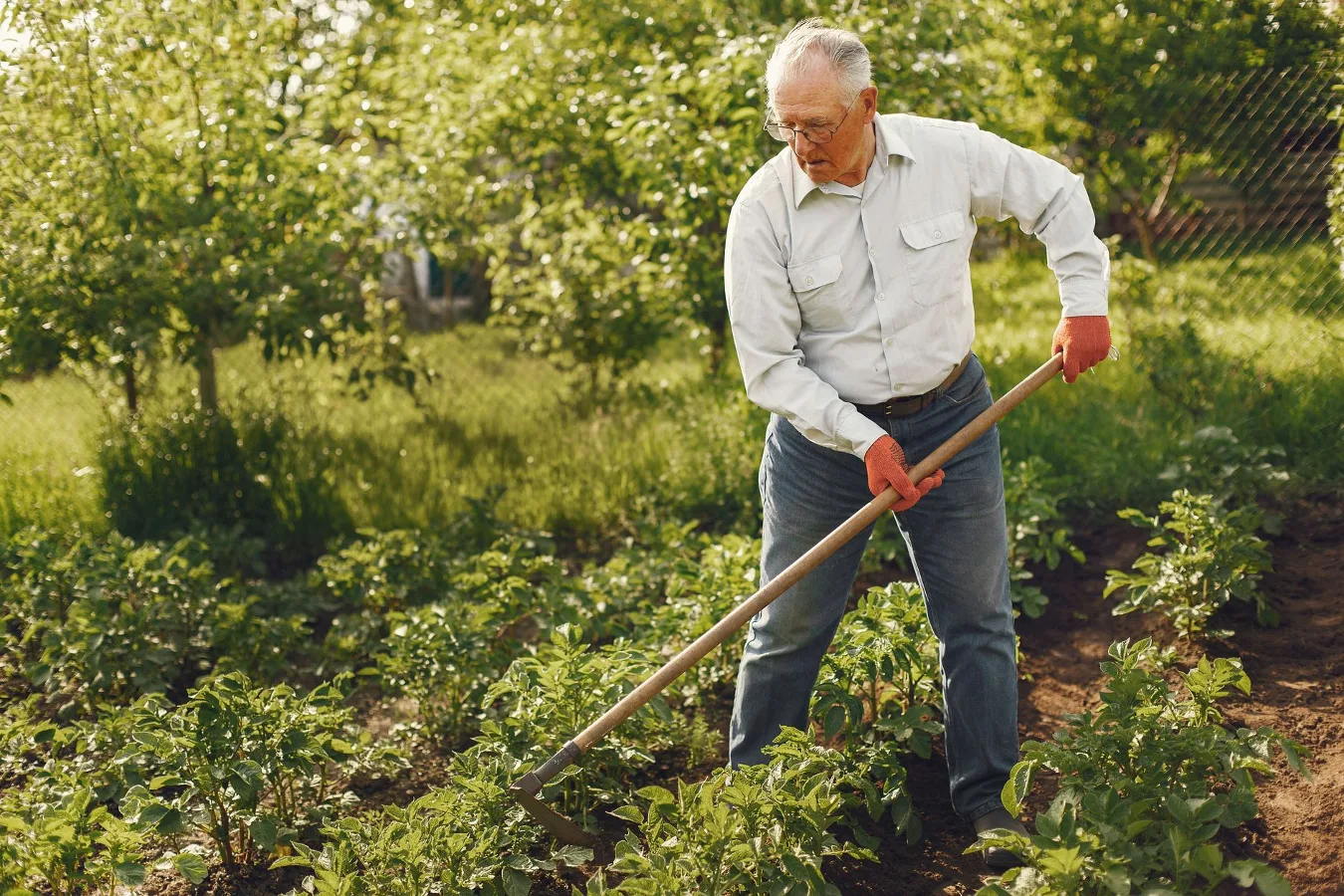
The best garden tool for weeding is the one that matches your weed type, soil conditions, and how you prefer to work. For most home gardeners, that means choosing between a hand weeder, a hoe, a stirrup hoe, or a long-handled weed puller rather than looking for one universal tool that does everything well. Japanese Garden Tool Guide for Buyers offers more detail on this point.
If you want the short answer: use a hand weeder or weed knife for tight spots and deep-rooted weeds, a hoe or stirrup hoe for larger beds and repeated surface weeding, and a long-handled puller if you want to reduce bending. The right choice depends less on brand hype and more on the garden you actually have.
Quick way to choose the right weeding tool
Start with the kind of weeds you need to remove. Shallow weeds that pop up in loose soil are easiest to handle with a hoe or stirrup hoe. Deep-rooted weeds, especially those with a taproot, usually call for a tool that can get under the root rather than simply slicing the top off. If you are working around vegetables, perennials, or closely planted flowers, a narrow hand tool gives you better control.
Then think about the physical setup of your garden. Raised beds, narrow paths, and containers favor compact tools. Large in-ground beds favor long-handled tools because they cover more area and reduce repeated crouching. For gardeners who deal with back, knee, or wrist strain, handle length and grip comfort may matter more than blade shape.
A useful rule of thumb: the best weeding tool is the one that reaches the weed without damaging nearby roots or forcing you into an awkward position.
Common weeding tools and what each does best
Hand weeder or dandelion weeder
A hand weeder is a narrow, pointed tool designed to slip into the soil near the weed’s crown and lift the root. It is especially helpful for taproot weeds such as dandelions and similar plants that return if the root is left behind. This is one of the best options for spot weeding in beds, borders, and tight spaces.
Best for: deep-rooted weeds, precise removal, container gardens, and crowded planting areas.
Trade-off: it is slower than a hoe and usually requires more bending.
Weed knife
A weed knife is a slim, often serrated tool that works well for cutting roots, loosening weeds in cracks, and getting into compacted spots. It is especially handy along pavers, edging, and seams where larger tools cannot fit. Some gardeners prefer it for stubborn weeds in hard soil because the blade can cut and pry in a controlled way.
Best for: cracks, edging, compacted soil, and precision work.
Trade-off: less efficient for large areas and not ideal for very dense growth.
Garden hoe
A traditional hoe lets you cut weeds just below the soil surface with a push, pull, or chopping motion depending on the design. It works well for open garden beds and regular maintenance when weeds are still small. Used early and often, a hoe can keep weed pressure down without much strain on your hands. seasonal garden maintenance guide offers more detail on this point. garden bed maintenance tips offers more detail on this point.
Best for: broad beds, row crops, and routine maintenance.
Trade-off: it is not the best choice for tightly planted areas or deep-rooted weeds that need lifting.
Stirrup hoe
A stirrup hoe, sometimes called a scuffle hoe, has a looping blade that moves just under the surface as you push and pull it. Many gardeners like it because it can feel efficient and low-effort on loose or moderately cultivated soil. It is especially useful for removing small weeds before they become established.
Best for: fast surface weeding, larger beds, and repeated maintenance.
Trade-off: it is less effective on large weeds, woody stems, or very rocky soil.
Long-handled weed puller
A long-handled weed puller is designed to reduce bending and can be a strong option for gardeners who want to work upright. Some styles use claws or prongs to grip the weed at the root zone. These tools can be helpful in lawns and open areas, though they are usually less precise around delicate plantings.
Best for: reducing strain, open spaces, and repeated use in larger areas.
Trade-off: bulkier to store, and sometimes less useful in crowded beds.
Comparison: which tool fits which garden?
| Tool | Best use case | Strengths | Limitations |
|---|---|---|---|
| Hand weeder | Deep-rooted weeds in beds and borders | Precise, effective on taproots, good control | Slower, requires bending |
| Weed knife | Cracks, edging, compacted spots | Fits tight spaces, versatile for detail work | Not ideal for large areas |
| Garden hoe | Open beds and row plantings | Covers ground quickly, good for routine use | Less precise near desirable plants |
| Stirrup hoe | Small surface weeds across larger beds | Efficient, lightweight feel, good for maintenance | Struggles with large or established weeds |
| Long-handled puller | Open spaces and reduced-bending gardening | More ergonomic, easier on back and knees | Less precise, may be awkward in tight beds |
The table makes one thing clear: the best tool is rarely the same for every task. Many gardeners end up with two or three weeding tools rather than relying on one all-purpose option. That is not overbuying; it is matching the tool to the job.
What matters most before you buy
Soil type
Soil changes how a weeding tool performs. Loose, well-worked soil is easier for nearly every tool. Heavy clay can make pulling and prying harder, so a sturdy hand weeder or weed knife may be more useful than a light tool that flexes. Rocky soil can also interfere with blades and tines, making precision and durability more important than speed.
Weed size and root style
Small seedlings are easiest to remove with shallow cutting tools. Mature weeds with strong roots need a tool that can get under the crown or lever the root out intact. One common mistake is waiting too long; once weeds are larger, they often require more force and can be harder to remove cleanly.
Garden layout
Raised beds, borders, and container plantings reward narrow, controlled tools. Open vegetable rows and larger in-ground beds make longer-handled tools much more practical. If your garden has winding paths, edging, or pavers, a weed knife may save time where broader tools cannot reach.
Comfort and leverage
Handle shape, grip texture, and tool weight can matter as much as the blade. A tool that feels fine in the store may become tiring after repeated use. If you have wrist sensitivity, a tool with a comfortable grip and natural leverage is worth prioritizing. If kneeling is difficult, look first at long-handled options before focusing on blade style.
Maintenance and durability
A good weeding tool should be easy to clean and durable enough to handle soil, moisture, and repeated use. Tools with simple metal heads and sturdy connections tend to be easier to maintain than lightweight tools that feel flimsy. If a tool has moving parts, think about whether you are willing to clean and care for them regularly.
Mistakes to avoid when choosing a weeding tool
- Choosing by appearance alone. A tool that looks efficient may not suit your soil or weed type.
- Using a broad tool in tight spaces. This often damages nearby roots and makes the job harder.
- Ignoring handle length. A short handle can be inconvenient if you weed often or have limited mobility.
- Expecting one tool to do everything. A hand weeder, hoe, and weed knife each solve different problems.
- Waiting until weeds are large. Small weeds are far easier to remove, especially with surface-cutting tools.
- Overlooking storage and cleaning. Soil buildup can shorten tool life and make future use less comfortable.
Useful alternatives if you want less manual pulling
If you dislike hand-pulling, you still have options. A stirrup hoe can remove small weeds with less repetition than a hand tool. A long-handled weed puller reduces bending. For cracks and narrow seams, a weed knife may be enough to keep the area tidy without much digging.
There is also a practical reality many gardeners learn over time: the best weeding strategy is often a combination of tools plus regular maintenance. That usually works better than waiting for one “perfect” product to solve every weed problem.
How to think about value, not just price
A cheaper tool can be fine if you only weed occasionally or have a small space. But value is not only about the purchase price. It also includes comfort, how often you will use the tool, and whether it actually fits the work in front of you. A tool that saves your back or cuts weeding time in half may be the better long-term choice, even if it is not the least expensive option.
At the same time, expensive does not automatically mean better. For many gardeners, a simple, well-made hand weeder or hoe does more practical work than a specialized tool with extra features that do not match the garden.
Best choice by scenario
- For dandelions and taproots: a hand weeder or dandelion weeder.
- For cracks and edging: a weed knife.
- For large beds and frequent maintenance: a hoe or stirrup hoe.
- For less bending and more comfort: a long-handled weed puller.
- For raised beds and containers: a compact hand tool with precise control.
FAQ
What is the easiest garden tool for weeding?
The easiest tool depends on your garden layout. For many people, a stirrup hoe is easiest for larger beds because it works quickly with less effort. For precise jobs, a hand weeder is easier because it targets the root directly.
Is a hoe better than a hand weeder?
Neither is universally better. A hoe is better for covering more ground and removing small weeds early. A hand weeder is better for deep-rooted weeds and tight spaces where precision matters.
What tool works best for weeds in cracks?
A weed knife is usually the most useful option for cracks, edging, and narrow seams. Its slim shape helps reach into places where wider tools cannot fit.
Do long-handled weeders really help with back strain?
They can help because they reduce bending, but comfort depends on the tool’s weight, handle design, and how much force the job requires. A long handle is helpful, but it is not always the best choice for detailed work.
Can one weeding tool handle every job?
Usually not very well. Most gardens are easier to manage with at least two tools: one for precision work and one for broader maintenance.
If you are choosing just one tool to start with, pick the one that matches your most common weeding problem. For many home gardens, that is either a hand weeder for precision or a stirrup hoe for regular surface maintenance. From there, you can add a second tool only if your garden layout truly needs it.