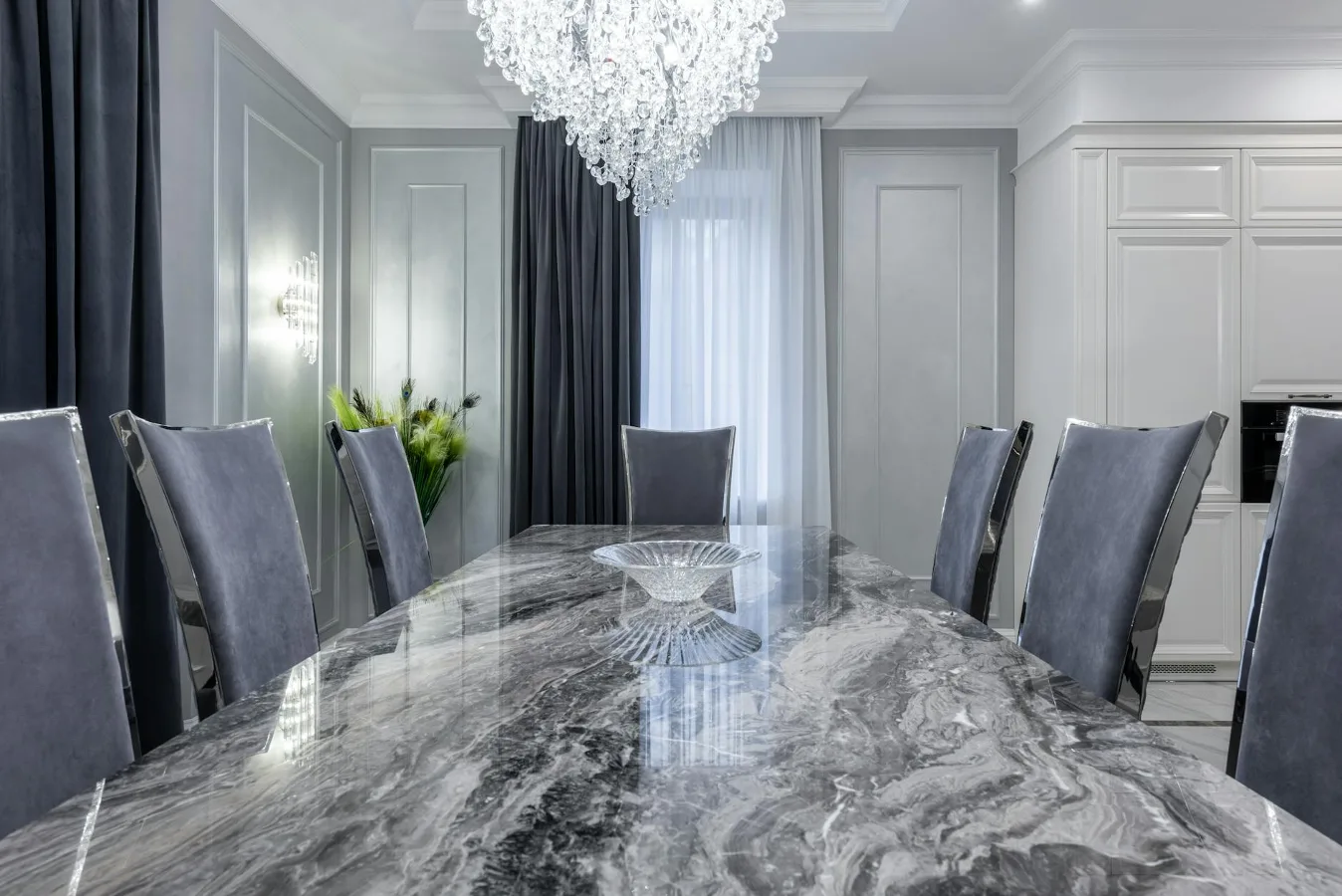
When a marble dining table makes sense
A marble dining table is best viewed as both a furniture piece and a surface that asks for a little more care than wood, laminate, or many engineered materials. It suits buyers who want a refined look, a cool natural stone surface, and a table that can anchor the dining room visually. walnut dining table offers more detail on this point.
That said, marble is not automatically the right choice just because it looks elegant. The best time to choose it is when you want a table that feels substantial, you are comfortable with regular upkeep, and the room can support its visual weight. In homes where the dining table doubles as a homework station, craft table, or everyday catch-all, the material’s maintenance needs matter more than the styling payoff.
A marble table can work especially well in formal dining rooms, open-plan spaces that need a focal point, and homes where the table is used thoughtfully rather than roughly. If you are shopping for one, the real question is not whether marble is beautiful. It is whether marble matches the way you actually live.
Step-by-step: how to judge a marble dining table
1. Start with how the table will be used
Begin with use case, not appearance. A marble top can be a strong fit for occasional entertaining, seated dinners, and rooms where the table is not exposed to constant spill risk. It is a less forgiving choice for households that frequently place hot dishes directly on the surface, move heavy objects around carelessly, or leave drinks sitting out for long periods.
Ask yourself a few practical questions: Will children use the table daily? Will it host laptops and school supplies? Do you prefer a low-maintenance surface you do not have to think about? If the answer to those questions leans yes, the design may still work, but the upkeep burden becomes part of the decision.
2. Check the marble type and finish
Not all marble surfaces behave the same way. Natural marble varies in color, veining, and porosity, which means the same style can look very different from one piece to another. Some finishes feel polished and formal, while honed finishes are usually more understated and can be less reflective.
The finish matters because it changes both the look and the day-to-day experience. A polished top may show etching, smudges, and glare more readily. A honed finish can be a little more relaxed visually, but it may still require sealing and careful cleaning. If you like the marble look but want a more forgiving surface, compare natural stone with stone-look alternatives before deciding.
3. Pay attention to the base, not just the top
The base does more than hold the table up. It affects legroom, stability, and how the table feels in the room. A pedestal base can make seating easier at the corners and ends, which is helpful for round or oval tables. A four-leg base can look lighter and may be easier to pair with many chair styles, but it can also limit flexible seating depending on placement.
This is one of the most overlooked considerations in dining table shopping. People often focus on the stone top and then realize the base interferes with chair placement or crowding in the dining room. Before buying, think about how many seats you actually want to use and whether the base leaves enough knee space for everyone. Pedestal Dining Tables: What to Know Before Buying offers more detail on this point.
4. Measure the room with the table in mind
Marble tables often look substantial, so scale matters. A table that is technically the right size may still overwhelm a compact room if the shape is too heavy or the base is too bulky. In a smaller dining area, a round marble dining table or a slim oval design can feel less severe than a large rectangular piece. dining table size guide offers more detail on this point.
Also consider circulation around the table. Dining rooms need room for chairs to pull out and for people to move behind seated guests. If the table sits too close to a wall or sideboard, the stone surface can make the room feel compressed. Visual lightness matters as much as physical dimensions.
5. Decide how much maintenance you are willing to do
Marble is often chosen for its appearance, but maintenance is what determines whether the table remains enjoyable over time. Natural stone typically needs more attention than nonporous surfaces. Spills should be cleaned promptly, and the surface should be cared for in a way that fits the specific marble and finish.
This does not mean marble is fragile in a dramatic sense. It means the surface rewards routine care. If you want something you can wipe down and forget, a marble-look alternative or another sealed material may be a better fit. If you are comfortable with a little extra caution, the trade-off may feel worthwhile.
What marble does well
Marble earns its place in dining rooms because it delivers a distinct balance of elegance, texture, and visual impact. It can brighten a room, especially when paired with lighter walls, wood chairs, brass accents, or soft upholstered seating. It also works across more than one style, from classic to modern to transitional.
A marble dining table also creates a sense of permanence. Even in a room with simpler furniture, a stone top signals that the space has a clear focal point. That can be useful in open-plan homes where the dining area needs definition without adding extra decor.
Another strength is versatility in styling. Marble pairs well with dark wood for contrast, metal for a sharper contemporary feel, and woven or upholstered chairs for a softer look. Because the material has movement and veining built in, it can reduce the need for a lot of decorative layering.
Where marble tends to fall short
The main drawback is that marble asks for more care than many shoppers expect. It can be sensitive to acidic spills, and some finishes show wear more visibly than others. That does not make it a bad material, but it does mean the table will shape how the room is used.
Weight is another real-world constraint. Marble furniture is heavy, which can make moving, repositioning, or assembling the table more difficult. This matters if you rent, rearrange furniture often, or have narrow stairways and tight doorways to navigate.
There is also a common misconception that a marble table is always practical because it is sturdy. Sturdy and low-maintenance are not the same thing. A heavy top can feel dependable while still being less tolerant of everyday spills, scratched surfaces, and casual neglect than some buyers assume.
Types and styles that are easiest to live with
If you want the marble look with fewer frustrations, the table style matters as much as the material itself.
- Round marble dining tables work well in smaller rooms and can make conversation feel easier.
- Oval tables soften the look of stone and can seat guests more fluidly than a similarly sized rectangle.
- Pedestal bases help maximize legroom and often make seating arrangements more flexible.
- Mixed-material designs with wood or metal bases can visually lighten the table and make it easier to blend into the room.
- Marble-look surfaces may suit buyers who want the aesthetic without the care requirements of natural stone.
For many homes, the best choice is not the most dramatic one. It is the version that fits seating needs, room size, and the amount of upkeep you are willing to accept.
Practical alternatives worth considering
Natural marble is only one route to a refined dining room. If you are drawn to the look but not the upkeep, a few alternatives deserve a close look.
Marble-look tables can deliver a similar visual effect with easier cleaning and less concern about staining. Sintered stone is another popular option in contemporary furniture because it is designed for durability and low maintenance, though the exact feel and appearance differ from natural marble. Travertine offers a softer, more matte stone character for buyers who want natural material without the same polished impression. Wood tops, especially in lighter finishes, can also give a room warmth while staying easier to live with day to day.
The right alternative depends on what you value most: visual richness, durability, maintenance simplicity, or budget flexibility. If your top priority is ease, marble may not be the most practical answer. If your priority is atmosphere and you are comfortable with care, it may be worth it.
A simple checklist before you buy
- Confirm the table shape fits the room and the seating plan.
- Check whether the base leaves enough knee room for all intended seats.
- Decide whether natural marble or a marble-look surface better matches your maintenance tolerance.
- Consider how often the table will be used for meals versus work, crafts, or casual drop-off.
- Look at the finish and think about how much visual wear you are willing to see.
- Plan for delivery, assembly, and the weight of the piece.
- Match the table to chairs that will not make the room feel crowded.
- Think about whether the room needs a statement piece or a quieter surface.
This checklist helps separate a beautiful photo from a good long-term choice. A marble dining table can be excellent when the room, lifestyle, and maintenance expectations line up. If they do not, the table may still look good on arrival but become inconvenient over time.
Common mistakes shoppers make
One frequent mistake is choosing marble purely for style and discovering later that the dining room is too small for the table’s visual weight. Another is overlooking the base and ending up with awkward chair spacing or poor legroom.
Shoppers also sometimes assume all marble surfaces behave similarly. In reality, finish, veining, and the specific stone all influence how the table looks and how much care it needs. A polished white table and a honed darker stone table can age and wear differently in everyday use.
Finally, some buyers underestimate how much their habits matter. A marble table in a low-traffic dining room can be a pleasure. The same table in a busy multipurpose space may feel demanding unless you are comfortable treating it as a more carefully used surface.
Who should choose marble, and who should skip it
A marble dining table makes the most sense for buyers who want a visually strong centerpiece, are comfortable with regular care, and use the dining room in a fairly considered way. It is a strong fit for formal dining rooms, style-focused interiors, and homes where the table is part of the room’s overall design story.
It is less compelling for households that need a highly forgiving surface, want minimal maintenance, or use the dining table for rough daily tasks. In those cases, a different material may create a better experience even if it feels less special at first glance.
The best decision is not the one that sounds the most luxurious. It is the one that matches your room, your routine, and your willingness to maintain the surface. If those three things line up, a marble dining table can be one of the most distinctive pieces in the home.