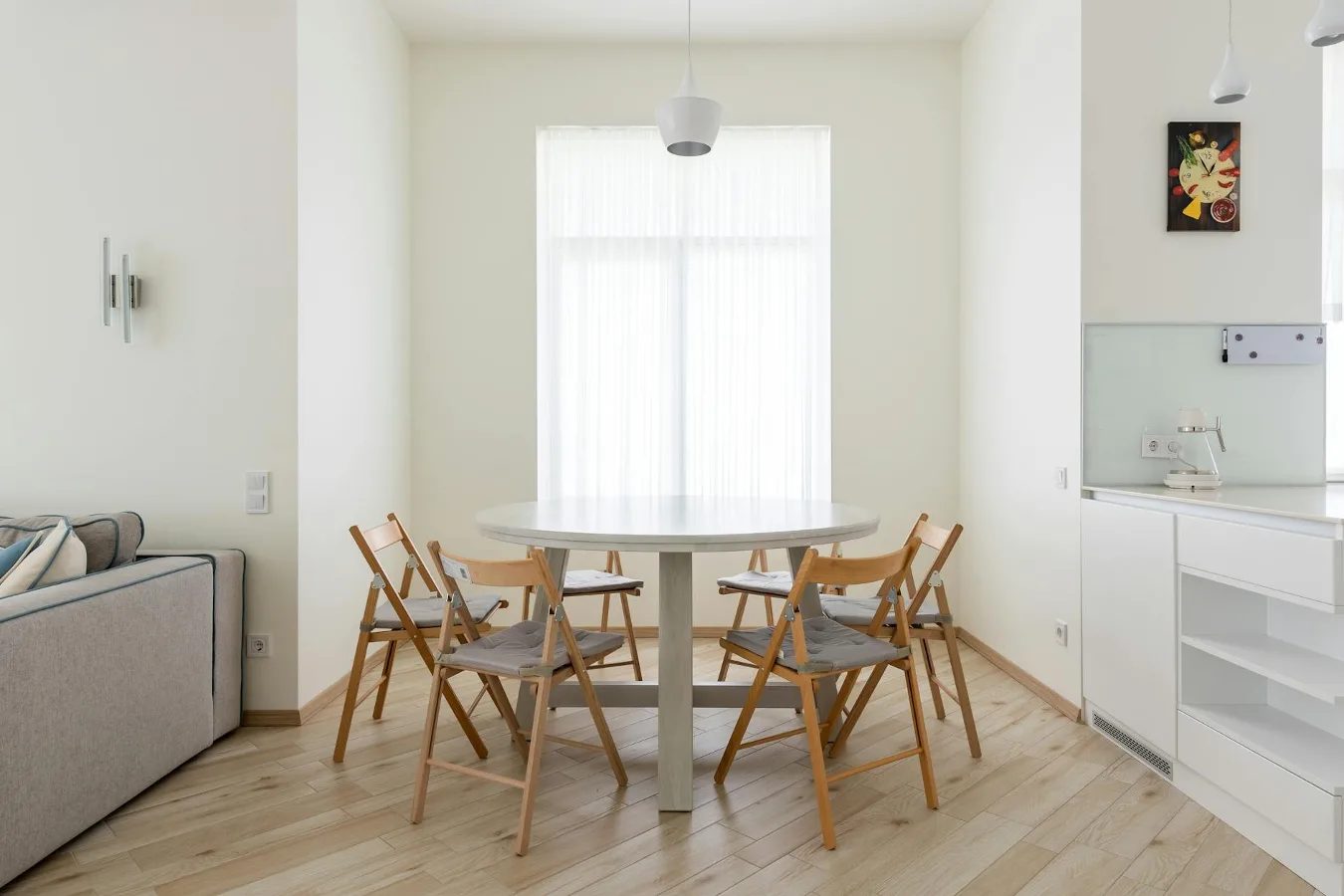
Why a round dining table with leaf works so well
A round dining table with a leaf is a practical choice for people who want a table that feels comfortable day to day but can expand for guests, holidays, or project work. The round shape keeps conversations easy and makes smaller dining areas feel less rigid, while the leaf adds flexibility that a fixed-size table cannot match. how to choose dining table size offers more detail on this point.
That combination is the main appeal: you get the visual softness and easy traffic flow of a round table, plus the extra surface area that can make entertaining much simpler. For many homes, especially apartments, condos, breakfast nooks, and multipurpose dining rooms, that flexibility is the deciding factor.
The trade-off is that extendable tables usually ask you to think more carefully about sizing, leaf storage, base style, and how often you actually need the extra length. A round table with a leaf can be an excellent fit, but only if the extension mechanism and proportions suit your space.
Key factors that matter before you buy
Room layout and clearance
The first question is not how many people the table can seat. It is how much room you have around it. A round table depends on surrounding clearance so chairs can pull out comfortably and people can move behind seated guests without squeezing through.
Measure the dining zone, not just the table footprint. Also account for nearby furniture such as buffets, consoles, kitchen islands, radiators, and door swings. A leaf can be useful only if the expanded table still leaves workable walking space.
How often you will use the leaf
Some households extend the table only a few times a year. Others use the leaf regularly for homework, work-from-home tasks, game nights, or family meals. That difference matters because a table with a complicated setup can feel frustrating if you need the extension often.
If you expect frequent changes, look closely at how the leaf is added, whether one person can manage it alone, and whether the table stays stable in both sizes. A simple, well-balanced mechanism is usually more useful than a dramatic-looking design that is awkward to operate.
Leaf type and storage
Not all leaves work the same way. Some are separate pieces that must be stored elsewhere. Others fold or tuck into the table itself. Many buyers overlook storage until after delivery, which can become a real annoyance if the leaf has no home.
If your home is short on closet or pantry space, internal leaf storage can be a major advantage. If you rarely extend the table, a separate leaf may still be fine, but only if you have a safe place to keep it flat and protected from warping or scratches.
Base style and seating comfort
With round dining tables, the base is as important as the top. A pedestal base often gives more flexible legroom and can make it easier to fit extra chairs around the table. Four-leg designs may feel sturdier or more traditional, but they can also limit how comfortably chairs slide in when the table is extended. dining room table and 4 chair sets offers more detail on this point.
This is one of the most overlooked considerations. A beautiful tabletop does not help much if chair legs and table legs compete for space. Pay attention to the chair placement you expect to use most often, not just the look of the table when it is empty.
Materials and finish
Material choice affects both appearance and maintenance. Solid wood has a warm, established feel and can age beautifully, but it may need more care with moisture and heat. Veneer can offer a refined look at a lower visual weight, though it may be less forgiving if damaged. Painted finishes, laminates, and engineered surfaces each bring different maintenance expectations.
For a table that changes size, finish consistency matters too. You want the leaf to blend naturally with the main top, especially in a round design where mismatched grain or color shifts are more noticeable. Minor variations are common, but dramatic differences can be distracting in a dining room setting.
Practical ways to choose the right table
Start with the seating goal, then test the shape
It helps to decide what the table needs to do most of the time. If it is mainly for daily family meals, prioritize comfort and easy movement. If it also needs to handle guests, think about how many extra place settings you realistically want to add when the leaf is installed.
Round tables create a shared, social setting, but they do not scale forever. Once a table gets too large, a round shape can lose some of its ease because conversation distances increase and the footprint becomes less efficient. If you expect very large gatherings often, a rectangular extendable table may be the better long-term fit.
Check the transition from round to expanded shape
Some round tables extend into an oval or racetrack-like shape. That is normal, but the visual change can surprise buyers who expect the table to keep the same look in every configuration. The expanded shape is often less symmetrical than the closed version, and that may affect how it sits in the room.
Look at both positions before buying, if possible. The table should work visually and functionally with and without the leaf. A table that feels perfect closed but awkward open may not be the best choice for a home that truly needs flexibility.
Match the table to chair style
Chair size influences whether the table feels comfortable. Armless dining chairs usually fit more easily around round tables, while wide upholstered chairs can reduce seating capacity faster than expected. If you already own chairs, check their width and arm height before choosing the table.
This is especially important for staging or furnishing a small home. The table may technically seat a certain number of people, but that count only works if the chairs are compact enough and the room around them still feels usable.
Think about daily maintenance
A dining table should suit real life, not just a styled room. If the table will host meals, laptops, craft projects, or children’s activities, the finish should be easy to wipe and tolerant of routine wear. A highly delicate surface may look refined but become stressful in a busy household.
Also consider how the leaf section will age. If the extension is used often, joints, seams, and alignment become practical concerns. A good-fit table should close cleanly, open smoothly, and stay level without requiring constant adjustment.
Common mistakes people make with extendable round tables
- Choosing by style alone. A round pedestal table can look elegant, but it still has to fit your chairs, traffic paths, and daily routine.
- Ignoring leaf storage. A separate leaf is inconvenient if there is nowhere safe to keep it.
- Forgetting expanded dimensions. The room may fit the closed table but not the extended version.
- Overestimating seating capacity. Comfort depends on chair width, base design, and elbow room, not just a nominal seat count.
- Overlooking the leaf seam. A visible joint is normal, but it should not interfere with dining or feel unstable.
- Buying a finish that is too delicate for daily use. A low-maintenance surface can be more valuable than a harder-to-care-for premium look.
When a round dining table with leaf is the best choice
This style makes the most sense when you want a softer-looking table for everyday meals but also need occasional expansion for guests. It is especially useful in homes where the dining area is part of a larger living space and the table needs to stay visually light.
It is also a strong option if you prefer a more social seating arrangement. Round tables make it easier for everyone to see and talk to each other, which can feel more intimate than a long rectangular table. Adding a leaf gives you that benefit without locking you into a fixed size all the time.
For smaller homes, the table can serve as a compromise between space-saving furniture and entertaining flexibility. That said, the compromise only works if the extension is easy enough to use and the expanded table still fits the room comfortably.
When another table style may be smarter
A round dining table with a leaf is not the automatic answer for every layout. If you need frequent large-capacity seating, a rectangular extendable table often uses space more efficiently. If your room is very narrow, a round shape may make circulation harder even before you add the leaf.
Likewise, if you want the simplest possible setup with the least maintenance, a fixed table may be easier to live with. There is no leaf to store, no mechanism to check, and no need to think about alignment. Sometimes simplicity is the better long-term value.
For especially compact rooms, a drop-leaf table or a smaller round pedestal table without an extension may be the better fit. The right answer depends less on trends and more on how your dining space actually functions. best table shapes for small dining rooms offers more detail on this point.
Practical buying checklist
- Measure the room with the table both closed and extended.
- Confirm how the leaf is stored and handled.
- Check whether the base allows comfortable chair placement.
- Match the finish to your daily maintenance preferences.
- Compare the table in both its everyday and expanded shapes.
- Think about how often you will use the extra seating.
- Make sure the chairs you already own will still work around the table.
FAQ
What is a round dining table with a leaf used for?
It is used to provide a compact round shape for everyday dining and an expanded surface for guests or larger meals. The leaf adds flexibility without requiring a second table.
Is a pedestal base better for a round extendable table?
Often, yes. A pedestal base can make seating more flexible because there are no corner legs to work around. That said, stability and design quality still matter, so the best choice depends on the specific table.
Do round tables with leaves always become oval when extended?
Many do, but not all. Some extension designs create an oval or racetrack-like profile, while others use a different visual transition. It is worth checking the expanded shape before buying.
What should I look for if space is limited?
Focus on the table’s footprint in both configurations, the amount of clearance around it, and whether the leaf stores inside the table. A compact base and easy-to-move chairs can make a big difference.
What is the biggest mistake buyers make?
The most common mistake is measuring only for the closed table and forgetting how much room the extended version needs. The leaf is the selling point, so the room has to work when it is in use, not just when the table is compact.
Choosing with the room, not the catalog, in mind
A round dining table with a leaf is at its best when it solves a specific space problem: the need for a table that feels welcoming every day but can adapt when more people gather. The best options balance easy movement, comfortable seating, sensible storage, and a finish that matches how your household actually uses the table.
If you keep the room dimensions, chair style, leaf mechanism, and everyday upkeep in view, the choice becomes much clearer. That is the real advantage of this category: not just extra size, but usable flexibility with a shape that still feels relaxed and conversational.