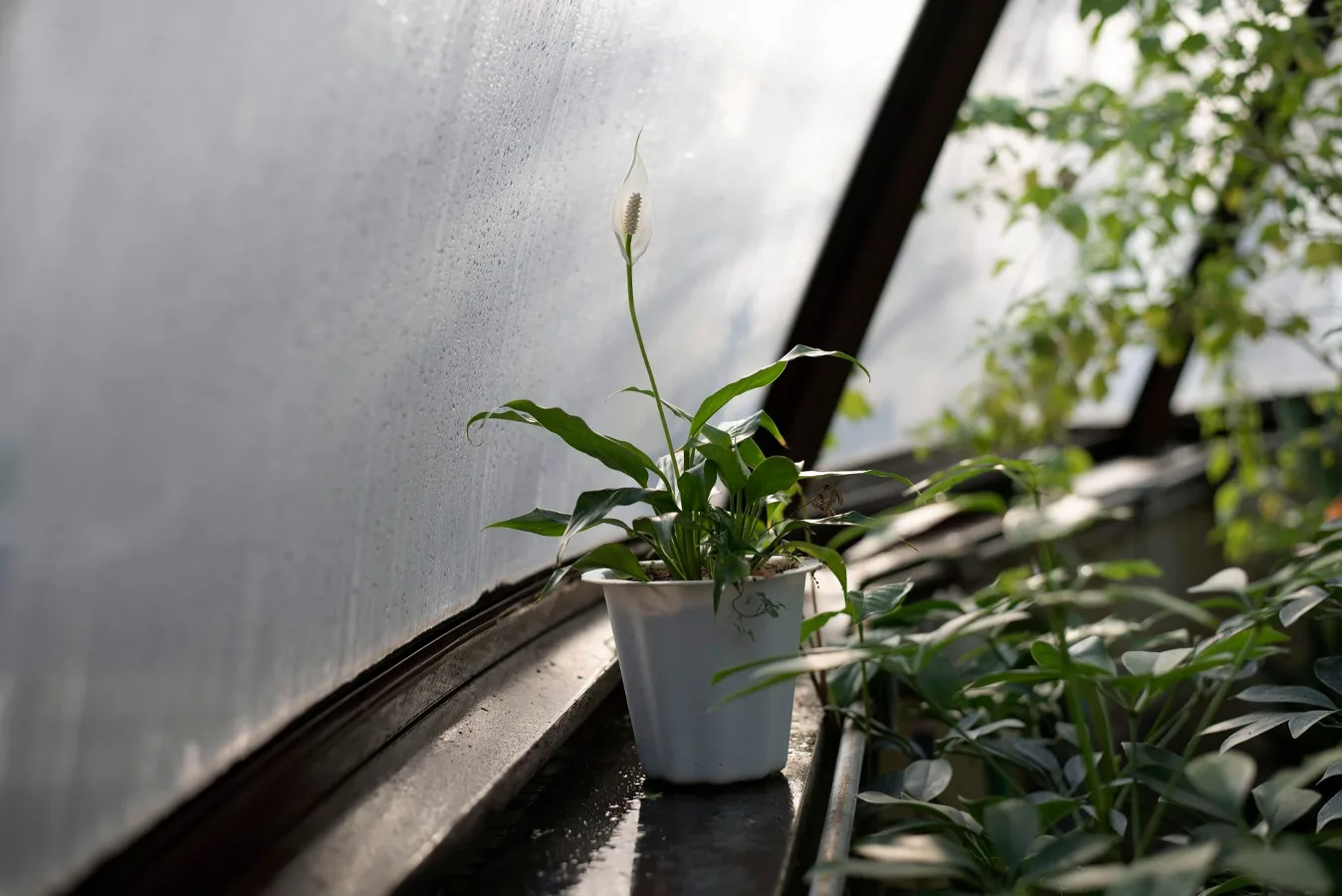
Why a peace lily may need a humidifier
A peace lily can adapt to typical home conditions, but dry indoor air often shows up in the leaves first. If the plant develops brown tips, crispy edges, or starts looking less perky even though the soil is being watered correctly, low humidity may be part of the problem.
A humidifier helps by adding moisture to the surrounding air, which can make the plant’s environment less stressful. That does not replace proper watering, light, or drainage. It simply removes one common source of strain, especially in homes with forced-air heat, air conditioning, or very dry winter air.
The key point is that peace lilies usually do better with consistent moderate humidity than with sporadic misting. A humidifier can create that steadier environment in a way a spray bottle usually cannot.
What to look for in a humidifier for a peace lily
Not every humidifier is equally useful near a houseplant. The best choice is usually one that raises humidity gently and predictably without soaking leaves or surrounding surfaces.
Cool mist is usually the safer fit
For most indoor plant setups, a cool mist humidifier is the most practical option. It avoids heat near the plant and is easier to use in living rooms, bedrooms, or plant shelves. Warm mist units can be less convenient around plants because they are built for different room conditions and may not be ideal in compact plant areas.
What matters most is even moisture in the air, not a dramatic burst of steam. A peace lily does not need a tropical fog effect; it needs a stable, plant-friendly room environment.
Choose output that matches the room, not the plant alone
A common mistake is buying a humidifier based only on the plant size. A peace lily may be small, but the real question is the room it lives in. A compact office, a bedroom shelf, and a large open living room each need a different approach.
If the room is large or drafty, a tiny unit may not make a meaningful difference. If the space is small, an oversized humidifier can make the area damp rather than comfortable. For a peace lily, the goal is balanced humidity around the plant, not excess moisture that lingers on nearby furniture, walls, or windows.
Easy cleaning matters more than many buyers expect
Humidifiers that are difficult to clean often become less useful over time. Mineral buildup, standing water, and neglected tanks can affect performance and indoor air quality. For a plant owner, a device that is simple to empty, wipe, and refill is usually a better long-term choice than one with extra features you will not maintain.
This is an overlooked consideration: the best humidifier for a peace lily is often the one you will actually keep clean. Regular care helps the appliance do its job without introducing avoidable maintenance problems.
How much humidity a peace lily usually prefers
Peace lilies are often described as enjoying higher humidity than many other common houseplants. That does not mean the room must feel tropical. It means very dry air can make the plant look tired, even if everything else seems fine.
Instead of chasing a perfect number, think in terms of consistency and comfort. If your home feels dry enough that your skin, lips, or other plants also seem affected, a peace lily may appreciate the extra moisture. If the room already feels fairly comfortable, the plant may not need much support beyond normal care.
A humidifier is most useful in winter, in heated apartments, near HVAC vents, or in rooms that run dry year-round. In more naturally humid climates, the plant may do well without one unless other conditions are stressful.
Where to place the humidifier
Placement can make a bigger difference than many people expect. Too close, and moisture can settle on the leaves or nearby surfaces. Too far away, and the plant may not benefit much.
Keep it near the plant, but not blowing directly on it
The humidifier should help the air around the peace lily, not blast the leaves with a direct stream. Direct moisture can leave the foliage wet for long periods, which is not the same as raising ambient humidity. It can also create the kind of damp surface conditions that most indoor plants do not need.
A practical approach is to position the humidifier a short distance away in the same room, aiming for broad air support rather than direct contact. If the plant sits on a shelf or plant stand, avoid placing the unit where condensation will repeatedly hit the pot, leaves, or furniture.
Watch for condensation and stagnant corners
Another overlooked issue is room shape. A humidifier in a closed corner may make that area humid while leaving the rest of the room relatively dry. If a window, wall, or shelf regularly collects condensation, the setup may be too intense or too close.
For peace lilies, steady air movement matters as much as added moisture. The plant should benefit from a moister environment without sitting in a pocket of trapped dampness.
Humidifier or misting: which is better?
Misting is popular, but it is not a substitute for a humidifier. A quick spray raises moisture on the leaf surface for a short time, then the effect disappears. A humidifier changes the room air more consistently.
That said, a humidifier is not always required. If your home is only mildly dry, you may get by with better placement, grouping plants together, or moving the peace lily away from heating vents. For more persistent dryness, a humidifier is usually the more reliable tool.
Use misting carefully: it can be helpful as a temporary refresh, but it should not be treated as the main humidity strategy. Wet leaves do not equal healthy humidity, and repeated wetting can become messy without solving the root issue.
Other humidity options that can help
A humidifier is one solution, but it is not the only one. Depending on your space, a simpler setup may be enough.
- Group plants together so they share a slightly moister microclimate.
- Move the peace lily away from vents and drafty windows.
- Use a pebble tray under the pot if you want a passive moisture boost, while keeping the pot above the waterline.
- Place the plant in a naturally more humid room if the light is still suitable.
- Adjust winter care because indoor air often becomes much drier when heating systems run frequently.
These methods can work well for moderate dryness. A humidifier becomes more valuable when the air is consistently dry or the plant shows repeated stress despite otherwise healthy care.
Signs the setup is helping
It can take time to see whether the environment is improving, and the plant will not always bounce back immediately. Still, a better humidity setup often shows a few useful signs.
- Leaf edges stop browning as quickly
- The plant looks less limp between waterings
- New growth appears healthier than older stressed leaves
- The room feels less uncomfortably dry
Existing damaged leaves usually do not repair themselves. The better indicator is whether new growth looks steadier and the plant stops declining.
Common mistakes with humidifiers and peace lilies
Many humidity problems come from using the right appliance in the wrong way.
Over-humidifying the room
More moisture is not always better. If the room becomes too damp, you may create problems for the plant, the furniture, or the surrounding space. Peace lilies like humidity, but they still need a balanced indoor environment. A humidifier should improve comfort, not make the room feel wet.
Putting the humidifier too close
Direct spray can leave droplets on leaves and nearby surfaces. That can be messy and can encourage conditions that are different from the steady humidity a peace lily prefers.
Ignoring the water quality and cleaning routine
Hard water and neglected tanks can reduce performance and create maintenance issues. If a humidifier is part of your plant care routine, the routine should include regular cleaning and refilling. A device that is easy to maintain will usually serve you better than a more complicated one that gets skipped.
Assuming humidity solves every leaf issue
Brown tips are not always caused by dry air. Watering inconsistency, mineral buildup from tap water, poor drainage, too much direct sun, or stress from temperature swings can also affect a peace lily. A humidifier is one piece of the picture, not a cure-all.
How to decide if a humidifier is worth it
The decision usually comes down to the room, the season, and how the plant is behaving.
A humidifier makes sense if your peace lily is in a dry room, the heating or cooling system runs often, and the plant keeps showing signs that suggest air dryness is part of the problem. It also makes sense if you care for several humidity-loving houseplants and want one practical appliance to support all of them.
You may not need one if the room already feels comfortably humid, the plant is thriving, or the issue is clearly something else such as poor drainage or too much direct light. In that case, the better fix may be adjusting the plant’s location or watering routine rather than adding another appliance.
For many households, the best approach is incremental: start with placement changes, watch the plant, and add a humidifier only if dry air still seems to be the limiting factor.
A practical setup that works for most homes
If you want a simple starting point, think in terms of one room, one plant zone, and one routine. Place the peace lily where it gets the right light, keep it away from vents, and use a cool mist humidifier nearby if the air is dry. Clean the unit regularly and check that the leaves are not staying wet.
That approach is often more effective than trying to create a perfect tropical environment. Peace lilies usually respond best to stable, moderate care. The goal is not to pamper the plant, but to remove the stress that dry indoor air can add.
A humidifier for a peace lily is most useful when it supports the plant’s environment without creating new maintenance chores. Choose a unit that fits the room, keep it clean, and use it as part of a broader indoor plant care routine rather than a standalone fix.