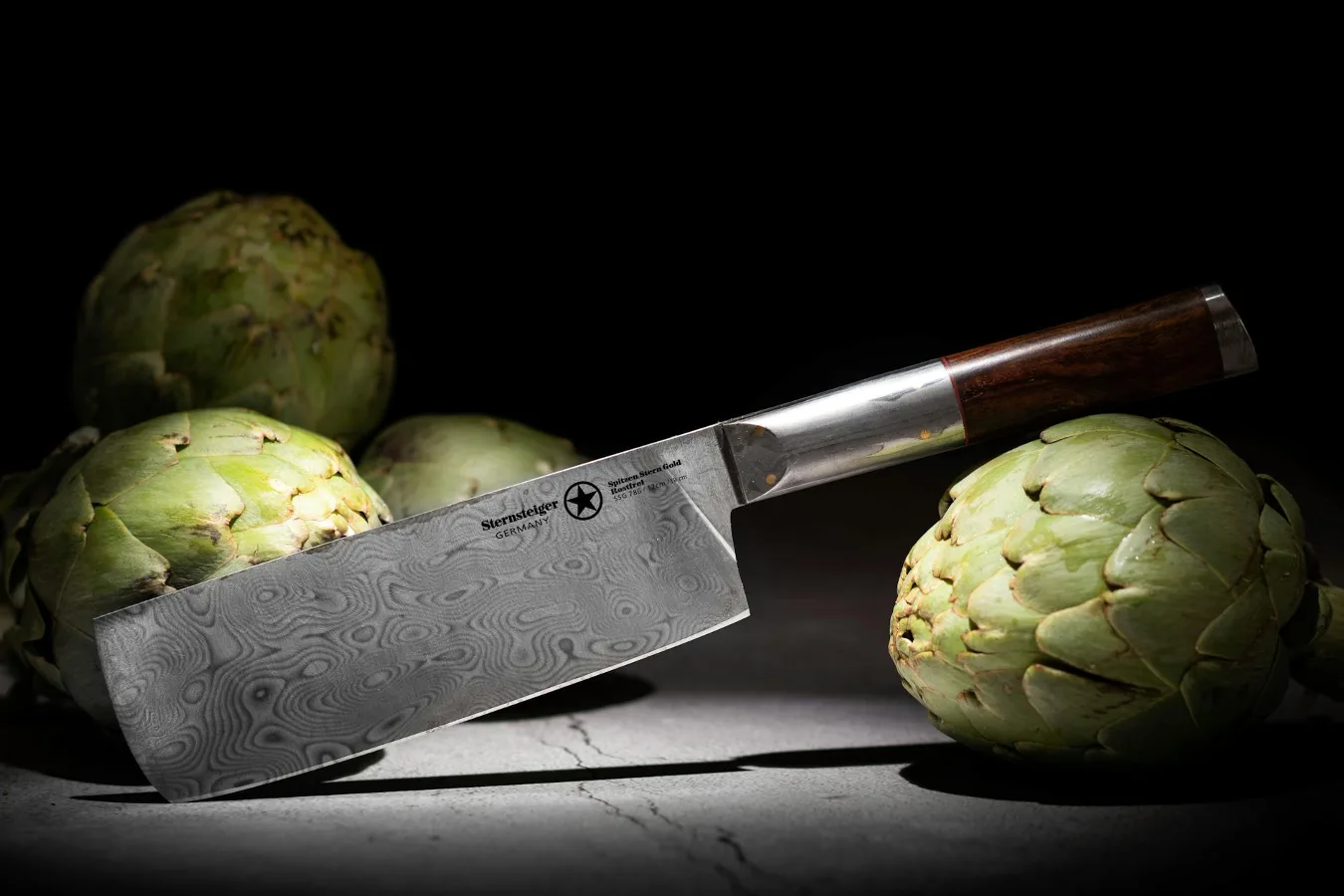
If you’re shopping for a Damascus steel knife set, the main question is not just whether the knives look impressive. It’s whether the set is built for real kitchen use, with a blade construction, handle shape, and knife selection that fit how you cook.
For most buyers, the best Damascus steel knife set is the one that balances appearance with practical performance. That usually means paying close attention to the core steel, the number of layers, whether the blades are full tang, how the handles feel in hand, and whether the set includes knives you will actually use.
Damascus-patterned knives can be attractive and useful, but the term itself is often misunderstood. In many modern kitchen sets, the visible “Damascus” look refers to a layered or patterned outer cladding around a steel core rather than a blade made entirely from one traditional material. That distinction matters because the cutting performance depends far more on the core steel and heat treatment than on the decorative pattern.
What to look for first
Start with the blade construction. If the product description only emphasizes the pattern, treat that as a warning sign. A good set should tell you what the core steel is, how the blades are made, and whether the knives are intended for everyday prep or more specialized use.
For a buyer-friendly decision, these are the most useful factors to compare:
- Core steel: The cutting edge is what determines sharpness potential, edge retention, and sharpening behavior.
- Construction: Look for a clear explanation of layered Damascus-style cladding, forged construction, or stainless steel layering.
- Handle comfort: The grip should feel secure during slicing, chopping, and repetitive prep.
- Knife selection: A practical set should cover common kitchen tasks without filling the block with duplicates.
- Maintenance needs: Some sets require more careful washing, drying, and sharpening habits than others.
Why Damascus steel appeals to buyers
Many shoppers are drawn to Damascus steel knife sets for two reasons: the visual pattern and the reputation for premium craftsmanship. That appeal is real, but it’s worth separating style from substance.
The patterned look can make a knife set feel more refined than a plain stainless option, especially in an open kitchen or as a gift. Some buyers also like the idea of owning a set that looks closer to a high-end culinary tool than a basic starter bundle.
The practical side is more nuanced. A Damascus-style exterior can be paired with different core steels, so two knife sets that look similar may perform very differently. One might sharpen easily and hold an edge well for home cooking; another might be more demanding to maintain or less comfortable for long prep sessions. The outer pattern alone does not tell you which is which.
The most important buying considerations
Blade core and edge retention
If you want a set that performs well over time, the core steel deserves more attention than the decorative finish. Edge retention affects how long a knife stays sharp between sharpenings, while sharpening behavior affects how easy it is to restore the edge when it dulls.
For many home cooks, the best balance is a blade that sharpens predictably and holds an edge well enough for normal meal prep. Extremely hard blades can stay sharp longer, but they may also be less forgiving if you use them improperly or try to cut through bones, frozen foods, or other hard materials that the knife is not designed for.
Handle shape and balance
A knife that looks premium but feels awkward will not be satisfying in daily use. Comfort matters more than many shoppers expect, especially if you prep vegetables, proteins, and herbs frequently.
Pay attention to the handle material, how the knife sits in your palm, and whether the balance point feels controlled rather than blade-heavy or handle-heavy. A well-balanced knife is usually easier to guide precisely, which can make slicing and chopping feel less tiring. complete guide to comal cookware offers more detail on this point.
Set composition
Knife sets often include more pieces than most kitchens truly need. That is not always a benefit. Extra steak knives, utility knives, or specialty blades can add value only if you will use them regularly.
A practical set usually centers on a chef’s knife, a paring knife, a serrated bread knife, and perhaps a santoku or utility knife depending on your cooking habits. If a set is loaded with rarely used extras, you may be paying for variety rather than usefulness.
Knife care and maintenance
Maintenance is part of the ownership cost, even when the product is not especially expensive. Before buying, check whether the knives are dishwasher safe, though hand washing is usually the safer long-term choice for most quality kitchen knives.
It also helps to know what kind of sharpening the blades need. Some knives respond well to a honing rod between sharpenings, while others benefit from a whetstone or professional sharpening. If you do not want a high-maintenance set, choose one with care requirements that fit your routine.
Storage method
Many sets are sold with a knife block, but that is not the only option. Magnetic strips and in-drawer organizers can save counter space and reduce clutter. A block can be convenient, but it also takes up room and may collect crumbs or moisture if not kept clean.
Storage matters because it affects both safety and edge life. Knives that bang into other utensils in a drawer can dull faster and become less safe to handle.
Common misconceptions about Damascus knife sets
Misconception 1: Damascus pattern automatically means premium performance. The pattern is visually distinctive, but performance depends on the steel composition, heat treatment, edge geometry, and manufacturing quality.
Misconception 2: All Damascus steel knife sets are high-maintenance. Some require more care than others. Stainless Damascus-style knives may offer a more forgiving ownership experience than blades that demand frequent drying or careful storage.
Misconception 3: More knives in the set is always better. A smaller, well-chosen set can be more useful than a large block full of duplicates. For many households, one excellent chef’s knife does more work than several specialty knives combined.
Misconception 4: A decorative handle means a better knife. Handle appearance is secondary to grip security, fit, and comfort. If a handle feels slippery, bulky, or unbalanced, the knife will be less pleasant to use no matter how attractive it looks.
Who a Damascus steel knife set suits best
A Damascus steel knife set can make sense for several types of buyers:
- Home cooks who want a set that feels more refined than a basic starter collection.
- Gift buyers looking for a visually striking kitchen upgrade with broad appeal.
- Food enthusiasts who value knife feel, presentation, and a more considered cutlery selection.
- New homeowners who want a central kitchen toolset that looks good on the counter and handles everyday prep.
It may be less suitable for buyers who want the easiest possible maintenance, who prefer minimal kitchen gear, or who need only one or two workhorse knives. In those cases, a focused knife pair or a simpler stainless set may be the smarter buy.
Practical trade-offs to weigh
One of the biggest trade-offs is appearance versus simplicity. Damascus-patterned knives often look more premium, but that visual appeal can distract from practical questions like sharpening, handle ergonomics, and overall set usefulness.
Another trade-off is versatility versus specialization. A larger set can cover more tasks, but it can also include knives you barely touch. If your cooking style is straightforward, too many specialty blades can create more clutter than convenience.
There is also a maintenance trade-off. A knife set that offers stronger edge performance may ask more from you in sharpening and storage. If you prefer low-fuss kitchen tools, it may be better to choose a set that is easier to live with every day rather than one that sounds more impressive on paper.
Common mistakes to avoid
- Buying for the pattern alone. The visible finish is only part of the story.
- Ignoring handle comfort. A knife can be sharp and still feel awkward or unstable.
- Choosing too many pieces. Extra knives do not automatically improve value.
- Overlooking maintenance needs. Some sets require more careful care than casual buyers expect.
- Assuming all Damascus-style knives are the same. Blade core, construction, and edge geometry can vary widely.
- Using the wrong knife for the job. Even a strong kitchen set has limits and should not be treated like a cleaver, pry bar, or utility tool.
How to evaluate value without overpaying
Value is not the same as the lowest price. For a Damascus steel knife set, value comes from a combination of useful knife selection, comfortable handling, dependable construction, and care requirements that match your routine.
Before you buy, ask a few simple questions:
- Will I use most of the knives in the set?
- Is the blade core clearly described?
- Does the set include storage that fits my kitchen?
- Will I be comfortable maintaining these knives?
- Does the set solve a real cooking need, or mainly offer visual appeal?
If you can answer yes to the first four questions, you are probably looking at a more practical purchase. If the strongest selling point is the pattern itself, pause and compare other options before deciding.
Reasonable alternatives to consider
A Damascus steel knife set is not the only path to a capable kitchen. Depending on your needs, a few alternatives may be more sensible.
A quality stainless steel knife set may be the best option if you want easier maintenance and a more straightforward ownership experience.
A chef’s knife plus a paring knife can cover many home cooking tasks with less clutter and less cost.
A Japanese-style set may appeal to buyers who want lighter-feeling knives and precise cutting for vegetables and boneless proteins, though these knives can be less forgiving if misused.
A modular knife collection lets you build around the pieces you actually need instead of committing to a full block at once.
Final buyer guidance
If you want a Damascus steel knife set, choose it for the right reasons: blade quality, comfort, useful knife selection, and a maintenance routine you can realistically follow. The pattern is a bonus, not the core reason to buy.
The best sets are the ones that feel good in hand, suit the way you cook, and make everyday prep easier without creating extra hassle. If you focus on construction and usability first, you are far more likely to end up with a set that stays useful long after the initial appeal wears off.