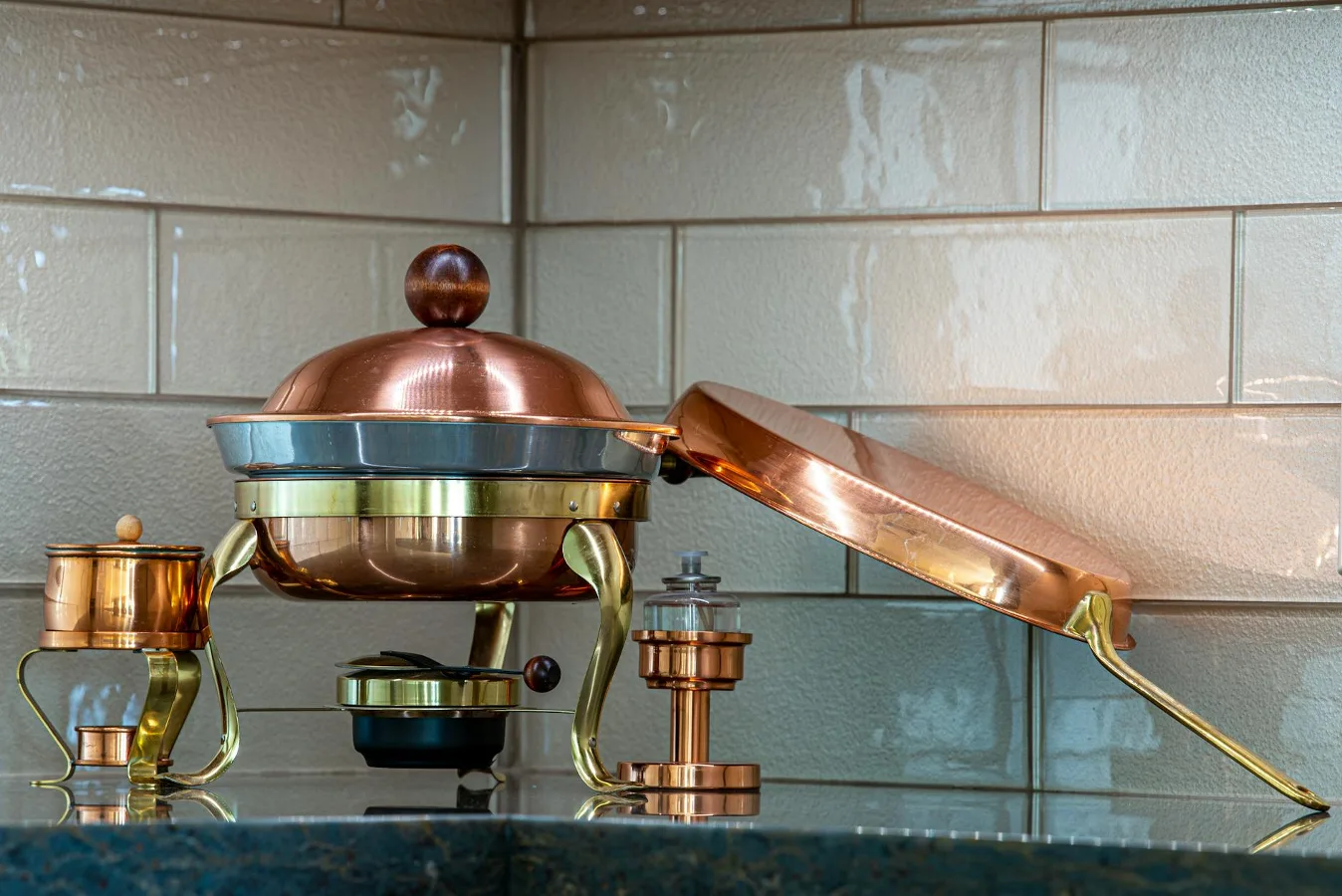
Copper cookware can be used on induction cooktops, but not every copper pan will work. The key issue is simple: induction heat is created by magnetism, so the pan needs a magnetic layer or base. A traditional all-copper pan will usually not respond on its own.
If you like copper for its fast, responsive heating, induction does not automatically rule it out. The better question is whether you want a fully compatible pan, a copper exterior with a bonded magnetic core, or an induction disc as a workaround. Each option has trade-offs in performance, care, and convenience.
What buyers need to know first
For most shoppers, the answer is this: choose copper cookware specifically labeled induction-compatible. That usually means the pan has a magnetic stainless steel base, a layered construction with a magnetic cooking surface, or a bonded induction-ready core. Without that, many induction cooktops will not recognize the pan at all. copper vs stainless steel cookware offers more detail on this point.
This matters because copper cookware is often chosen for precision. It heats quickly, adjusts quickly, and appeals to cooks who want more control than heavier materials usually provide. On induction, you can still get that benefit, but only if the pan is built for the cooktop from the start.
Best fit: who should consider copper on induction?
Copper cookware for induction cooktops is a good fit if you want responsive heat and are willing to pay attention to compatibility details. It may suit cooks who make sauces, custards, caramel, reductions, or other dishes where fine temperature control matters. It can also appeal to people who like the look of copper cookware and want it to function on a modern induction range.
It is a less natural fit if you want the lowest-maintenance option. Copper usually needs more care than stainless steel or enameled cookware, especially if the exterior is left exposed. If your priority is simple everyday use with minimal upkeep, another induction-friendly material may be easier to live with.
The compatibility question: what actually works
There are three common paths to make copper work on induction:
- Induction-compatible copper cookware with a magnetic base or magnetic cooking layer.
- Clad or layered cookware that uses copper for performance but includes stainless steel or another induction-friendly metal.
- An induction interface disc that sits between the cooktop and the pan, allowing a nonmagnetic pot to heat indirectly.
The first two options are usually the best long-term choices. They preserve better everyday usability and avoid the inefficiency of an extra disc. The disc method can be useful in a pinch, but it adds a step, can slow response, and may reduce the precision people usually want from copper.
A common misconception is that any pan with copper in it will work on induction. That is not true. The cooktop cares about the magnetic properties of the cooking surface or base, not just the presence of copper somewhere in the construction.
Material and construction factors that matter most
Magnetic base
The most important feature is whether the bottom of the pan is magnetic enough for your cooktop to detect. If the manufacturer does not clearly state induction compatibility, do not assume it will work just because the pan contains copper.
Cooking surface and lining
Many copper pans used for cooking are lined with stainless steel or another food-safe layer. That lining affects both performance and care. Stainless steel lining is common because it is durable, relatively easy to maintain, and suitable for many cooking tasks. It also keeps the cooking surface nonreactive, which matters for acidic foods.
Thickness and responsiveness
Copper is prized for fast heat transfer, but thickness still matters. Very thin cookware may respond quickly but can be less forgiving. Thicker construction can improve stability and reduce hot spots, though it may not feel as nimble. The right balance depends on whether you prioritize delicate control or broader all-purpose use.
Handle design and weight
Copper cookware can vary a lot in weight once magnetic layers and linings are added. Handle comfort becomes more important as pans get heavier. A pan that is beautifully responsive but awkward to lift is a poor everyday choice, especially for larger skillets or sauté pans.
Oven use and lid compatibility
If you plan to move pans from induction to the oven, check the handle and lid materials. Some copper cookware is oven-safe, but the limit depends on construction rather than the copper itself. This is a practical detail that many buyers overlook until they are trying to finish a dish in the oven.
Performance trade-offs you should expect
Copper cookware is admired for heat control, but induction changes the equation a little. The cooktop itself already responds quickly, so the advantage of copper may feel less dramatic than it does on gas or electric. Even so, a well-made induction-compatible copper pan can still offer excellent control.
The trade-off is that compatibility often adds complexity. A pure copper pan may not work. A magnetic base may slightly change how the pan feels and heats. A lined pan may be easier to use but not give the same exact character as traditional bare copper cookware. Buyers should think in terms of balance rather than perfection.
Another nuance: induction cooktops tend to reward flat, stable bases. A pan that is slightly warped or uneven can perform poorly, regardless of how good the copper layer is. Flat contact matters because the cooktop depends on efficient energy transfer.
Care and maintenance considerations
Maintenance depends on the exterior finish and the interior lining. Bare copper develops patina and needs polishing if you want to keep the bright look. Some people enjoy that aging process; others find it a chore. If the pan has a stainless steel exterior, care is usually simpler.
The lining is just as important. Stainless steel-lined copper usually requires normal cookware care, but it can still show discoloration or stuck-on residue if overheated. Copper cookware also should be dried carefully after washing to help prevent spotting and preserve the finish.
For buyers who want beautiful cookware without a lot of upkeep, this is one of the biggest decision points. The most attractive copper pan is not always the most practical if you cook frequently and dislike polishing.
Cost and long-term value
Copper cookware generally sits in a higher price tier than basic induction-ready cookware. That does not automatically make it a poor value, but it does mean the purchase should solve a real need. If you mainly want even heating for everyday eggs, soups, and searing, a good induction-ready stainless steel pan may deliver more convenience for the money.
If you cook frequently and value fine control, copper may be worth the extra investment, especially in a pan size you use often. The best long-term value usually comes from buying only the pieces you will actively use rather than building a full set for appearance alone.
Common mistakes to avoid
- Buying by appearance alone: a copper pan that looks right may still be incompatible with induction.
- Ignoring the base: the bottom construction matters more than the exterior finish.
- Overlooking the lining: food safety, reactivity, and cleanup depend on what touches the food.
- Choosing the wrong size: a pan that is too small or too large for the burner can heat unevenly.
- Assuming all copper needs the same care: finishes and linings change maintenance needs significantly.
- Using an interface disc as the default solution: it can work, but it is rarely the most elegant or efficient choice.
Better alternatives if copper is not the best fit
If you want induction performance first and copper aesthetics second, look at copper-clad stainless steel or other clad cookware made specifically for induction. These pans can provide good responsiveness while being easier to use day to day. what to look for in clad cookware offers more detail on this point.
For cooks who want simpler maintenance, fully clad stainless steel is often the most practical alternative. It does not offer the same visual appeal as copper, but it is durable, widely compatible, and easier to match across a full cookware set. Cast iron and enameled cast iron also work on induction, though they are far less responsive and much heavier.
So the better choice depends on what problem you are trying to solve. If the goal is fast, precise heat with a refined look, copper can make sense. If the goal is reliable everyday utility, another material may be the smarter purchase.
How to shop smarter
Before buying, confirm that the product listing explicitly says induction-compatible. Then check the construction details: magnetic base, lining material, oven-safe limits, handle material, and whether the bottom is flat enough for induction use. If those details are vague, that is usually a warning sign.
It also helps to think about the exact dishes you make. A copper saucepan may be more useful than a full copper set. A sauté pan may matter more than a stockpot. Buying the right single piece can be better than buying a larger set that looks impressive but does not match your cooking habits.
If you already own copper cookware and want to see whether it will work, check for magnetic attraction on the base. If a magnet does not stick, the pan may not be suitable for induction unless you use an interface disc. Even then, performance may be less direct than with a true induction-ready pan.
What to do next
Start by deciding whether your priority is appearance, precision, or convenience. If precision is the goal, choose copper cookware made specifically for induction rather than trying to adapt traditional copper later. If convenience matters more, consider stainless steel or copper-clad alternatives that are easier to maintain and more forgiving for daily cooking.
The safest buying approach is to treat induction compatibility as the first filter and copper quality as the second. That keeps you from paying for a beautiful pan that does not suit your cooktop. For most shoppers, the best choice is not the most ornate one; it is the one that matches the way they actually cook.
For readers building out a kitchen, this topic connects naturally with broader cookware decisions such as best cookware materials for induction, how to check pan compatibility, and copper vs stainless steel cookware. Those comparisons help narrow the field before you commit to a purchase. best cookware materials for induction offers more detail on this point.