What French home decor really means
French home decor is less about copying a single look and more about creating a room that feels refined, lived-in, and quietly collected. The style often combines symmetry with softness, traditional details with relaxed materials, and elegance with comfort. That balance is the real appeal. english country home decor offers more detail on this point. Western Decor for Home: A Practical Style Guide offers more detail on this point.
For many shoppers, the search starts with a mood: carved wood, linen upholstery, aged metal, pale walls, gilded mirrors, and a sense that nothing is too new or too perfect. But the style can move in several directions. A room can lean toward French country decor, Parisian interior style, or French provincial decor depending on how formal, rustic, or ornamental you want it to feel.
The practical question is not whether a piece looks “French” enough. It is whether the mix of shape, finish, and scale creates a room that feels intentional. That is what separates a cohesive space from a themed one.
When this style works best
French home decor works especially well if you want a room that feels polished without being severe. It suits people who like traditional design but do not want heavy dark wood everywhere, and it also fits homes that need softness after years of minimal or ultra-modern styling.
This approach is also useful when a room already has architectural character. Crown molding, tall windows, plaster walls, ceiling medallions, parquet flooring, and fireplace mantels can all support the look. Even if your home lacks those details, you can still build the feeling through furnishings, lighting, and finishes. Gold Floor Lamp Buying Guide offers more detail on this point.
It may be less suitable if you want a very spare aesthetic or if your space demands highly durable, low-maintenance finishes throughout. French-inspired rooms often rely on texture, layered materials, and decorative details that need a bit more care than a purely utilitarian setup.
Step-by-step criteria for choosing the right pieces
1. Start with the room’s architecture
Before buying decor, look at what the room already gives you. A space with clean walls and basic trim may need quieter, more transitional French elements. A room with detailed millwork can handle more ornament, like a carved mirror or an upholstered chair with classic curves.
If the architecture is very modern, avoid overloading the room with too many ornate objects. A few well-chosen pieces will usually feel more believable than a full decorative transformation.
2. Choose a restrained color palette
French home decor usually depends on muted neutrals, softened whites, warm beiges, grays, pale blues, sage, taupe, and dusty pastels. The goal is not flatness. It is a palette that feels aged and breathable.
One common mistake is using too much high-contrast color or stark white everywhere. That can make the room feel sharper than the style intends. Another mistake is going overly pastel, which can push the room into a themed or romanticized version of the look. A better approach is to layer several understated tones with a few deeper accents for balance.
3. Pay attention to material mix
Material variety is one of the most important parts of the style. French interiors often feel successful because they combine smooth and textured surfaces: linen next to carved wood, stone beside brass, matte plaster near glass, or cane and upholstery in the same room.
This mix helps a space feel collected rather than matched. It also prevents neutral rooms from looking bland. If everything is glossy or brand-new, the style loses its depth. A little patina goes a long way, but it should feel natural rather than forced.
4. Watch the silhouette of each piece
French-inspired furniture often has elegant lines, gentle curves, cabriole legs, oval mirrors, and softened corners. These shapes bring movement into a room that might otherwise feel boxy.
That said, not every piece needs to be ornate. In fact, a strong mix of curved and straight silhouettes usually works better than repeating the same decorative gesture everywhere. A simple sofa can anchor a room if it is paired with more graceful side chairs, a vintage-style table, or a decorative lamp.
5. Decide how formal you want the room to feel
Not all French home decor is the same. A dining room can tolerate more symmetry, chandeliers, and polished finishes than a family room. A bedroom may benefit from softer upholstery and layered linens, while an entryway might need only one or two statement pieces.
Thinking in terms of formality helps prevent overdecorating. If everything in the house feels ornate, the result can be heavy. If every room is too casual, the French influence may disappear. The best spaces usually shift in tone from room to room while staying visually connected.
Examples of French home decor directions
One useful way to approach the style is to decide which direction fits your home and habits.
- French country decor leans warmer, softer, and more rustic. It often uses weathered wood, simple linens, soft patterns, and an unfussy feel.
- Parisian interior style usually looks more tailored and urbane, with stronger contrast, classic silhouettes, mirrors, and a slightly more polished finish.
- French provincial decor tends to feel more traditional and decorative, often with furniture that looks substantial and elegant.
- Shabby chic alternatives borrow from the softness and patina of French style but can feel more casual and distressed. That works for some rooms, but it is easy to overdo.
If you are uncertain, start with the least extreme version. A room with a neutral base, graceful furniture, and one or two antique-inspired accents can often read as French without becoming overly literal.
Where to focus your budget
French home decor does not require buying everything at once, and it usually looks better when built gradually. If you are deciding where to spend first, prioritize the pieces that carry the most visual weight.
- Anchor furniture: sofas, beds, dining tables, and armchairs establish the room’s overall tone.
- Lighting: chandeliers, sconces, table lamps, and floor lamps can strongly shape the mood.
- Mirrors and wall decor: these pieces add the reflective, layered feel that many French interiors rely on.
- Textiles: curtains, cushions, throws, and bedding help soften formal lines.
- Hardware and small finishes: knobs, pulls, frames, and decorative trays can quietly support the look.
Less important objects can be changed more easily. This matters because French decor is often built through editing, not just buying. A room usually improves when the strongest pieces are right and the smaller accents do not compete for attention.
Common mistakes that make the style feel off
1. Too many distressed finishes. A little wear adds character, but too much distressing can make the room feel staged. Real French-inspired spaces usually rely on balance, not artificial aging everywhere.
2. Overly matching furniture. The style rarely feels best when every piece comes from the same set. A more layered mix of old and new usually looks more convincing.
3. Ignoring scale. Delicate chairs can disappear in a large room, while oversized ornate furniture can overwhelm a small one. Scale matters as much as style.
4. Filling every surface. French rooms often feel collected, but that does not mean crowded. Leave negative space so decorative objects can breathe.
5. Using decorative details without structure. A gilt mirror or a carved chair will not create the style on its own. The room still needs a coherent palette and a clear sense of proportion.
A practical checklist before you buy
Use this quick checklist to judge whether a piece belongs in your version of French home decor:
- Does it fit the room’s scale?
- Does it support the palette rather than fight it?
- Does it add texture, shape, or balance?
- Can it work with pieces you already own?
- Does it feel elegant without looking overly formal?
- Will it still make sense if the room evolves?
If the answer is yes to most of these, the piece probably has staying power. If it only works because it looks decorative in isolation, it may not be the right choice.
How to make the style feel current
One overlooked consideration is that French home decor can look dated if every room leans too heavily on a single era. To keep it fresh, mix in contemporary restraint. A clean-lined sofa, a simple side table, or a modern lamp can stop the room from feeling like a set piece.
Texture also helps. Linen, stone, oak, iron, plaster, and brushed metals tend to make the style feel more grounded than shiny surfaces or highly polished finishes. The contrast between relaxed materials and refined forms is what keeps the look relevant.
Another useful nuance: you do not need to make every surface antique-inspired. A few focal points carry more visual authority than many smaller nods. That is especially helpful in American homes, where room layouts and built-in details often differ from older European interiors.
French decor ideas by room
Living room
Use a soft neutral base, a sofa with graceful proportions, layered lighting, and one strong focal point such as a mirror, artwork, or mantel arrangement. The room should feel comfortable enough for daily use while still looking composed.
Bedroom
This is where French home decor often feels easiest to live with. Linen bedding, upholstered headboards, a small chandelier or pendant, and simple curtains can create the mood without clutter. Keep the palette calm so the room feels restful rather than overly ornate.
Dining room
A dining room can handle stronger symmetry and more decorative presence. Consider a table with presence, upholstered or ladder-back seating, and lighting that feels deliberate. A mirror or framed artwork can reinforce the look without making the room busy.
Entryway
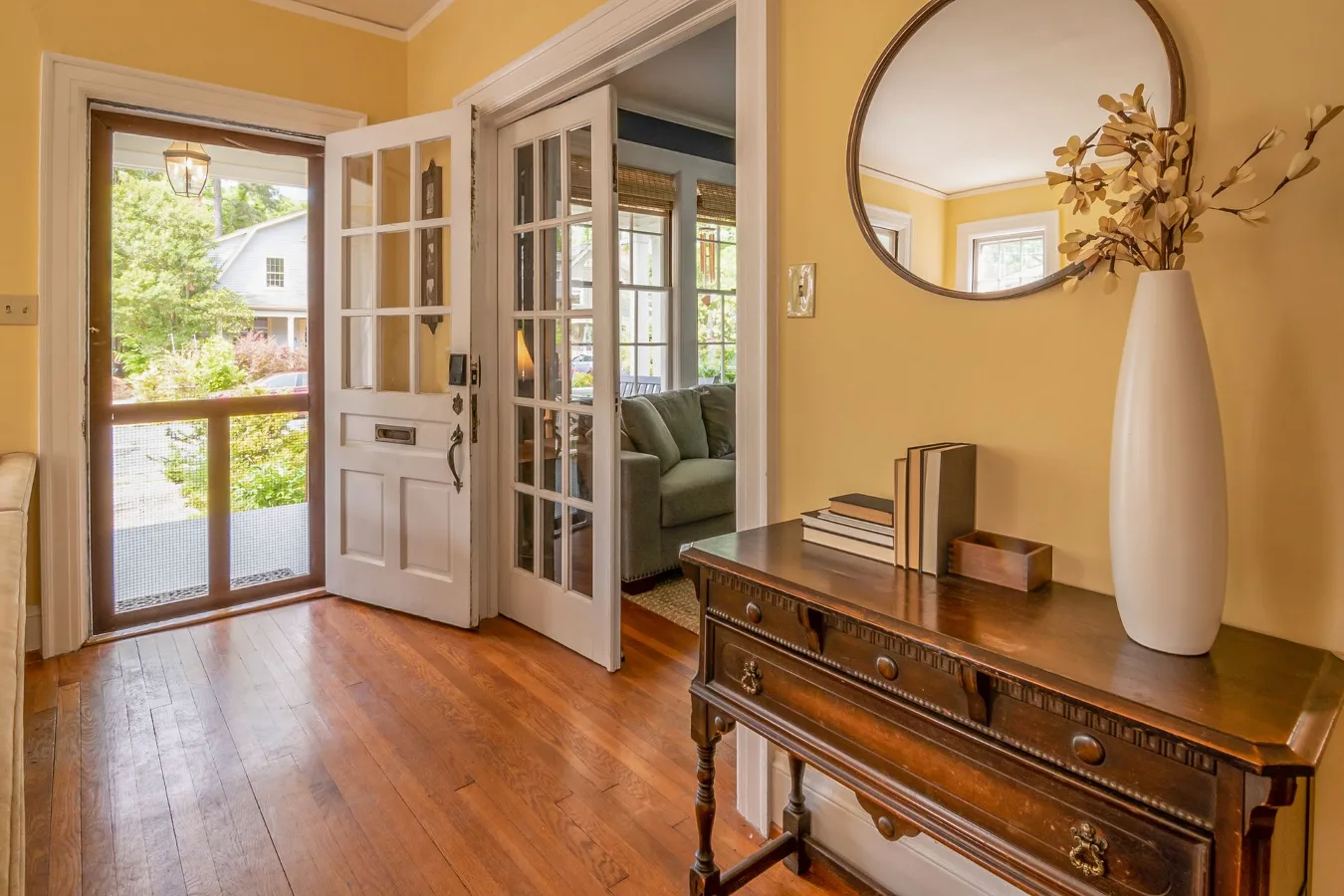
An entryway benefits from restraint. One console, one mirror, one lamp, and a small decorative object may be enough. The goal is to suggest the style immediately, not crowd the space before the rest of the home is visible.
Choosing alternatives if the full look is not right for you
If classic French home decor feels too formal, you can borrow only the parts that suit your home. A neutral palette, antique-style mirror, and linen textiles can create a lighter impression without committing to the full aesthetic.
If you want more rustic character, French country may be a better fit. If you prefer a sharper city feel, Parisian-inspired styling usually makes more sense. And if you simply want a softer traditional interior, you can use curved forms and aged finishes without declaring the room a specific style at all.
That flexibility is part of the appeal. French-inspired decorating works best when it is adapted to the home, not imposed on it.
For shoppers and decorators alike, the best French home decor choices are the ones that balance elegance, restraint, and livability. If a piece looks beautiful but feels out of scale, too ornate, or difficult to maintain, it may not help the room in the long run. The strongest rooms usually mix a few polished elements with quieter basics, then let texture and proportion do the rest.