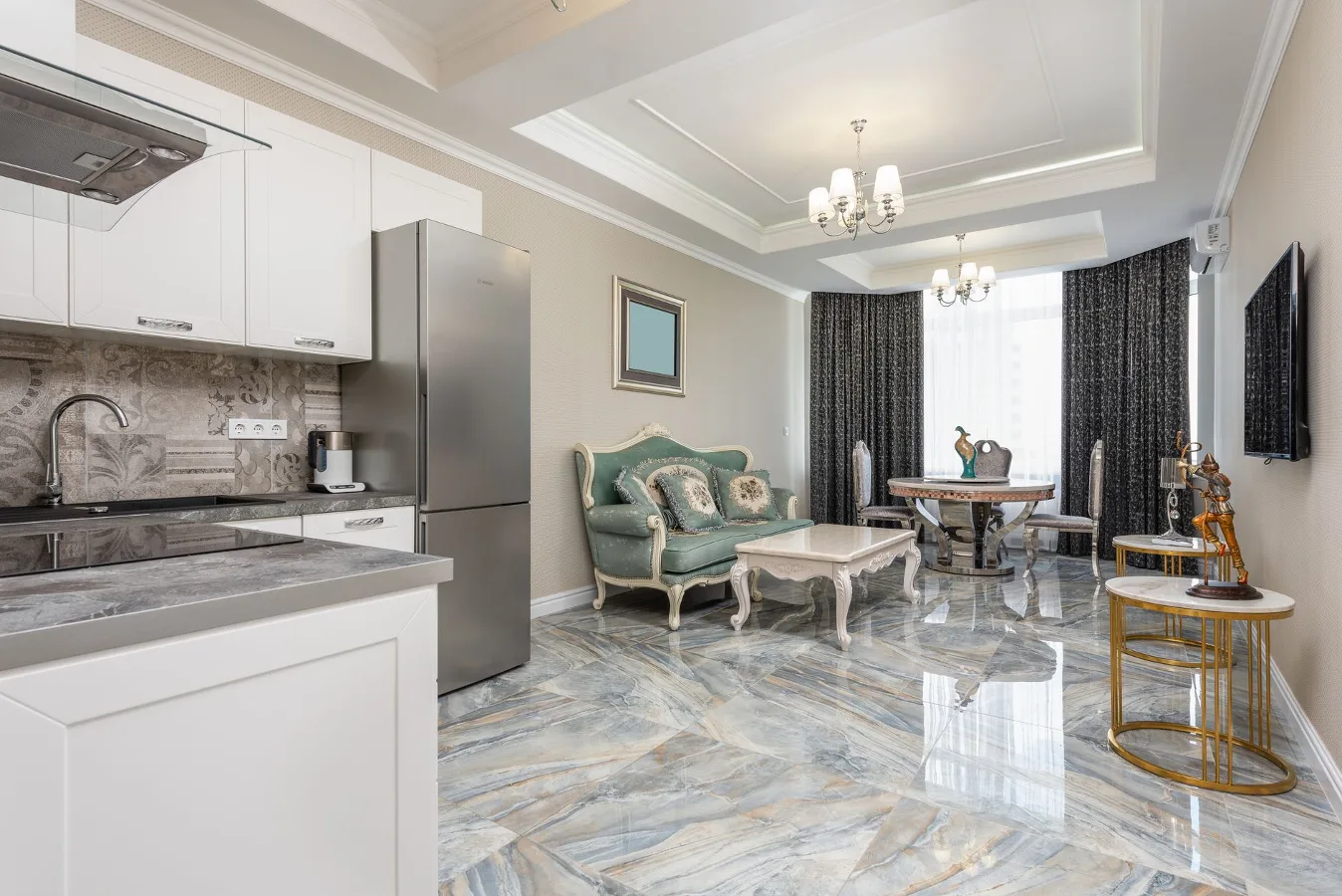
Art deco home decor is a style built around contrast: bold geometry, polished surfaces, luxurious materials, and a sense of order. If you want the look without making a room feel heavy or dated, the key is choosing a few strong Art Deco signals and keeping the rest of the space clean and intentional.
For most homes, the best approach is not to decorate every surface with vintage references. Instead, use Art Deco elements where they have the most impact: lighting, mirrors, furniture silhouettes, wall treatments, and a restrained color palette. That gives you the glamour associated with the style while keeping the room functional for everyday life.
What defines Art Deco home decor
Art Deco emerged as a decorative style that celebrates structure, refinement, and visual drama. In a home setting, that usually translates into symmetrical layouts, stepped or angular forms, curved details with a streamlined edge, and materials that reflect light. Common references include brass, chrome, lacquered finishes, marble, velvet, glass, and mirror.
What makes the style recognizable is not one single object. It is the combination of form and finish. A velvet chair with tapered legs can read as Art Deco. So can a geometric wall sconce, a sunburst mirror, or a cabinet with metallic inlay. Even a simple room can feel Art Deco if the shapes, surfaces, and proportions work together.
The design decisions that matter most
Start with shape, not accessories
The strongest Art Deco rooms usually begin with architectural or furniture shapes. Look for arches, fans, chevrons, scallops, trapezoids, stepped profiles, and repeated lines. These shapes give the room its structure before any decorative objects are added.
A common mistake is relying only on accessories. A few themed objects can signal the style, but if the larger pieces feel generic, the room may read as loosely glamorous rather than genuinely Art Deco. Better results usually come from combining one or two defining shapes with simpler supporting pieces.
Use a controlled palette
Art Deco decor often looks best with a disciplined color palette. Deep jewel tones, cream, ivory, black, charcoal, navy, emerald, and warm metallics are all common choices. You do not need to use all of them. In fact, limiting the palette often makes the room feel more polished.
If you prefer a softer version of the style, muted neutrals paired with brass, walnut, and smoked glass can still suggest Art Deco without becoming visually overwhelming. If you want a more dramatic look, black-and-gold combinations create strong contrast, but they work best when balanced with lighter surfaces so the room does not feel closed in. learn more about gold floor lamp offers more detail on this point. guide to rustic floor lamps offers more detail on this point.
Choose materials that reflect the era without feeling costume-like
Art Deco is closely tied to luxurious surfaces, but the goal in a modern home is balance. Velvet, bouclé, lacquer, marble, walnut, brass, chrome, and mirror can all work well. The practical question is not whether a material is “correct,” but whether it supports the room’s use.
For example, high-shine lacquer may look striking in an entry or dining room, but it may be less forgiving in a high-traffic family area. Velvet adds depth and softness, but it needs thoughtful care and may not suit every household. Smoked glass and polished metal can bring the style into a room without adding a lot of visual weight.
How to style Art Deco rooms without overdoing it
Living rooms
In a living room, Art Deco home decor usually works best when the large furniture pieces are simple and the accents carry the style. A curved sofa, a pair of armchairs with clean lines, or a coffee table with a metallic base can establish the mood. From there, add a mirror, a geometric rug, or a sculptural lamp.
Symmetry is especially useful here. Matching lamps, paired chairs, or balanced side tables can create the structured feeling associated with the style. The room does not need to be perfectly mirrored, but it should feel composed. Too many unrelated shapes can weaken the effect.
Dining rooms
Dining rooms are natural candidates for Art Deco styling because the look can handle a little drama. A table with a strong silhouette, upholstered chairs, and a statement chandelier can do most of the work. Wall art with geometric motifs or a mirrored buffet can reinforce the style.
Because dining rooms are often more formal, this is one of the easiest places to introduce bolder finishes. Still, scale matters. Oversized decor in a smaller dining room can feel cramped, while too many small objects may look cluttered rather than elegant.
Bedrooms
For bedrooms, the challenge is keeping the style restful. Art Deco can lean glamorous, so softening it with texture helps. Upholstered headboards, pleated lampshades, brushed brass accents, and layered bedding in rich but calm colors can create the look without making the room feel theatrical.
If you want a subtle approach, focus on the headboard wall, bedside lighting, and one statement mirror or piece of art. That is often enough to establish the style while preserving a comfortable sleep environment.
Entryways and powder rooms
Smaller spaces are excellent for Art Deco because they can handle stronger visual impact. A powder room with patterned wallpaper, a sculptural mirror, and elegant hardware can make a strong impression without requiring a large investment. Entryways benefit from the same approach: a console table, a bold lamp, and a mirror with shape can set the tone for the home.
This is also where the style can become a little more daring. Since these spaces are used briefly, they can support richer color, stronger contrast, and more reflective finishes than a main living area.
Practical ways to bring the style home
Begin with one anchor piece
If you are building an Art Deco look from scratch, start with a single anchor piece and work outward. That might be a mirror, a lighting fixture, a sofa, or a dresser with an unmistakable silhouette. Once that piece is in place, choose supporting items that repeat its lines or finish.
This approach reduces the risk of a room becoming disjointed. It also helps you spend more carefully, since not every piece needs to be decorative. A few well-chosen items often create a stronger result than many smaller purchases.
Repeat shapes in different forms
One of the most effective ways to make Art Deco decor feel cohesive is to repeat a shape in more than one place. For example, a fan motif in a mirror might echo the curve of a chair back and the pattern in a rug. Or a stepped detail in shelving could be echoed by a lamp base or side table profile.
The repetition should feel deliberate, not obvious. Think of it as visual rhyme rather than matching. That gives the room polish without making it look staged.
Layer texture to prevent flatness
Because Art Deco often uses polished surfaces, texture is important for balance. Without it, the room may feel cold or overly glossy. Velvet, boucle, wool, linen, and wood grain can soften harder materials like glass, brass, and mirror.
This matters especially in rooms with limited natural light. Reflective finishes can help brighten the space, but textural variety keeps it from feeling stark. A room that combines sheen with softness often feels more livable than one that relies on shine alone.
Common mistakes to avoid
One of the most common misconceptions is that Art Deco home decor must be dark and theatrical. That version exists, but it is not the only one. Many well-designed Art Deco-inspired rooms feel bright, elegant, and restrained. You can use cream, taupe, warm wood, and brass just as effectively as black and emerald.
Another mistake is mixing too many eras. Art Deco pairs well with some mid-century elements and some contemporary pieces, but if you add too many competing references, the room can lose clarity. The style works best when there is a dominant visual language.
Scale is another overlooked issue. Small geometric objects scattered across every surface can feel busy. Larger, fewer pieces often create a more confident result. This is especially true for wall decor and furniture, where proportion affects how polished the room feels. how to mix geometric patterns offers more detail on this point.
How to tell if Art Deco is the right fit
Art Deco home decor works well if you like rooms that feel structured, elegant, and a little dramatic. It is a strong choice if you enjoy symmetry, metallic finishes, and furniture with presence. It also suits homeowners who want a style that can feel formal without being overly traditional.
It may not be the best fit if your preference leans toward highly relaxed, rustic, or minimalist interiors. That does not mean you cannot borrow from the style. You may simply want a lighter interpretation with one or two Art Deco features rather than a full theme.
If your home already has strong architectural details, Art Deco accents can complement them nicely. If the architecture is very simple, the decor will need to do more of the work, which makes scale and material choices even more important.
Alternatives if you want a similar look with less formality
If full Art Deco feels too ornate, there are adjacent styles that capture part of the mood. Hollywood Regency shares the glamour and mirrored finishes but can feel more playful. Mid-century modern brings cleaner lines and works well if you want a less decorative approach. Contemporary glam keeps the sheen and metallic accents while simplifying the shapes.
For a softer version, you can also build an Art Deco-inspired room around just one or two features: a geometric light fixture, a brass-framed mirror, or a velvet accent chair. That often delivers the atmosphere without committing to a fully period-influenced interior.
Choosing pieces that age well
If you are buying decor with longevity in mind, focus on pieces that are decorative but not overly trend-specific. A well-made mirror, a simple brass lamp with geometric details, or a classic upholstered chair can work across changing design trends. Extremely stylized accessories may be useful in the short term, but they can be harder to adapt later.
Maintenance should also be part of the decision. Reflective metals, mirrored finishes, and lacquered surfaces may require more frequent cleaning to keep their polish. Fabrics like velvet can look luxurious but deserve care attention, especially in busy households or homes with pets.
That trade-off is worth considering before committing to a roomful of high-maintenance finishes. The most successful Art Deco interiors usually strike a balance between beauty and practical use.
Building a room that feels intentional
The best Art Deco home decor does not depend on collecting obvious themed pieces. It depends on editing. Choose a clear palette, repeat a few strong shapes, and give the room enough breathing space to let the materials stand out. A mirror, a lamp, a table, and one or two textured accents can be enough to establish the style if they are chosen carefully.
For commercial intent shoppers, that makes the decision easier: look first for the pieces that set the framework of the room, then add smaller accents only where they improve balance. If a piece adds glamour but also complicates the room’s function, it may not be the right fit. Art Deco works best when it feels composed, not crowded.