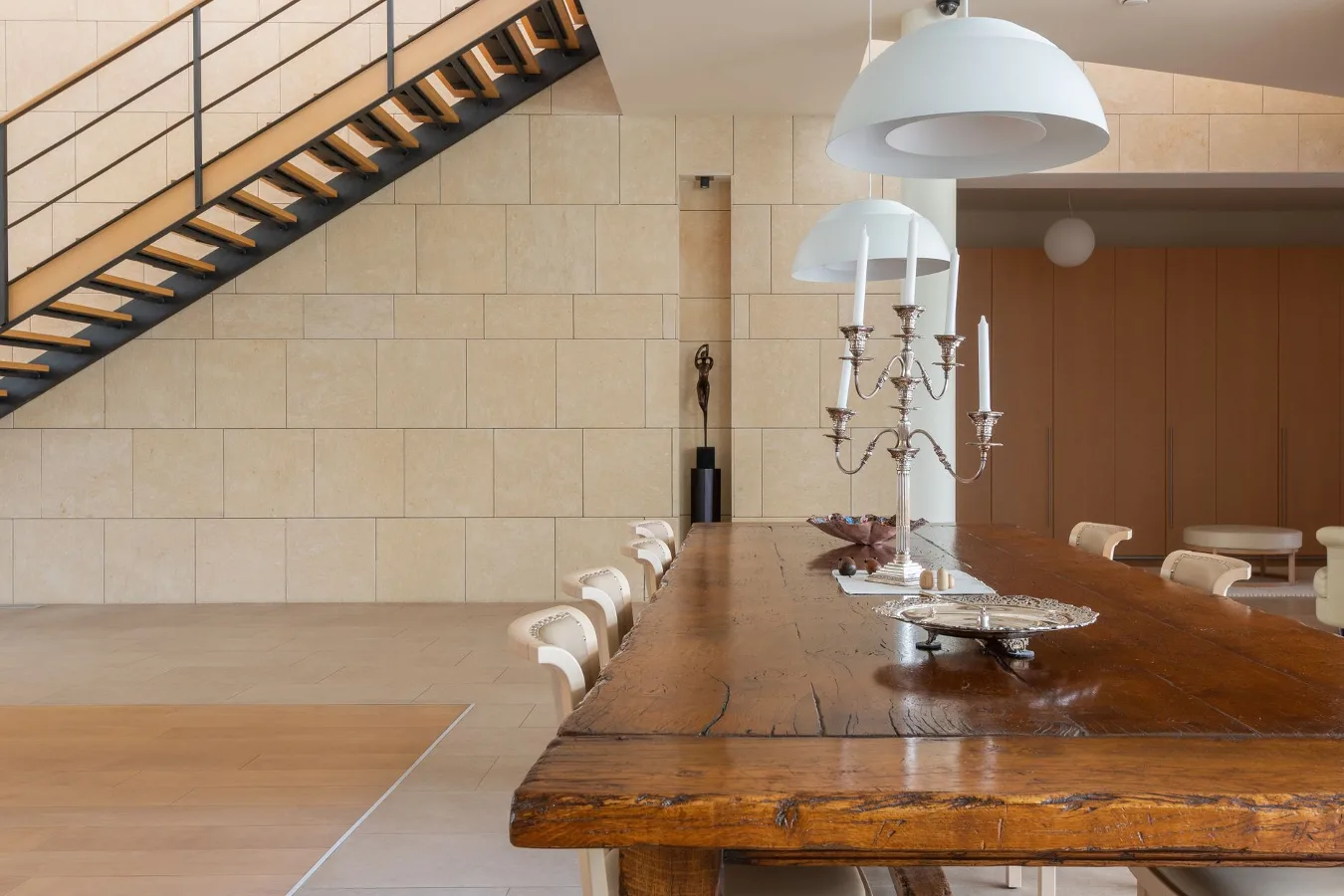
Should You Buy a Travertine Dining Table?
A travertine dining table makes sense if you want a dining room piece that feels substantial, natural, and visually quieter than glossy marble or highly finished laminate. The appeal is not just the stone itself. It is the balance of texture, tone, and weight that can make a dining space feel more grounded. stone dining table buying guide offers more detail on this point. Natural Wood Dining Tables: A Buyer’s Guide offers more detail on this point. solid wood round dining table offers more detail on this point.
For many buyers, the real question is not whether travertine looks good. It does. The better question is whether it fits the way the room is used. Travertine can be a strong choice for a formal dining area, a design-forward open concept space, or a home where the table serves as both a gathering spot and a visual anchor. It is less ideal if you want a carefree surface that shrugs off spills and daily wear with little attention.
If you are narrowing down options, think of travertine as a material that rewards careful selection. The right table can feel timeless and versatile. The wrong one can be too heavy, too high-maintenance, or too porous for the way your household actually lives.
What Makes Travertine Different from Other Dining Table Materials
Travertine is a natural stone with a softer, more understated look than polished marble or engineered surfaces that try to mimic stone. Its character usually comes from subtle variation, movement, and a matte or honed finish rather than dramatic veining. That gives it a calm, architectural presence that works well in contemporary, Mediterranean-inspired, transitional, and organic modern interiors.
Compared with wood, travertine does not offer warmth in the tactile sense, but it can bring warmth visually through its earthy color range. Compared with glass, it feels more rooted and less fragile-looking. Compared with sintered stone, quartz, or porcelain tops, travertine usually has more natural variation but also more care considerations.
The key trade-off is this: you are buying for appearance and atmosphere as much as for function. That is not a drawback if you understand it up front. It is only a problem when the table is chosen purely for looks and then expected to behave like a low-maintenance family laminate.
Buyer Scenarios: Who Travertine Works Best For
Best fit for design-led households
If the dining room doubles as a showcase space, travertine is especially appealing. Its soft, neutral palette pairs easily with linen seating, warm woods, black metal, boucle chairs, and muted upholstery. It can make the room feel composed without looking overly formal.
Best fit for slower, more intentional use
Travertine often suits homes where the dining table is used thoughtfully rather than roughly. That does not mean it cannot handle daily use. It means the household needs to be comfortable with coasters, placemats, and routine upkeep. If everyone in the home treats the dining table as a hard-working surface for crafts, homework, takeout, and laptop use, the material choice deserves extra scrutiny.
Best fit for larger, visually open rooms
Because travertine has visual weight, it can fill a room without needing a lot of decorative help. In a small apartment or tight dining nook, that same weight can feel overpowering. The room size, ceiling height, and amount of natural light all matter more than many buyers expect.
Trade-Offs You Should Consider Before Buying
The biggest misconception about travertine is that all stone tables are equally durable and equally easy to live with. They are not. Travertine can be beautiful and practical in the right setting, but it has limitations that deserve attention before you commit.
Porosity is the first issue. Travertine is a natural stone, and natural stone may be more receptive to stains than nonporous surfaces. Sealing can help, but sealing is not the same as making the surface maintenance-free. Spills should still be addressed promptly, especially with acidic liquids or strongly colored foods and drinks.
Weight is the second issue. A travertine dining table can be difficult to move, rotate, or reposition. That matters if you like to rearrange furniture, live in a walk-up, or expect frequent room changes. It also affects delivery, installation, and floor protection.
Surface sensitivity is the third issue. A honed finish can feel softer and more organic, but it may show wear differently than a harder engineered surface. Scratches, etching, and small marks may be part of the material’s natural character. Some buyers appreciate that lived-in look. Others find it frustrating.
Cost considerations are the fourth issue. Travertine usually sits in a more premium category than basic mass-market materials, but price alone does not guarantee better construction. A weak base, poor joinery, or a tabletop that is not properly supported can undermine the value of the stone itself.
Material and Spec Factors That Matter Most
Stone finish
The finish changes both appearance and upkeep. Honed travertine usually feels softer and more relaxed. Polished stone can look more refined and reflective, but it may be less forgiving visually in a busy room. A textured finish may hide minor marks better, though it can be harder to keep looking consistently clean.
Sealing and care requirements
Ask whether the tabletop is sealed, how the finish should be maintained, and whether the seller recommends a particular stone-safe cleaner. If the product information is vague, treat that as a warning sign. A reputable listing should make maintenance expectations clear rather than leaving you to guess.
Base construction
The base matters as much as the top. Travertine tops are often heavy, so the supporting structure needs to be stable and appropriately designed. A pedestal base can create a sculptural look and improve leg clearance, while a four-leg design may feel more traditional and visually lighter. The right choice depends on the shape of the room and how many chairs need to slide in comfortably.
Table shape
Round travertine dining tables can soften a room and improve conversation flow. Rectangular versions are better for longer spaces and larger seating needs. Oval designs can split the difference, offering a gentler profile without giving up too much surface area. Choose shape based on circulation space, seating plans, and how formal you want the room to feel.
Edge profile and thickness
Details like the edge profile and visible slab thickness can change how heavy or refined the table feels. A thicker edge reads more substantial and architectural. A slimmer profile may feel more delicate, but it should still look structurally honest. Avoid choosing a table only because it appears lighter in photos if the room needs presence and stability.
Compatibility with flooring and chairs
Stone on stone, stone on tile, or stone on hardwood all raise practical questions. Felt pads, floor protection, and chair glide compatibility matter more than buyers often expect. Likewise, the chairs should not visually fight the table. Soft upholstery, timber frames, or brushed metal tend to work well; overly ornate seating can make the room feel busy.
Styling a Travertine Dining Table Without Overcomplicating It
Travertine tends to look best when the rest of the room gives it room to breathe. That does not mean the dining area should be bare. It means the supporting elements should feel deliberate rather than crowded.
- Pair it with warm, tactile seating instead of overly shiny finishes.
- Use a pendant light with clean lines or natural materials.
- Repeat one or two tones from the stone in the rug, artwork, or cabinetry.
- Keep tabletop styling minimal so the surface stays readable.
- Mix in wood, linen, leather, or matte metal to balance the stone.
A common styling mistake is assuming travertine needs equally luxurious accessories. In practice, restraint usually looks better. The table already carries enough presence.
Maintenance Reality: What Owners Need to Be Comfortable With
Travertine is not difficult in the abstract, but it does ask for consistency. That means wiping up spills quickly, using coasters, avoiding harsh cleaners, and treating the surface with a little more care than you would give a synthetic top. If you enjoy low-maintenance surfaces, this may be the point where travertine loses out to porcelain, quartz, or high-quality wood.
The good news is that a practical routine is usually enough for many households. What matters most is not perfection. It is avoiding the kinds of habits that create avoidable damage: leaving citrus, vinegar, wine, or colored sauces on the surface; dragging rough objects; or using abrasive tools that can dull the finish.
If the table will be part of a high-traffic family zone, ask yourself whether everyone using the room is likely to follow the same care habits. A beautiful table can become a point of frustration if one person sees it as a display piece and another uses it like a utility surface.
Common Mistakes Buyers Make
- Choosing travertine for appearance alone and overlooking maintenance.
- Underestimating the table’s weight and delivery logistics.
- Buying a shape that does not suit the room’s circulation.
- Ignoring the base design and only focusing on the tabletop.
- Forgetting that chair clearance matters as much as table width.
- Assuming all natural stone behaves the same way.
- Overstyling the room so the table loses its impact.
One overlooked consideration is how the table will age visually alongside the rest of the room. Travertine can be forgiving in a home that embraces natural variation. It can feel out of place in an interior that demands every surface look perfectly uniform.
Good Alternatives If Travertine Is Not the Right Fit
If you like the look but not the maintenance, several alternatives may suit you better:
- Porcelain or sintered stone: often preferred for lower maintenance and strong everyday usability.
- Marble-look engineered tops: useful if you want a stone-inspired appearance with fewer natural variations.
- Solid wood: a warmer, more forgiving option that develops character over time.
- Wood base with stone top: a hybrid approach that can reduce visual heaviness.
These alternatives are worth considering if your main goals are easy cleanup, lighter weight, or a lower-risk choice for a busy household. Travertine still stands out when you want natural texture and a quieter luxury feel, but it is not the only route to a refined dining room.
How to Decide Before You Buy
A practical way to shop is to work through the table in this order: room fit, daily use, maintenance tolerance, and then style. Many buyers reverse that process and start with color or shape. That leads to avoidable mistakes.
- Measure the room and confirm chair clearance and walking space.
- Decide whether the table will be used daily or mostly for gatherings.
- Review the stone finish, seal treatment, and care instructions.
- Check the base for stability, legroom, and visual balance.
- Consider how the table will pair with your flooring, chairs, and lighting.
If the table still feels right after those checks, you are probably looking at a good fit. If it only feels right as a photo object, keep looking.
Frequently Asked Questions
Is a travertine dining table durable enough for everyday use?
It can be, but durability depends on how the table is made, whether the stone is sealed, and how much care the household is willing to give it. It is better suited to careful daily use than to rough, spill-heavy routines.
Does travertine scratch or stain easily?
Natural stone can be sensitive to scratches, stains, and etching depending on the finish and upkeep. Using coasters, placemats, and prompt cleanup helps reduce the risk.
What shape works best for a travertine dining table?
Round tables suit smaller or more conversational spaces. Rectangular tables work better in longer rooms or when you need more seating. Oval tables are a good middle ground.
Is travertine hard to maintain?
It is not especially hard to maintain if you are comfortable with a routine that includes gentle cleaners, quick spill cleanup, and periodic stone care. It is less forgiving than many engineered surfaces.
What should I pair with a travertine table?
Simple upholstered chairs, wood accents, matte metal, and restrained lighting usually complement travertine well. The goal is to support the stone rather than compete with it.
Next Steps
If you are shopping for a travertine dining table, focus first on whether the material fits your lifestyle, not just your mood board. Then compare the finish, base design, table shape, and care expectations. That approach will help you avoid a beautiful but impractical purchase.
Travertine works best when the room can support its character: calm, natural, and a little more intentional than everyday basics. If that sounds right for your space, it can be one of the most distinctive dining table choices in the furniture category. If not, the best alternative may be a material that offers a similar look with less upkeep.