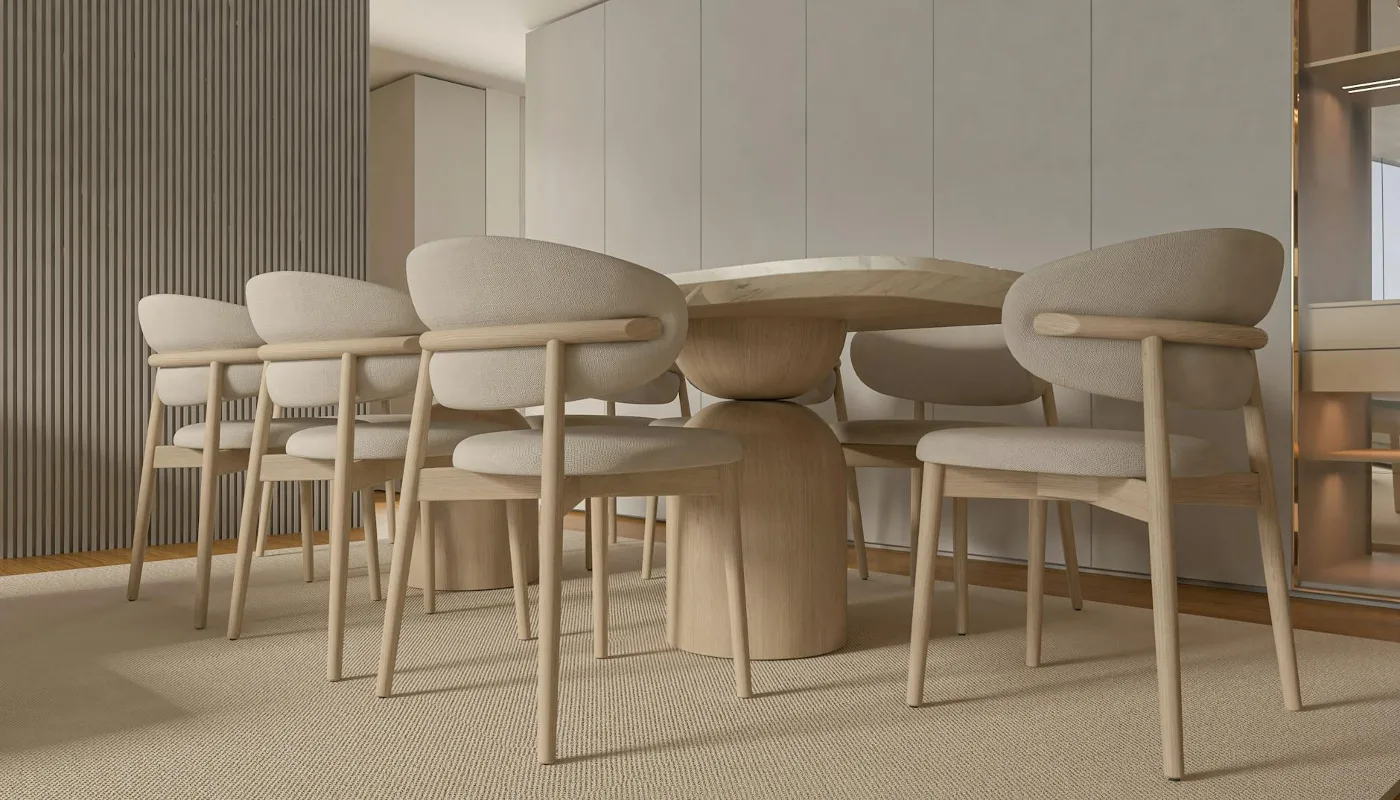
A solid wood round dining table is a smart choice if you want a dining surface that feels welcoming, works well in smaller or awkward spaces, and brings visible natural character into the room. The round shape helps people face one another, while solid wood adds the weight, texture, and repairable quality many buyers want for long-term use. natural wood dining table offers more detail on this point. amish dining table offers more detail on this point.
The right table, though, depends on more than appearance. Size, wood species, base style, finish, and the way you plan to use the table every day all matter. A well-chosen round table can anchor a breakfast nook, a compact apartment dining area, or a more formal dining room. A poor fit can make chairs feel cramped, limit serving space, or create maintenance headaches. best table base styles for dining rooms offers more detail on this point.
Who a solid wood round dining table suits best
This style tends to work especially well for households that value conversation, flexibility, and a softer visual footprint. Round tables often feel less rigid than rectangular ones, which makes them a practical option for casual meals, games, homework, and small gatherings.
They are a strong match for:
- Smaller dining rooms where corners would crowd circulation
- Open-plan homes that need a table with a lighter visual presence
- Households that host informal dinners and want everyone equally included
- Buyers who prefer natural materials over synthetic surfaces
- Spaces that blend traditional, farmhouse, transitional, or modern rustic design
That said, a round table is not automatically the best answer for every room. If you regularly need to seat a large group, place buffet dishes along the table edge, or push the table against a wall, another shape may be more efficient.
The main trade-offs to understand before buying
The biggest appeal of a solid wood round dining table is the combination of warmth and practicality. The curved profile can make a room feel less crowded, and solid wood usually offers better long-term value than many lower-cost alternatives because it can often be refinished or repaired more easily.
But there are trade-offs. Round tables usually provide less usable edge space than rectangular tables of similar footprint, which matters if you like to serve multiple dishes family-style. They also become less convenient as seating needs grow. Once the table gets large, reaching the center can become awkward, and the shape can start to lose the easy flow that makes round tables appealing in the first place.
Another common misconception is that all solid wood tables are equally durable. The species, construction, joinery, and finish all affect performance. A table made from solid wood still needs a stable base and a finish suited to daily use.
Material and spec factors that matter most
If you are comparing tables online, the product photos may look similar while the underlying materials vary a lot. The details below matter more than styling alone.
Wood type
Different hardwoods bring different visual and practical qualities. Oak, maple, walnut, and cherry are commonly associated with dining furniture, but the exact feel depends on grain pattern, color, and finish. Oak often reads as sturdy and visible-grain, maple tends to look cleaner and more uniform, walnut usually has richer color, and cherry is often chosen for a warmer, evolving tone.
Rather than chasing a “best” wood, think about the look you want and how much surface character you are comfortable living with. Prominent grain can hide minor wear well. Smoother, more even wood can feel refined but may show marks more clearly depending on the finish.
Construction quality
A table described as solid wood still needs thoughtful construction. Pay attention to the base, the way the top is attached, and whether the design appears stable enough for everyday use. A pedestal base can create more legroom and make chairs easier to arrange, while four-legged designs may feel more familiar and visually grounded.
For round tables, the base style is not just decorative. It affects knee space, stability, and how easily guests can slide in and out. A pedestal can be excellent for seating flexibility, but only if the base is wide and steady enough for the top size.
Finish and surface treatment
The finish determines much of the day-to-day experience. Some finishes prioritize a more natural look, while others are designed for easier cleaning and better resistance to moisture and spills. A matte look may feel understated and modern, but it can behave differently than a higher-sheen surface when it comes to fingerprints, cleaning, and visible marks.
If your table will see heavy use from children, meals, and work-from-home tasks, the finish deserves as much attention as the wood itself. The most attractive table can become frustrating if it demands more care than your household will realistically give it.
Top diameter and seating reality
Round tables are often marketed by diameter, but the real question is how comfortably people can sit and move around the table in your room. Seating capacity varies with chair width, base design, and how much elbow room you expect to have.
A common mistake is buying for maximum headcount instead of daily comfort. A table that technically fits extra chairs may still feel cramped once plates, drinks, and serving pieces are on the surface. For most buyers, a little breathing room matters more than squeezing in one more seat.
How to choose the right size for your space
Size should be determined by both the room and the way you live. Start with the floor space around the table, not just the empty area in the center of the room. You need enough clearance for chairs to move out, people to walk behind seated guests, and enough comfort to avoid a crowded feel.
Ask yourself three questions:
- How often will the table be fully seated?
- Will it sit in a dedicated dining room or a shared space?
- Do you need room for serving dishes, laptops, homework, or crafts?
A smaller round table can be ideal for two to four people and for compact homes. A larger version can work beautifully in more generous spaces, but only if circulation remains comfortable. If a room is long and narrow, a round table may still work, but placement becomes more important than the table itself.
Another overlooked consideration is chair style. Armless dining chairs generally keep the footprint slimmer, while upholstered or wide-arm chairs can make a round table feel significantly tighter. The table and chairs should be evaluated as a set, not separately.
Style choices that change the whole feel
One reason people choose a solid wood round dining table is that it can support many design directions without feeling generic. The shape softens the room, while the wood can lean rustic, refined, contemporary, or traditional depending on the details.
A pedestal base creates a more open, graceful look and often fits transitional interiors well. Tapered legs can feel lighter and more classic. Chunkier bases read more grounded and work well in farmhouse or informal family spaces. The edge profile matters too: a thick apron and heavy top create a different visual impression than a slimmer, cleaner silhouette.
If your home already has a lot of hard lines, a round wood table can ease that visual rigidity. If your space is already soft and organic, choose details that keep the table from feeling too visually busy.
Maintenance and care considerations
Solid wood is often chosen because it feels substantial and can age gracefully, but it still needs basic care. That care is usually manageable, yet buyers should understand what is involved before they commit.
Everyday care typically means wiping spills promptly, using coasters, protecting the surface from heat and moisture, and cleaning with methods suited to the finish. Avoid assuming that “solid wood” means carefree. Wood moves with its environment, and finish quality affects how well the table handles routine life.
If you live in a climate with strong seasonal changes, or if your home tends to be dry in winter and humid in summer, wood movement may become more noticeable. That does not make the table a poor choice. It simply means stable construction and proper care are worth paying attention to.
Long-term, a major advantage of solid wood is the possibility of refinishing or refreshing the surface if wear becomes noticeable. That flexibility is one reason many buyers consider it a better long-range furniture investment than fully synthetic alternatives.
When a round table is better than other shapes
A round table is often the better choice when social interaction matters more than maximizing formal seating. Everyone can see each other easily, and there is no obvious head of the table. For households that use the dining area for daily life rather than only special occasions, that informal balance can be a real advantage.
Round tables also reduce the hard edges in a room. In smaller spaces, that can improve movement and make the area feel less boxed in. If your dining area sits close to a walkway, the absence of corners can be a practical benefit.
By contrast, rectangular tables usually win when you need linear serving space, want to seat more people efficiently, or have a long room that naturally suits a straight layout. Square tables can work well for symmetrical rooms or very small dining corners. Oval tables can be a useful compromise if you like the softer look of round shapes but want a bit more seating flexibility.
Common mistakes buyers make
One frequent mistake is focusing too much on the table top and not enough on the base. A beautiful top with a poorly designed base can feel awkward in use, especially if chair legs collide with support structures.
Another mistake is underestimating room clearance. People often measure the wall-to-wall size of the room and stop there. In practice, dining furniture needs movement space around it. If the table is too large for the actual circulation path, the room will feel cramped no matter how attractive the table is.
Buyers also sometimes overlook chair pairing. A round table can look balanced with the wrong chairs but function poorly. Thick, bulky chairs may defeat the purpose of choosing a visually lighter shape in the first place.
Finally, some shoppers assume all finishes age the same way. They do not. A finish that looks elegant in photos may demand more maintenance or show wear differently than expected. That is why product descriptions should be read for care requirements, not just color names and style terms.
Good alternatives if a solid wood round dining table is not quite right
If you like the look but need different function, a few alternatives may fit better:
- Round veneer table: Can offer a similar profile with a different price and maintenance profile, though it may not provide the same refinishing potential.
- Oval wood table: Keeps some of the soft look of round seating while improving seating capacity and reach.
- Rectangular solid wood table: Better for serving space, larger groups, and long narrow rooms.
- Drop-leaf table: Useful if you need flexibility in a compact home and do not want a fixed large footprint.
The right alternative depends on whether your priority is aesthetics, flexibility, seating count, or daily convenience. Many buyers realize they want the rounded visual feel, not necessarily a perfectly circular surface.
What to do next before you buy
Before placing an order, narrow your choices using a practical checklist. Measure the room, confirm chair clearance, decide how many people will use the table most days, and think about the finishes and wood tones already in the space. If possible, compare the table with the scale of your existing lighting, rug, and sideboard so the room feels intentional rather than crowded.
Then look closely at the product details that actually affect use: wood type, construction, base design, finish, and care instructions. A table should suit your routine, not just your mood board.
If you want a dining piece that feels inviting, natural, and adaptable, a solid wood round dining table is one of the most versatile options available. The best version is the one that fits your room honestly, supports the way you eat and gather, and can age comfortably with the rest of the home.