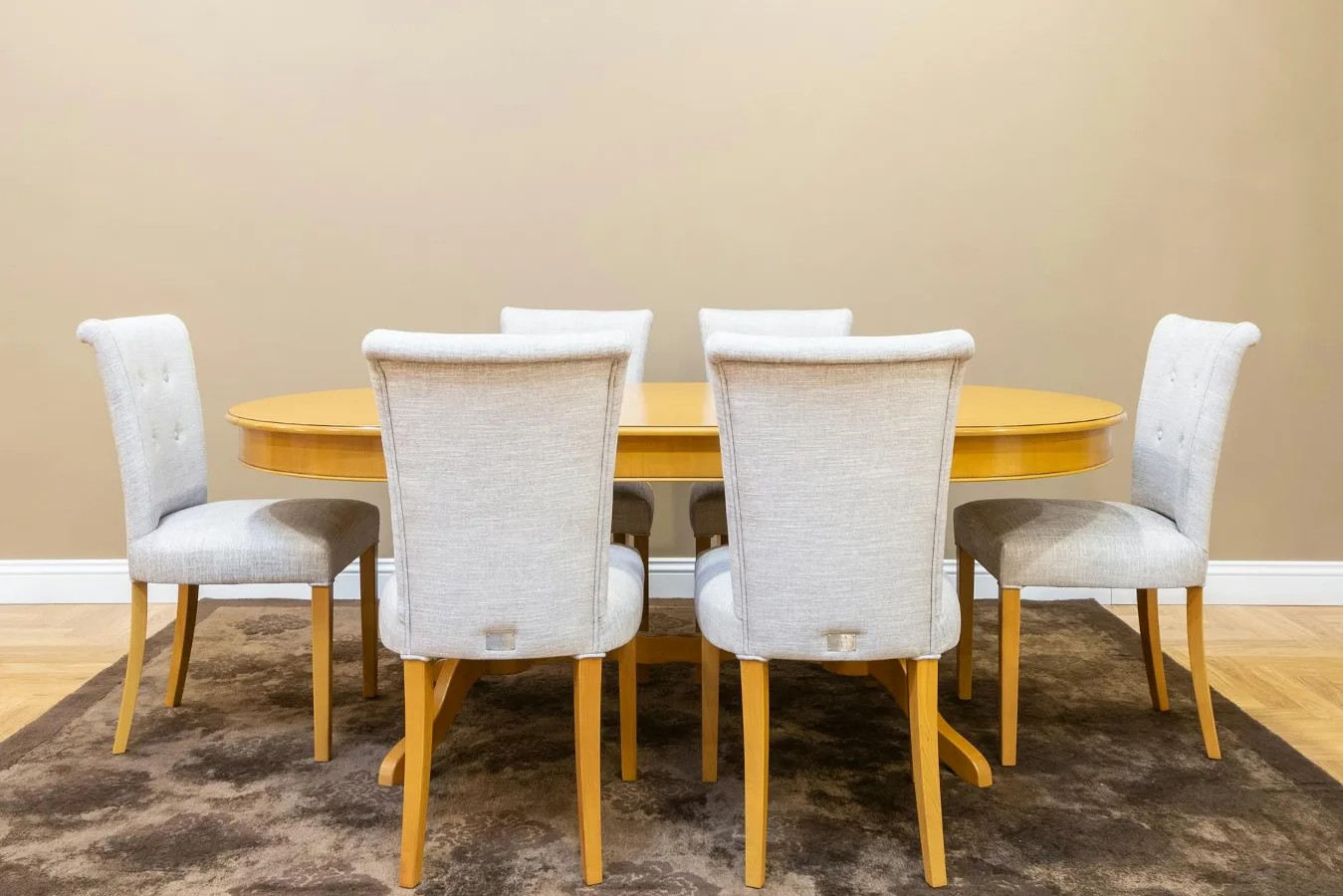
An oval dining table for 6 is a strong choice if you want seating that feels comfortable without the sharper footprint of a rectangular table. The rounded ends can make a dining room feel easier to move through, while still giving six people a clear place at the table. Walnut Dining Table Buying Guide offers more detail on this point.
The right table, though, is not just about shape. It depends on room size, chair width, base style, and how often the table will be used for everyday meals, guests, homework, or hosting. An oval shape can solve some layout problems, but it can also create them if the proportions are off.
Why an oval table works well for six
For many homes, an oval table sits in a useful middle ground. It has the visual softness of a round table and the seating capacity of a rectangular one. That makes it especially appealing in dining rooms where you want the space to feel open rather than rigid.
One practical advantage is traffic flow. The curved ends reduce the chance of bumping into corners, which matters in tighter dining rooms, open-plan layouts, and homes where the dining area connects to a kitchen or living room. The shape can also make the table feel a little less formal than a straight-edged rectangle, even when the style itself is traditional.
Another reason shoppers choose this shape is seating balance. With six chairs around an oval top, guests at the ends may feel less boxed in than they would at a narrow rectangular table. That said, the center of the table still needs enough usable surface area for serving dishes, place settings, and decor.
The first decision: room size and clearance
Before comparing materials or finishes, measure the space around the dining area. This is the most common place people go wrong. A table can look perfect online and still feel cramped once chairs are pulled out and people are seated.
Focus on clearance on all sides. You need enough room not only for the table itself, but also for chairs, walking paths, and comfortable movement when people sit down or leave the table. In open floor plans, that means thinking about more than the dining zone alone. You also need to account for nearby furniture, aisle traffic, and how the room connects to the rest of the house. choosing dining chairs for comfort offers more detail on this point. how to measure a dining room offers more detail on this point.
A helpful habit is to mark the table outline on the floor with painter’s tape. Trace the oval shape, then add the chair pullout space around it. That gives a much clearer picture than a quick glance at room dimensions.
What to watch for in smaller dining rooms
In a smaller room, oval tables can be a smart fix, but only if the width stays manageable. The curved ends help soften the footprint, yet the table still needs enough length for six seats. If the room is narrow, a pedestal base often feels easier to navigate than four corner legs, since it removes some visual and physical obstacles.
Also consider chair arms. Armchairs may look polished, but they can make a modest-sized dining area feel tight fast. If the room is limited, side chairs or slimmer upholstered chairs may be the better fit.
Seating comfort matters more than the number of chairs
Many shoppers focus on whether a table can physically fit six chairs. That is only part of the question. The better question is whether six people can sit comfortably at the same time, with enough elbow room and enough clearance for the chair frames.
Oval tables often help because the curved ends avoid hard corners near seated guests. But comfort also depends on the table’s width. If the top is too narrow, place settings, serving bowls, and glassware start competing for space. If it is too wide, guests on opposite sides may have trouble reaching the center.
Think about how you use the table. If it is mostly for weekday meals, you may care more about personal space and chair clearance. If it is also for holiday serving, homework, or games, surface area becomes more important.
A common misconception is that all tables for six should be the same size. In reality, the right fit changes based on chair style, the size of the people using it, and whether the table sits in a formal dining room or a multipurpose room.
Base style can change how the table feels and functions
The base is easy to overlook, but it strongly affects usability. Two oval tables with the same top dimensions can feel very different depending on whether they use a pedestal base, trestle base, or four legs.
Pedestal bases can make seating more flexible because there are fewer leg obstructions at the corners. They often work well for oval tables meant to seat six, especially when people want the ends to feel open. The trade-off is that stability and weight distribution matter, so the base design should feel substantial and well balanced.
Trestle bases can be attractive and sturdy, especially in farmhouse or traditional interiors. They often give a strong visual presence, but the support structure may affect where chairs can be placed. Some trestle designs make end seating easier than others, so the exact layout matters.
Four-leg bases are familiar and versatile, but they can be less forgiving at the corners if the legs are placed too close to where someone wants to sit. For a six-seat oval table, that can matter more than buyers expect.
Material and finish: choose for use, not just looks
The best surface depends on how the table will be used day to day. Wood, veneer, laminate, glass, and stone-look tops each come with different care needs and visual effects.
Solid wood offers warmth and a substantial feel. It is often chosen for classic or transitional dining rooms, but it usually needs more attention to protect the finish from scratches, moisture, and heat.
Wood veneer can deliver a similar look at a different price point and with different construction characteristics. The key is understanding the quality of the core and how the finish is built, since durability can vary widely.
Laminate and other engineered surfaces are often easier to maintain, which is useful in busy households. They can be a practical choice for families or frequent everyday use, especially if spills and cleanup are a concern.
Glass tops create a lighter visual profile, which can help in smaller rooms. The trade-off is that fingerprints, smudges, and scratches may be more noticeable, and the room can feel less warm than with wood.
Stone-look or stone-inspired surfaces can bring a more substantial appearance, but weight, care requirements, and sensitivity to marks should be considered carefully.
The finish matters too. A high-gloss top reflects more light and can feel more contemporary, while matte or satin finishes tend to hide everyday wear more easily.
How to match the table shape to the room style
An oval dining table is versatile, but it still needs to suit the room’s architecture and furnishings. In a traditional dining room, an oval pedestal table can feel elegant and balanced. In a casual eat-in kitchen, a simpler profile may fit better and keep the room from feeling overdecorated.
If the room already has a lot of straight lines—cabinetry, windows, sideboard, rectangular rug—an oval table can soften the overall look. That contrast is one reason the shape works so well in modern and transitional interiors. If the room is already filled with curves or ornate details, a very decorative oval table could start to feel busy.
Rug shape also matters. A rug that is too small will make even a beautiful table look squeezed. A rug that is properly scaled should extend well beyond the chair pullout area so the chairs stay on the rug when people sit down.
Practical layouts that usually work best
There is no single ideal setup, but a few patterns tend to work well for an oval table for six.
- Longer, narrower rooms: A pedestal oval table often helps keep circulation paths open.
- Open-plan spaces: Choose a table with a finish and base that visually separates the dining zone without making it feel heavy.
- Everyday family use: Prioritize an easy-to-clean surface and chairs that slide in smoothly.
- Formal dining rooms: Consider a more substantial base and a finish that pairs well with the room’s storage pieces.
- Smaller homes or apartments: Focus on chair clearance and choose a scale that allows the table to breathe.
The overlooked detail here is chair shape. A table that seems appropriately sized can still feel awkward if the chairs have bulky arms, deep seats, or wide legs. The table and chairs should be evaluated as one set, even if they are purchased separately.
Common mistakes shoppers make
One of the biggest mistakes is measuring only the table top and not the full setup. Chairs need to move, people need to walk behind seated guests, and serving dishes need a place to land. Another frequent error is choosing a table for its style alone, then discovering that the base blocks comfortable seating at the ends.
Some buyers also underestimate the difference between a table that seats six and a table that seats six comfortably. If the dining room doubles as a workspace, the comfortable option usually matters more than the maximum seating claim.
Another practical mistake is ignoring how often the table will be rearranged. If the room changes for holidays, homework, or entertaining, a lighter design or more versatile shape can be easier to live with than a heavy statement piece.
When an oval table is the better choice than round or rectangular
An oval table is worth serious consideration if you want the softer look of a round table but need more seating than a typical round top can offer. It is also a strong choice when corners feel awkward in the room or when you want to improve movement around the dining area.
Compared with a rectangular table, an oval can feel less rigid and slightly more forgiving in tight traffic zones. That said, rectangles often offer more obvious placement options for serving pieces and may align more easily with room architecture. So the oval shape is often chosen for balance: not the most formal, not the most casual, but adaptable enough for everyday life.
If the room is extremely narrow, a rectangular table may use wall-to-wall space more efficiently. If the room is compact and square, a round table may feel more open. Oval works best when you want a middle path.
How to decide with confidence
Start with the room, then the seating needs, then the style. That order prevents the most common regrets. If the table fits the room, supports the way you use it, and works with your chairs, the shape is doing its job.
For an oval dining table for 6, the strongest candidates usually share three qualities: enough surface area for comfortable seating, a base that does not interfere with chairs, and a proportion that respects the room’s traffic flow. Once those pieces are in place, finish and design become easier decisions.
If you are still comparing options, narrow the field by asking a simple question: will this table make the dining area easier to use every day, or just prettier to look at? The best choice does both, but usability should come first.
A well-chosen oval table can make a dining room feel more welcoming, more flexible, and less crowded. For many homes, that is exactly the balance a six-person table should deliver.