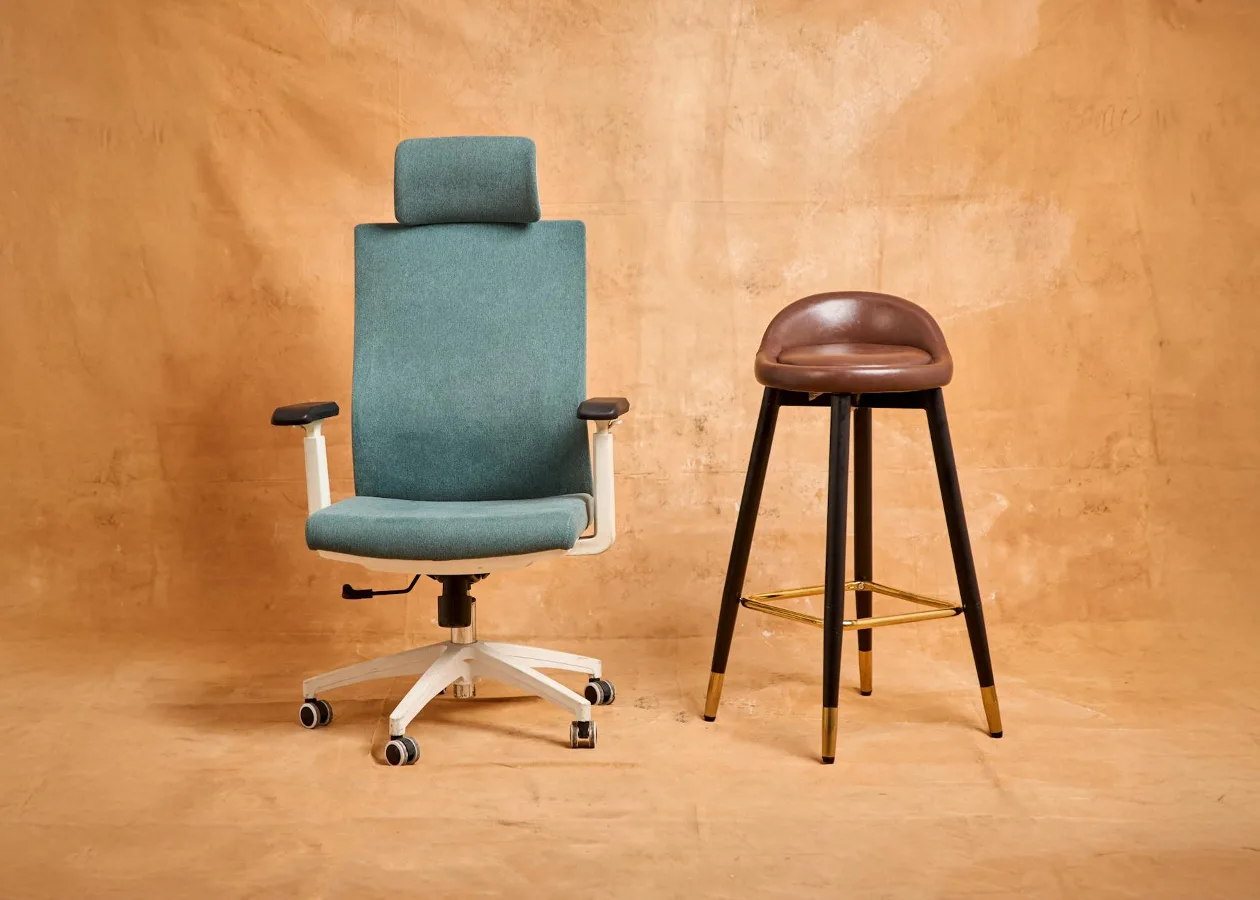
What an ergonomic sewing chair should solve
An ergonomic sewing chair is not just a “nice-to-have” seat for a craft room. It is the chair that helps you sit closer to the machine, keep your shoulders relaxed, and avoid awkward reaches while you sew, press, pin, or trim. For many sewists, the real value is not luxury—it is reducing the strain that builds up during long stretches of focused work.
The right chair depends on how you sew. Someone who piecing quilts at a machine all afternoon will have different needs from someone who alternates between hand sewing, fitting, and cutting at a standing table. That is why the best chair for sewing is usually the one that matches your table height, your range of motion, and the way your body likes to sit. chair height for a sewing table offers more detail on this point.
Commercially, the phrase can cover task chairs, drafting chairs, rolling stools with backrests, and more supportive office-style models. What matters is whether the chair helps you stay stable, supported, and mobile without forcing your body into a fixed posture.
When it matters most
An ergonomic sewing chair matters most when sewing stops being a short hobby session and starts becoming a repeated routine. If you only sit down for a few minutes at a time, almost any decent chair may feel acceptable. But once you are spending longer blocks at a machine, the small mismatches add up.
It becomes especially relevant if you:
- sew for long stretches without frequent breaks
- use a machine set into a cabinet or dedicated table
- share a sewing room with other work or craft activities
- have neck, back, hip, or knee sensitivity
- move frequently between the machine, cutting area, and ironing board
- need a chair that works in a compact or multi-use room
One common misconception is that more padding automatically means more comfort. In practice, a deeply cushioned chair can still be awkward if it sits too high, slips around, or prevents you from getting close enough to your workspace. For sewing, fit often matters more than softness.
Step-by-step criteria for choosing one
1. Start with your sewing surface height
Your chair and your table need to work together. If the seat is too high, your shoulders may rise and your arms may hover while you guide fabric. If it is too low, you may hunch forward to reach the needle area. That is why adjustable seat height is one of the most useful features in an ergonomic sewing chair. Ergonomic Saddle Chairs: A Practical Buying Guide offers more detail on this point.
Measure the height of your machine table, sewing cabinet, or work surface first. Then look for a chair that can place you comfortably in relation to that surface. If your setup changes often, a wider height range gives you more flexibility.
2. Decide how much back support you really need
Some sewists prefer a chair with a supportive backrest that encourages a neutral seated position. Others want a lower back support or a lightly contoured back that does not get in the way when they lean forward. There is no universal best choice here.
If you sew with frequent forward lean, a very tall or rigid backrest can feel restrictive. If you tend to stay seated for long sessions, a more structured back may be worth prioritizing. The key is support without forcing you into one posture all day. back support basics for long craft sessions offers more detail on this point.
3. Check how easily you can move around your workspace
Sewing rarely happens in one spot alone. You may roll from the machine to a cutting mat, turn toward an ironing surface, or pivot to reach drawers and thread storage. A chair with smooth mobility can make that rhythm easier.
Wheels are helpful in some sewing rooms, especially if you work between stations. But they are not always ideal. On very slick flooring, a rolling chair may feel unstable. On thick carpet, it may be hard to move at all. A seat that swivels without rolling can sometimes be a better fit for a smaller room.
4. Look at seat shape, not just seat padding
The shape of the seat affects how stable you feel while sewing. A broad, flat seat can give you room to shift positions. A contoured seat may offer better pressure distribution. A rounded front edge can reduce pressure behind the thighs, which matters when you are seated for a long time.
For sewing, avoid seats that are so deep that your feet cannot remain planted comfortably. If your feet dangle or you have to slide forward to reach the floor, the chair is working against your posture.
5. Pay attention to armrests, or the lack of them
Armrests can be useful, but they are not always practical in a sewing room. Low-profile or adjustable armrests may help when you are resting between tasks. Fixed arms, however, can interfere with reaching the machine or tucking the chair under a table.
If your chair sits close to a sewing machine bed, the freedom to pull in tight often matters more than having arms. Many sewists prefer armless designs for that reason.
6. Match the chair to your body and not just the room
Height, torso length, leg length, and flexibility all affect comfort. A chair that works for one sewist may feel completely wrong for another, even if both are shopping for the same setup. This is one reason a purely style-driven purchase can disappoint.
If possible, prioritize adjustability over one fixed ideal. Seat height, tilt, lumbar placement, and swivel function allow the chair to adapt as your sewing habits change.
Practical examples of different sewing needs
The best ergonomic sewing chair depends on use case. These examples show how the criteria shift from one situation to another.
For machine sewing at a dedicated table
A height-adjustable task chair with a supportive back and easy swivel is often the most practical choice. It should let you sit close enough to the machine without leaning your shoulders forward. Mobility matters if you keep thread, scissors, and notions within a nearby work zone.
For quilting and longer sessions
Quilters often spend more time seated at a stretch, which makes back support, seat comfort, and stable posture more important. A chair that allows small changes in position can help reduce fatigue. The best option is usually one that balances cushioning with structure.
For a small sewing corner
Space constraints change the decision. A compact chair, a lower-profile backrest, or a rolling stool with a modest footprint may be more realistic than a large office chair. In tight spaces, the ability to tuck the chair away can matter as much as the support it provides.
For mixed craft use
If you also cut fabric, press seams, or handle handwork at the same station, versatility is valuable. A chair that is easy to adjust and move between tasks can serve better than a highly specialized seat.
What people often overlook
One overlooked detail is foot support. Even a well-designed chair can feel wrong if your feet do not sit comfortably on the floor. When your feet are unsupported, your lower back and thighs may take on extra strain. In some sewing setups, a footrest can make a bigger difference than the chair brand itself.
Another overlooked point is how the chair interacts with the sewing machine pedal. If the seat is too high or the base is bulky, your leg positioning can become awkward. You may find yourself reaching for the pedal with a toe pointed or one hip rotated. That is a recipe for discomfort over time.
Seat glide is also worth noticing. A chair that rolls too easily can make controlled sewing feel fussy, while one that does not move enough can make repeated transitions annoying. The best balance depends on your floor and workflow.
Common mistakes to avoid
- Choosing style over function: a chair may look great in a sewing room and still be poor for posture or table access.
- Ignoring seat height: this is one of the most common reasons a chair feels uncomfortable at a machine.
- Buying too much chair: oversized arms, a deep seat, or a tall back can get in the way in a sewing setup.
- Assuming plush equals ergonomic: cushioning helps only if the overall shape and height are right.
- Forgetting floor type: carpet, hardwood, and vinyl all change how wheels and bases behave.
- Skipping the workstation check: the chair should be chosen with the machine table, pedal placement, and nearby surfaces in mind.
How to compare options without overcomplicating the process
When comparing ergonomic sewing chairs, focus on the features that affect daily use rather than the longest spec list. A simple checklist can keep the decision grounded.
| Feature | Why it matters for sewing | What to look for |
|---|---|---|
| Seat height adjustment | Helps align you with the machine and pedal | A range that fits your table and leg length |
| Back support | Supports longer sessions and better posture | Comfortable, non-restrictive support |
| Seat depth and shape | Affects thigh comfort and stability | Enough room without forcing you forward |
| Mobility | Makes moving between sewing stations easier | Swivel, wheels, or controlled movement |
| Foot placement | Supports lower-body comfort | Ability to keep feet flat or use a footrest |
| Arm design | Can help or interfere with workspace access | Armless or low-profile adjustable arms |
If you are shopping online, product photos can be misleading because chair proportions are hard to judge visually. Pay more attention to adjustability, seat dimensions, and whether the design suits a sewing table rather than a general office desk.
Alternatives if a full ergonomic sewing chair is not the best fit
A traditional ergonomic chair is not the only workable solution. Depending on your room and habits, another seating style may serve you better.
- Drafting chair: useful for higher work surfaces or adjustable tables.
- Task stool with backrest: good for compact spaces and frequent movement.
- Armless office chair: often a practical middle ground for sewing tables.
- Rolling craft chair: convenient if you move between stations often.
- Foot-supported seated setup: helpful if your machine position and body alignment need a custom solution.
These alternatives are not automatically better or worse. They simply solve different problems. A drafting chair can be excellent for one setup and awkward for another. The best choice is the one that fits your working height and the tasks you do most often.
A simple checklist before you buy
- Measure your sewing table or machine surface height.
- Decide whether you need wheels, swivel, or both.
- Choose between structured back support and a lighter backrest.
- Make sure the seat lets your feet rest comfortably.
- Check whether armrests will interfere with getting close to the machine.
- Think about how often you switch between sewing, cutting, and pressing.
- Consider your floor type and room size.
- Prioritize adjustability if more than one person will use the chair.
If a chair checks most of these boxes, it is usually a stronger candidate than one with a more impressive description but poor fit for your workspace.
The most useful way to think about comfort
The best ergonomic sewing chair is the one that makes your sewing setup easier to use, not the one with the most features on paper. Comfort in a sewing room is a system: chair height, foot support, table height, pedal placement, and movement all interact.
That is why the smartest purchase is rarely the most padded or the most expensive option. It is the chair that matches your body, your room, and the way you actually sew. If you start with those factors, you are much more likely to end up with a seat that supports the work instead of getting in the way of it.