Air fryers and deep fryers are built for different priorities. An air fryer is usually the better choice if you want less oil, easier cleanup, and a more versatile countertop appliance. A deep fryer is the stronger pick if your main goal is classic fried texture, especially for foods that taste best fully submerged in hot oil. fritaire non toxic air fryer offers more detail on this point.
If you are deciding between the two, the key question is not which one is universally better. It is which one fits how you actually cook. For some households, that means a compact appliance for fries, vegetables, and reheating. For others, it means a dedicated fryer for parties, batch cooking, or traditional fried foods. guide to healthier cooking methods offers more detail on this point.
Quick answer: air fryer vs deep fryer
Choose an air fryer if you want a lower-oil cooking method, simpler cleanup, and a multiuse appliance that can handle more than just fried foods. Choose a deep fryer if you care most about the most authentic fried texture and you fry often enough to justify the extra oil handling and cleanup.
The biggest difference is cooking method. An air fryer uses rapid hot air circulation with a small amount of oil, if any. A deep fryer cooks food by submerging it in hot oil. That difference affects texture, flavor, smell, mess, and how much attention the appliance needs during use.
How they compare in everyday use
Texture and flavor
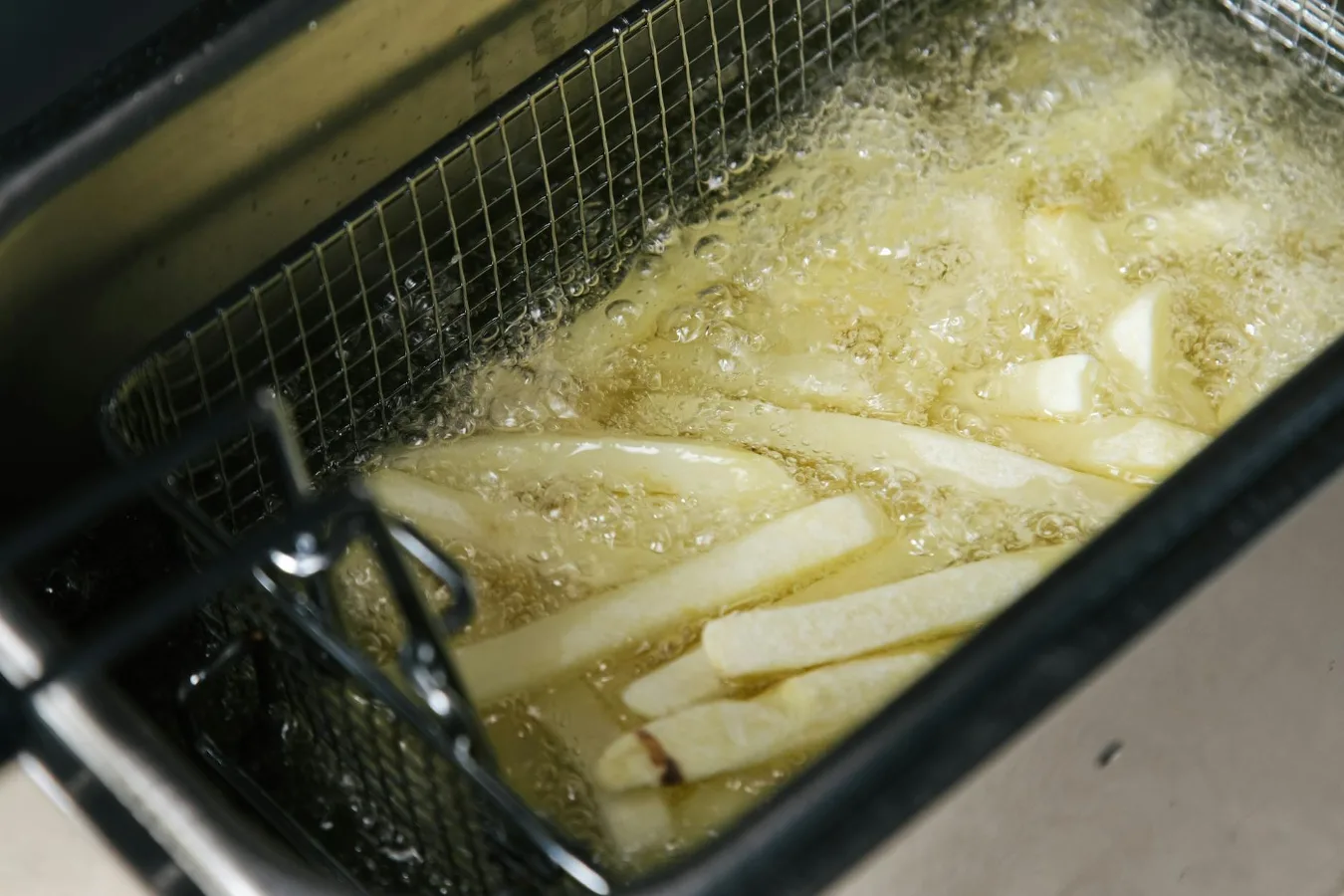
A deep fryer is hard to beat for the classic results many people expect from fried food. The full oil bath creates an even, rich crust that is especially appealing on foods like battered chicken, doughnuts, onion rings, and tempura-style items.
An air fryer can still produce crisp exteriors, especially on breaded foods, frozen snacks, and foods with a light coating of oil. But the texture is different. It often lands closer to roasted-and-crisp than fully deep-fried. That is not a flaw for everyone; for many cooks, it is the preferred trade-off.
If your definition of “best” means the closest match to restaurant-style deep frying, the deep fryer usually wins. If you want crisp edges without fully oil-immersed cooking, the air fryer has the advantage.
Oil, cleanup, and odor
This is where air fryers tend to shine. They usually require little oil, and there is no large pot of used frying oil to strain, store, or dispose of. For many households, that alone makes the appliance more convenient for regular use.
Deep fryers require more planning. You need enough oil for the basket or chamber, a safe way to handle hot oil, and a plan for filtering or replacing it. Cleanup is more involved because oil can cling to baskets, lids, and surrounding surfaces. Frying also tends to leave a stronger smell in the kitchen.
That does not mean deep fryers are impractical. It means they make more sense for people who are comfortable managing oil and want the results that come with it.
Safety and mess
For many shoppers, safety is the most overlooked factor. Deep frying involves hot oil, which raises the risk of splatter, spills, and burns if the appliance is handled carelessly or overloaded. Even with a well-designed fryer, the process demands more attention.
Air fryers are generally easier to use in a busy kitchen because they do not involve a pot of very hot oil. That makes them appealing for beginners, families, and anyone who wants a more forgiving appliance. They are not risk-free, but the cooking process is usually simpler and less messy.
Speed and convenience
Both appliances can cook quickly, but the convenience looks different. A deep fryer can deliver fast, consistent results for foods that fry well in oil, especially when batch cooking. Once the oil is properly heated, the process is straightforward. best kitchen appliances for quick weeknight meals offers more detail on this point.
An air fryer can be more convenient for everyday use because it is easy to set up, easy to clean, and often useful for reheating leftovers, roasting vegetables, or cooking smaller portions. If you want one appliance that earns its spot on the counter through frequent use, the air fryer often has broader day-to-day appeal.
Which one is better for specific foods?
Food choice matters more than many buyers expect. Some foods are naturally better suited to one method than the other.
- French fries: Deep fryers deliver the most classic fried texture. Air fryers can make very good fries, especially frozen fries, but the result is usually a little different.
- Chicken wings: Both can work well. Deep frying gives a more traditional fried finish, while air frying is easier for regular home use.
- Battered foods: Deep fryers usually handle wet batters better. Air fryers are often better with breaded coatings than loose batters.
- Frozen snacks: Air fryers are especially popular for frozen mozzarella sticks, nuggets, and fries because they are simple and low-mess.
- Vegetables: Air fryers are often more practical since they roast and crisp without heavy oil.
- Doughnuts and funnel-cake-style items: Deep fryers usually make more sense for traditional results.
A common misconception is that an air fryer is simply a healthier deep fryer with the same results. The truth is more nuanced. The food may taste and feel different, so the better question is whether you want a lower-oil version of a dish or the exact traditional version.
Buying considerations that matter most
Capacity and batch size
Capacity is a practical constraint that affects how well each appliance fits your kitchen. Air fryers often work best for singles, couples, or smaller family portions, though larger models are available. Deep fryers are often chosen by people who want to fry larger batches of a few specific foods.
Think about how you actually cook. If you mostly make side dishes, snacks, or small dinners, an air fryer may be easier to live with. If you host often or fry several servings at once, a deep fryer can be more efficient for that one job.
Kitchen space and storage
Counter space matters. Air fryers are usually more versatile, so many people are willing to keep one out regularly. Deep fryers can feel more specialized, and their oil-related accessories add to storage needs.
If your kitchen is compact, the appliance that can do more jobs often earns its footprint better. That is one reason air fryers are popular in apartments and smaller homes.
Maintenance and long-term convenience
Deep fryers bring recurring maintenance. Oil quality changes over time, and the appliance may need more thorough cleaning to avoid buildup and lingering smells. If you do not want to manage oil regularly, that can become a hassle.
Air fryers are usually easier to maintain, though they still need cleaning after greasy foods. Baskets and trays can collect residue, especially if you cook breaded items often. The difference is that the cleanup is usually simpler because you are not dealing with a container full of used oil.
Cost beyond the sticker price
Instead of focusing only on purchase price, think about ongoing costs and convenience. Deep fryers use cooking oil, which becomes an ongoing ingredient and disposal consideration. Air fryers do not eliminate oil entirely, but they can reduce how much you go through.
That matters if you fry frequently. Over time, the cost and effort of oil management can be a real deciding factor, even if the upfront appliance price is not dramatically different.
Common mistakes people make when choosing
- Assuming air fryer results are identical to deep frying. They are not. The cooking methods create different textures.
- Buying a deep fryer without considering oil storage and disposal. The appliance is only part of the commitment.
- Choosing size based on appliance footprint alone. Food capacity matters just as much as counter space.
- Ignoring what foods you cook most often. The best appliance depends on your regular menu, not just occasional cravings.
- Overlooking cleanup time. A fryer that is inconvenient to wash may end up unused.
- Expecting an air fryer to replace every fried-food need. Some recipes simply perform better in oil.
One practical nuance: many people buy a deep fryer for occasional “special” meals, then realize they do not want to manage oil that often. In that case, an air fryer may be the better match even if the traditional fried texture is slightly less exact.
When an air fryer is the better choice
An air fryer makes sense if you want a general-purpose appliance that can handle crispy snacks, weeknight meals, reheating, and smaller batches with minimal mess. It is especially useful if you are trying to reduce oil use or if you want a simpler appliance that encourages more frequent cooking.
It is also the safer practical choice for many households because it avoids the specific challenges of hot oil. For beginners, busy parents, and anyone who values convenience over authenticity, it is often the more forgiving option.
When a deep fryer is the better choice
A deep fryer is the stronger choice if fried food is a real part of your cooking routine and you want the most traditional result possible. It is especially useful for breaded chicken, battered seafood, doughnuts, and foods where full immersion matters for texture.
If you already cook with oil comfortably and do not mind the cleanup, a deep fryer can deliver consistency that an air fryer may not fully match. It is less versatile than an air fryer, but within its lane, it can be very effective.
Good alternatives to consider
If neither appliance feels perfect, there are a few reasonable middle-ground options:
- Convection oven or toaster oven with convection: Good for crisping larger portions with less oil than deep frying.
- Oven-style air fryer: Useful if you want a larger cooking area and more baking flexibility.
- Stovetop skillet frying: Better for some recipes that need careful control without committing to a dedicated deep fryer.
These alternatives can make sense if you want fried-style food occasionally but do not want another specialty appliance taking up space.
FAQ
Is an air fryer healthier than a deep fryer?
Air fryers usually use far less oil than deep fryers, which is why many people view them as the lighter option. That said, “healthier” depends on the recipe, ingredients, and portion size, not just the appliance.
Can an air fryer replace a deep fryer?
For some foods, yes. For others, no. An air fryer can handle many crispy dishes well, but it will not fully replicate the texture of foods that are best cooked in hot oil.
Which is easier to clean?
Air fryers are usually easier to clean because you are not dealing with used frying oil. Deep fryers require more cleanup and more care around oil handling.
Which is better for frozen food?
Air fryers are often the more convenient choice for frozen snacks and sides. Deep fryers can still work well for some frozen foods, especially those designed for frying, but they involve more setup.
Which appliance is better for families?
It depends on what the family eats most often. Air fryers are typically more versatile for everyday use, while deep fryers may suit families that regularly make classic fried foods in larger batches.
If you want the shortest possible answer, choose an air fryer for versatility, easier cleanup, and less oil. Choose a deep fryer for the most traditional fried texture and foods that truly benefit from full immersion. The better appliance is the one that matches your cooking habits, not just your appetite for crispy food.