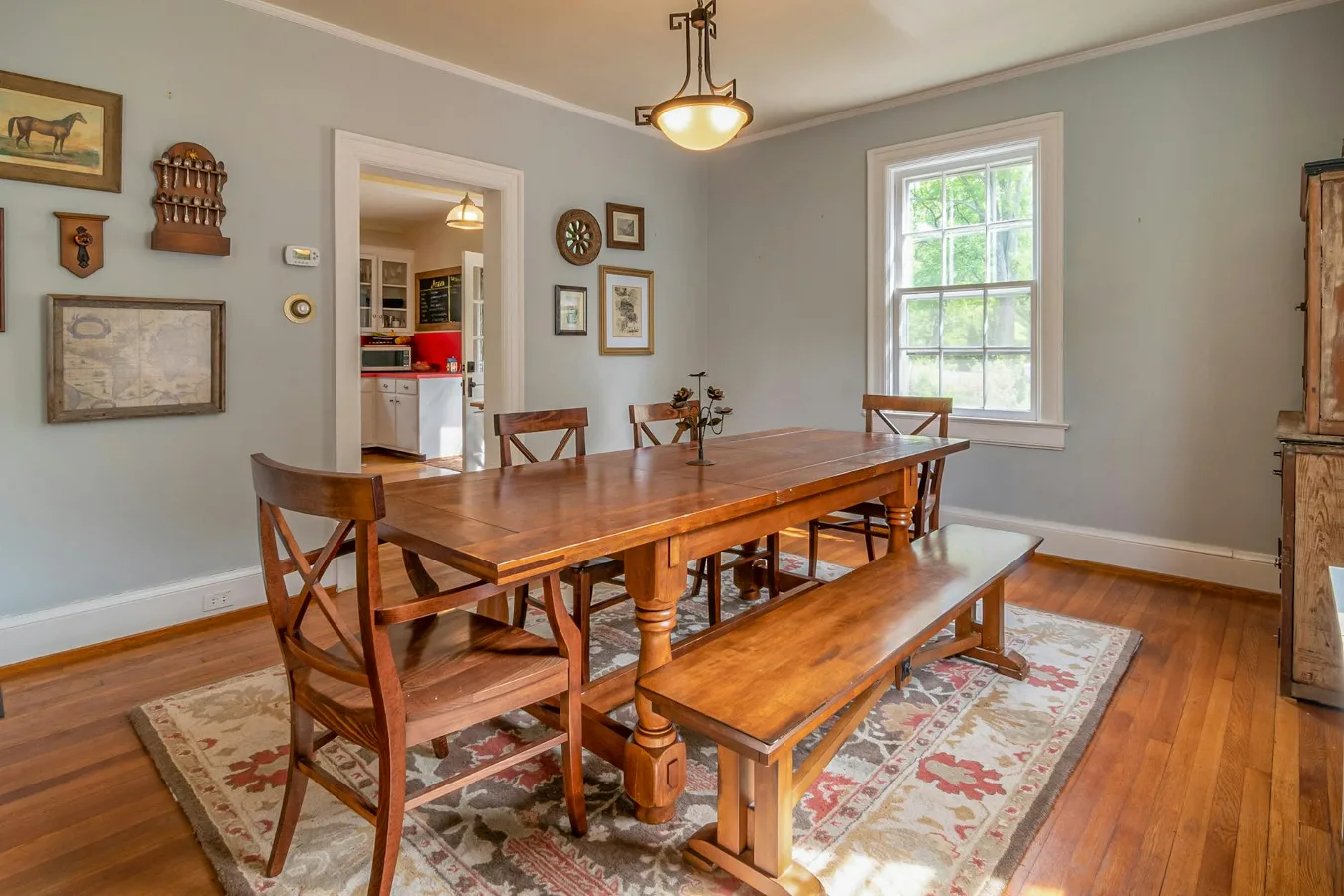
Quick answer: what an Amish dining table is
An Amish dining table is usually a handcrafted solid-wood table made by skilled woodworkers using traditional joinery, careful finishing, and a strong emphasis on durability. For most shoppers, the appeal is not just the look; it is the ability to choose a table that fits the room, the household, and the way the space is actually used.
If you are comparing one for a home dining room, the most important questions are simple: What wood is used? How much customization do you need? Will the table need leaves, storage, or a specific shape? Those answers matter more than the label itself.
Amish dining tables are often chosen for long-term use, classic styling, and a more tailored fit than many mass-market options. They are not automatically the best choice for every home, though. They can be heavier, more expensive, and less flexible if you want a lightweight or highly modern look.
How Amish dining tables compare to other dining tables
The phrase “Amish dining table” is often used to signal craftsmanship, solid wood construction, and customization. That makes it useful to compare these tables against the two most common alternatives: mass-produced veneer tables and fully custom furniture from other builders. custom furniture buying guide offers more detail on this point. White Oak Dining Table Buying Guide offers more detail on this point.
| Comparison factor | Amish dining table | Typical mass-market table |
|---|---|---|
| Construction | Usually solid wood with traditional joinery | Often a mix of solid wood, veneer, engineered wood, or composites |
| Customization | Often strong in size, wood species, finish, and edge choices | Usually limited to preset sizes and finishes |
| Style | Commonly classic, transitional, farmhouse, or mission-inspired | Ranges widely, including trend-driven styles |
| Weight and feel | Typically substantial and sturdy | Can be lighter and easier to move |
| Long-term value | Often strong if the construction and finish suit the home | Can vary widely depending on materials and build quality |
The comparison is not about “better” or “worse” in a vacuum. It is about fit. A family that wants a table to grow with the home may value the sturdiness and finish quality. A renter or someone who rearranges often may prefer something lighter and more flexible.
What to look at before you buy
The biggest mistake shoppers make is focusing only on style. A dining table is a working piece of furniture, so the practical details matter just as much as the appearance.
Wood species and color tone
Different wood species can change the character of the table in obvious ways. Some woods show grain movement and natural variation more prominently, while others create a calmer, more uniform surface. Darker finishes can feel formal; lighter finishes often read as relaxed or farmhouse-inspired.
If your dining room already has a strong floor color, cabinets, or a nearby kitchen island, wood tone should be chosen with the whole space in mind. Matching every wood finish too closely can make the room feel flat. A coordinated but not identical approach usually looks more natural.
Table shape and room layout
The shape should follow the room, not just the style you like online. Rectangular tables are the most common choice because they work well in longer rooms and seat larger groups efficiently. Round and oval tables can feel softer and easier to navigate in smaller spaces or open-plan rooms. Square tables can work in compact rooms or breakfast areas, but they are less flexible for bigger gatherings.
Think about circulation. Chairs need space to pull out, and people need room to walk behind seated guests. A beautiful table that overwhelms the room will be frustrating every day.
Size and seating needs
Size is one of the most overlooked decision points. Shoppers often look at the tabletop dimensions alone and forget about chair clearance, traffic flow, and whether the table will be used for homework, work-from-home tasks, or holiday serving.
Before buying, consider how many people sit there on a normal weeknight, not just on special occasions. If you host occasionally, an extendable option may make more sense than oversizing the table for daily life.
Leaves and extension options
Many Amish dining tables are offered with leaves, which can add flexibility for guests and holidays. The trade-off is that leaves add handling, storage, and setup considerations. Some homeowners love the flexibility. Others tire of lifting, storing, and aligning pieces. round dining table with leaf offers more detail on this point.
If you expect to use leaves often, ask how they are stored, how the seams look when expanded, and whether the table remains stable with extensions in place. Extension convenience is one of those practical details that is easy to overlook until the first holiday meal.
Finish and maintenance
The finish affects daily life just as much as the wood itself. A dining table needs to stand up to spills, heat, plate movement, and frequent cleaning. Some finishes are easier to wipe down and maintain, while others may be more sensitive to care habits.
For households with children, frequent entertaining, or regular use, durability and maintenance should carry real weight. A finish that looks beautiful in a showroom but requires too much caution may become a source of frustration.
Why buyers choose an Amish dining table
There are good reasons this category remains popular. The draw is not only craftsmanship; it is the combination of practical strengths that often matter in a busy home.
- Solid presence: These tables often feel substantial and anchored in a room.
- Customization: Buyers can often choose dimensions, wood species, edge profiles, and finishes.
- Timeless styling: Many designs work with traditional, transitional, farmhouse, and mission-influenced interiors.
- Long-term use: A well-chosen table can serve for years without looking disposable or trendy.
- Repair potential: Solid-wood construction can be more forgiving than low-cost composite furniture when cared for properly.
That said, durability is not a guarantee just because the table is associated with Amish craftsmanship. The final result still depends on the build quality, wood selection, finish, and how the table is used in the home.
Common mistakes to avoid
Shoppers often make the same few errors when choosing an Amish dining table. Avoiding them can save money and disappointment.
Choosing style before size
A table can look perfect in photos and still be awkward in the room. Measure the dining area, the path to nearby rooms, and the clearance needed for chairs. Then compare shapes and base styles.
Ignoring how the table will be used
A formal table for occasional entertaining is a different decision from a family table that handles daily meals, art projects, and laptop use. If the table will be used heavily, prioritize surface practicality and stability over decorative detail.
Overlooking chair compatibility
Table height, apron depth, and leg placement affect chair comfort. A table may seat the right number of people on paper but feel cramped if the base interferes with armchairs or wider seating.
Assuming all solid wood behaves the same
Wood is natural, and that means variation. Grain, color shift, and small seasonal movement are part of the material. Buyers who expect a perfectly uniform look may be disappointed, while those who value natural character often appreciate it.
Skipping finish and care questions
One of the most practical but overlooked considerations is maintenance. Ask what routine care is recommended, what cleaning products should be avoided, and how the finish may respond to heat or moisture. A table should fit the household’s habits, not the other way around.
Good alternatives if an Amish dining table is not the right fit
Not every dining room needs this type of table. If the goals are different, another option may be more appropriate.
- Solid-wood contemporary dining tables: Better if you want a cleaner modern look with fewer traditional details.
- Extendable tables from mainstream furniture brands: Useful if budget or portability matters more than customization.
- Veneer tables with hardwood cores: Can offer a lighter visual feel and a lower price point, though with different durability trade-offs.
- Pedestal tables: A strong choice for smaller rooms where legroom and flexible seating matter.
The right alternative depends on whether your priority is craftsmanship, design flexibility, space efficiency, or ease of moving the furniture later.
Who an Amish dining table suits best
This type of table usually makes the most sense for buyers who want a grounded, lasting dining room anchor and are willing to think through the details. It can be a strong match for households that entertain at home, prefer traditional or transitional furniture, or want a piece that feels more permanent than trend-based decor.
It may be less suitable for someone who expects frequent moves, needs a very light piece, or wants a sharp modern silhouette with minimal visual weight. In those cases, a different dining table category may fit the room better.
Practical buying checklist
Before you order, use a simple checklist to compare options fairly:
- Measure the room, including chair clearance and walking paths.
- Decide whether you need a fixed top or extension leaves.
- Choose a shape that matches the room layout.
- Compare wood species and finish tones in the context of the room.
- Check how the base affects seating and legroom.
- Ask how the finish should be cleaned and maintained.
- Consider whether the table needs to coordinate with existing chairs or benches.
This kind of step-by-step review helps prevent impulse choices. With a dining table, the easiest purchase is not always the one that works best for years.
Frequently asked questions
What makes an Amish dining table different?
It is typically associated with solid wood construction, traditional woodworking methods, and customization options. The exact details vary by builder, so it is worth checking materials, finish, and dimensions rather than relying on the label alone.
Are Amish dining tables good for everyday use?
Often, yes. Many buyers choose them for daily family meals because they are designed to be sturdy and practical. The better question is whether the size, finish, and shape fit your household habits.
Should I choose a table with leaves?
Choose leaves if you host larger gatherings or need flexibility for occasional extra seating. If you rarely expand the table, a fixed top may be simpler and easier to live with.
What style works best with an Amish dining table?
They often pair well with traditional, farmhouse, transitional, and mission-inspired interiors. The best match depends on the leg style, edge profile, and finish tone.
How do I narrow down the right size?
Start with room measurements, then think about how many people use the table on an ordinary day. Add the needs of guests only after you know the everyday fit is comfortable.
An Amish dining table can be a smart choice if you want a solid-wood piece with a more tailored fit than many off-the-shelf tables. The best purchase is the one that balances style, room size, maintenance needs, and how your household really uses the space.